
 23 Tumanyan St, Yerevan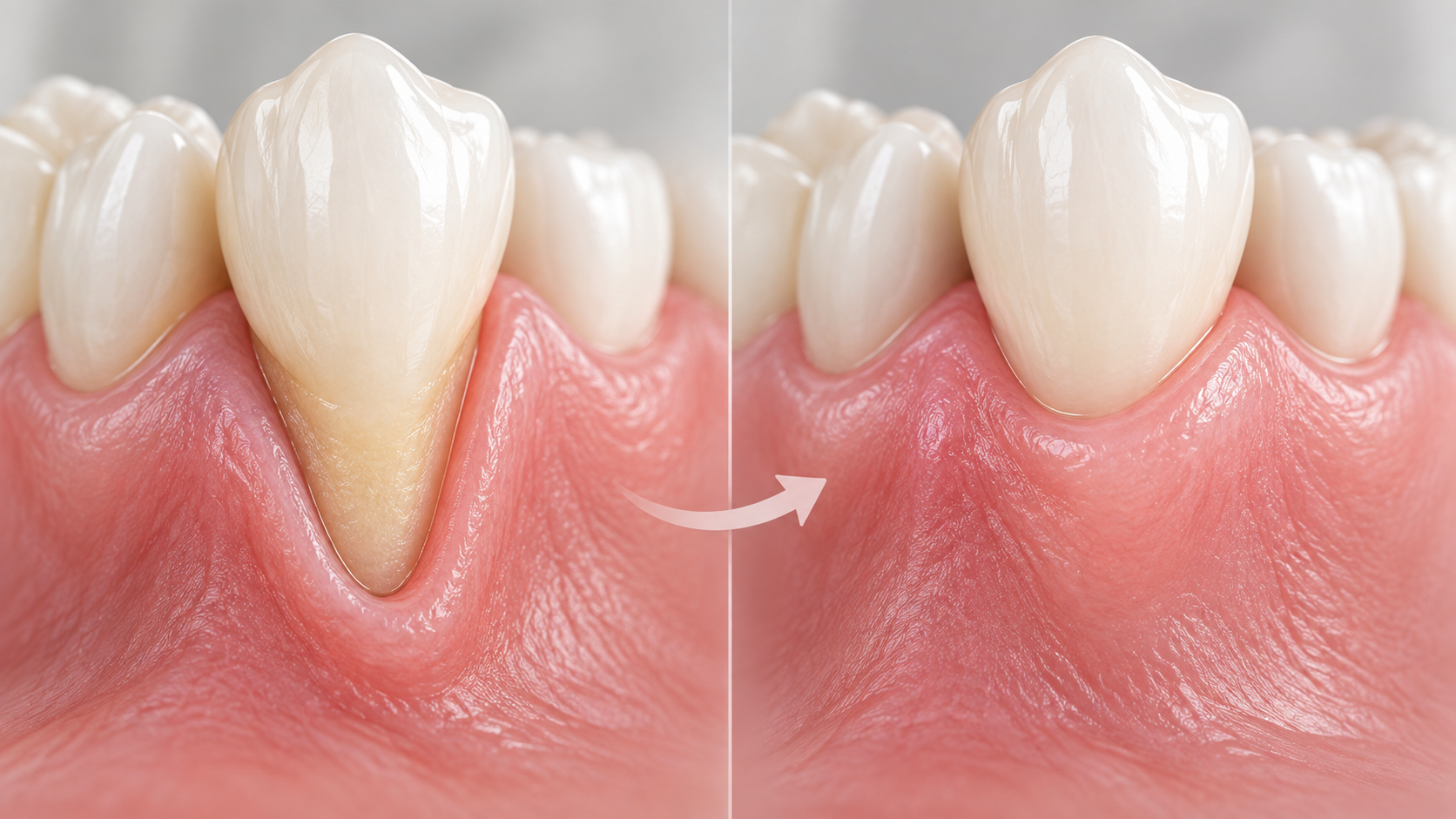
Key points in one minute
Gum recession at a glance
- Gentle home care may reduce further trauma, but it generally cannot move a receded gum margin back on its own.
- Assessment includes measuring the defect and checking inflammation and the tissues between teeth.
- A connective-tissue graft can be an option for selected patients, but complete root coverage cannot be promised.
- Pain, swelling, pus or rapid deterioration calls for an in-person assessment.
What gum recession means
As the gum margin recedes, part of the root becomes exposed. It may be sensitive to cold or brushing, though some people have no symptoms. Recession can affect one or several teeth and does not automatically mean periodontitis.
A dentist considers bleeding, plaque, pocket measurements and supporting tissues together. A photograph cannot reliably show whether a defect is stable or progressing.
Possible causes and symptoms
Contributing factors may include plaque-related inflammation, forceful brushing, thin gum tissue and tooth position. Several can act together. Your dentist will ask when you first noticed the change and whether sensitivity or cleaning difficulties followed.
An exposed root may be prone to sensitivity and root decay. Lack of pain is no assurance that the area needs no assessment.
How the defect is assessed
The clinician measures the gum margin and the attachment between teeth. In the RT1 category, there is no interdental attachment loss. In RT2, that loss is no greater than on the outer tooth surface; in RT3, it is greater. This helps frame the chance of covering the root.
Tissue thickness, tooth position, inflammation and the root surface also matter. A classification supports planning; it is not an individual guarantee.
| Finding | Why it matters |
|---|---|
| Bleeding and plaque | Inflammation needs attention first |
| Forceful brushing | The cleaning technique needs adjustment |
| Interdental tissue loss | Complete root coverage is less predictable |
Treatment choices
The first step is to address inflammation and ongoing trauma. Gentle brushing instruction, professional care and monitoring may be enough for a stable defect. Measures for sensitivity or damage to the root surface serve a different purpose: they do not restore the gum margin.
When root coverage or more soft-tissue volume is needed, a periodontist may discuss a coronally advanced flap, a graft of your own connective tissue, or another material. A graft involves a donor site and healing time. Anatomy, goals and risks guide the choice; surgery is not required for every recession.
- Monitoring can be reasonable when the area is stable and risk factors are controlled.
- Treating sensitivity does not itself cover the exposed root.
- Surgical options require an individual assessment and realistic expectations.
Outcomes and recovery
The prospect of root coverage depends on the tissues between teeth, defect size and depth, tissue thickness and ongoing care. EFP evidence supports connective-tissue graft techniques for selected defects, but it cannot predict full coverage for an individual tooth. Discomfort, bleeding and later relapse are possible.
After surgery, follow your clinician’s instructions for cleaning, eating and review. Avoid touching the site before advised. If you are visiting Yerevan temporarily, plan follow-up before travelling home.
Home care and warning signs
Before the appointment, use a soft brush without excessive pressure. Do not try to push the gum back yourself. You may note changes in sensitivity or bleeding, but photos cannot replace clinical measurements.
Arrange a dental assessment for a newly exposed root, sensitivity or bleeding. Rapid swelling, pus, fever, severe pain, or trouble swallowing needs urgent medical assessment. This article is for information and cannot replace an examination or diagnosis.
Save before your visit
Questions worth asking your dentist
- Is there inflammation to treat before addressing the recession?
- Which recession type do I have, and how predictable is root coverage?
- Could monitoring be appropriate instead of surgery?
- What follow-up and home care will I need?
Sources
- Gum grafting procedure — Cambridge University Hospitals NHS Foundation Trust
- Periodontal manifestations and gingival recession classification — European Federation of Periodontology
- Aesthetics and patient-reported outcomes in periodontal care — European Federation of Periodontology
- Oral health — World Health Organization


