
 23 Tumanyan St, Yerevan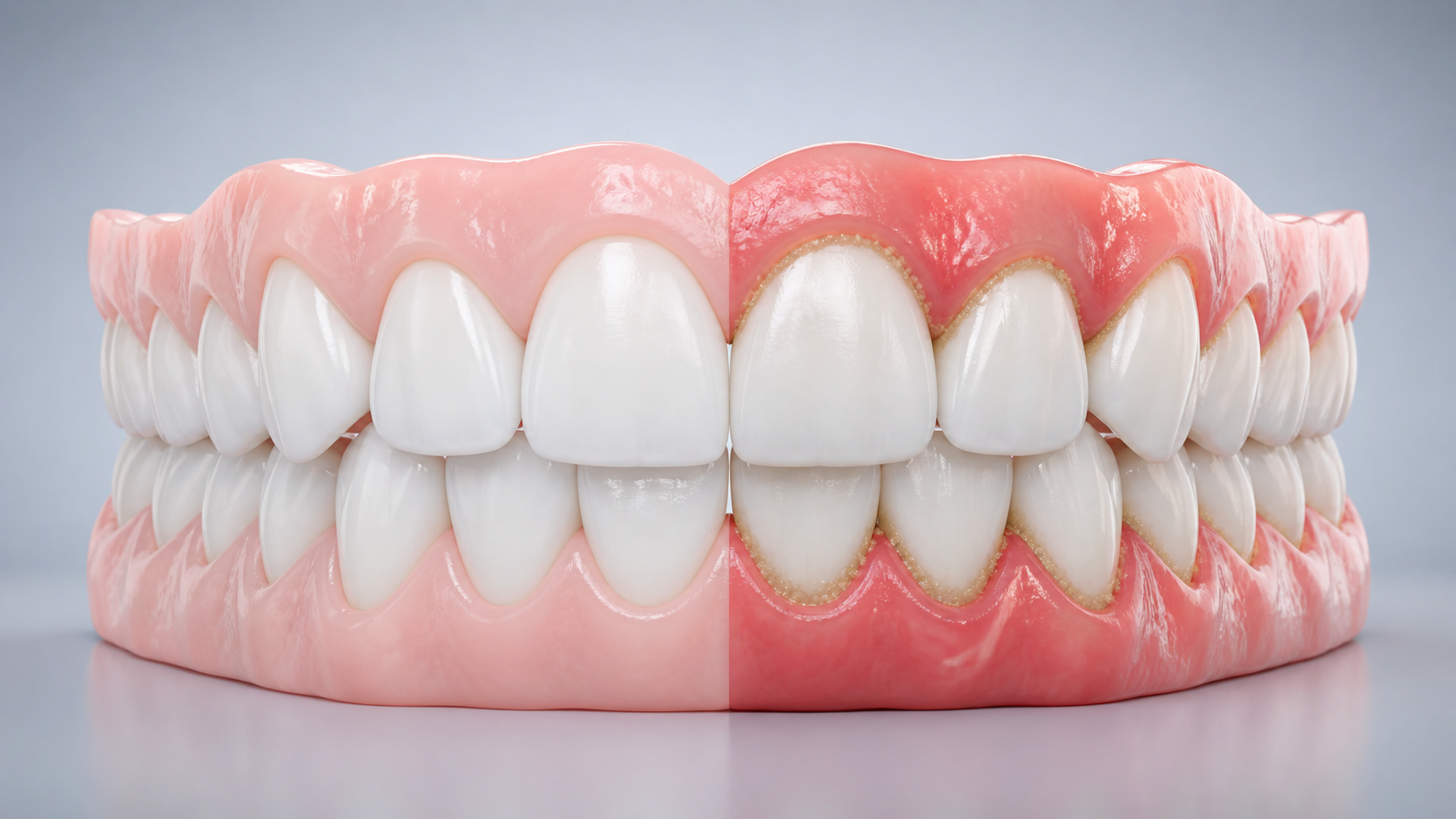
Key points in one minute
Key point: bleeding or swollen gums need a cause-based assessment and gentle daily care, not an online diagnosis
- Gingivitis is gum inflammation; redness, swelling, tenderness and bleeding during cleaning are common signs.
- Regular cleaning removes plaque, while hardened deposits need professional removal.
- Pregnancy, diabetes, tobacco, certain medicines and difficult-to-clean areas can alter risk and should be discussed at the appointment.
- Loose teeth, severe swelling, ulcers, pus, fever, trouble swallowing or breathing need prompt assessment.
What gingivitis is, and how it differs from periodontitis
Gingivitis affects the gum tissue around the teeth. Gums may look redder, feel swollen or tender, or bleed when you use a toothbrush, floss or eat firm food. Bleeding is not something to dismiss as simply brushing too hard: even when the cause is straightforward, an in-person check is useful.
Periodontitis is different: it involves damage to the supporting tissues and loss of bone around teeth. A symptom, photograph or online checklist cannot reliably distinguish it from gingivitis. The aim of a visit is to identify the cause and depth of the problem, then agree a realistic plan.
- Gingivitis is often reversible when its cause is addressed and care is maintained.
- Periodontitis cannot be treated with brushing alone, but professional care can help manage it.
- A lack of pain does not rule out gum disease.
Why gums become inflamed: plaque and risk factors
A soft bacterial film, plaque, continually forms on teeth. When it remains at the gumline or between teeth, it can trigger inflammation. Plaque can harden into calculus (tartar), which cannot be removed with a toothbrush or floss and requires professional cleaning.
Smoking, diabetes, hormonal changes including pregnancy, medicines with oral side effects, crowded teeth and orthodontic appliances can influence risk. They do not mean that disease is inevitable. Tell the dental team about pregnancy, health conditions, allergies and regular medicines.
| Situation | What it may mean | What to do |
|---|---|---|
| Bleeding with cleaning, mild swelling | Gum inflammation or irritation from cleaning | Book an assessment; continue gentle hygiene |
| Plaque or hard deposits | Irritants at the gumline | Discuss professional cleaning and technique |
| Bad breath, pain or receding gums | Cause and severity need assessment | Do not delay a dental visit |
| Loose teeth, pus or rapidly increasing swelling | A potentially more serious problem | Seek urgent dental assessment |
Diagnosis and the usual treatment pathway
A dentist asks about symptoms and health, examines teeth and gums, and assesses plaque, calculus, bleeding and interdental areas. When appropriate, they measure periodontal pockets and request X-rays to assess supporting bone. The tests needed depend on the individual situation.
For plaque-induced gingivitis, professional removal of deposits plus individual advice for home care is commonly the foundation. Another cause may need different treatment or referral. Antibiotics, antiseptics, pain medicines and home remedies are not universal answers; a treating clinician must weigh their indications and risks, especially in pregnancy or chronic illness.
- Ask whether there is evidence of attachment or bone loss and whether imaging is needed.
- Ask to be shown how to clean your own interdental spaces.
- Clarify the review date and how progress will be judged.
What you can do at home and when to seek faster help
Before your visit, brush gently twice daily with fluoride toothpaste and clean between teeth every day with a suitable tool if it does not cause trauma. Do not try to scrape calculus away with sharp objects or stop prescribed medicines on your own. Ask a dentist or hygienist to demonstrate technique if you are unsure.
Seek care sooner for marked pain or swelling, pus, ulcers or red patches, loose teeth, worsening general health, or symptoms that are escalating. Urgent emergency assessment is needed for difficulty breathing or swallowing, rapidly spreading swelling, or signs of a severe allergic reaction. These are safety signs, not a remote diagnosis.
- Do not postpone an examination because bleeding improves briefly.
- Mention pregnancy or diabetes when booking and at the visit.
- Avoid tobacco: it raises gum-disease risk and can obscure tissue changes.
Save before your visit
Questions worth asking your dentist
- Do I have gingivitis, periodontitis, or another reason for bleeding?
- Do I need professional cleaning, and which areas need special care?
- Which interdental tool suits me?
- Which signs mean I should seek help before my review?
Sources
- Oral health — World Health Organization
- About Periodontal (Gum) Disease — Centers for Disease Control and Prevention
- Gum disease — NHS


