
 23 Tumanyan St, Yerevan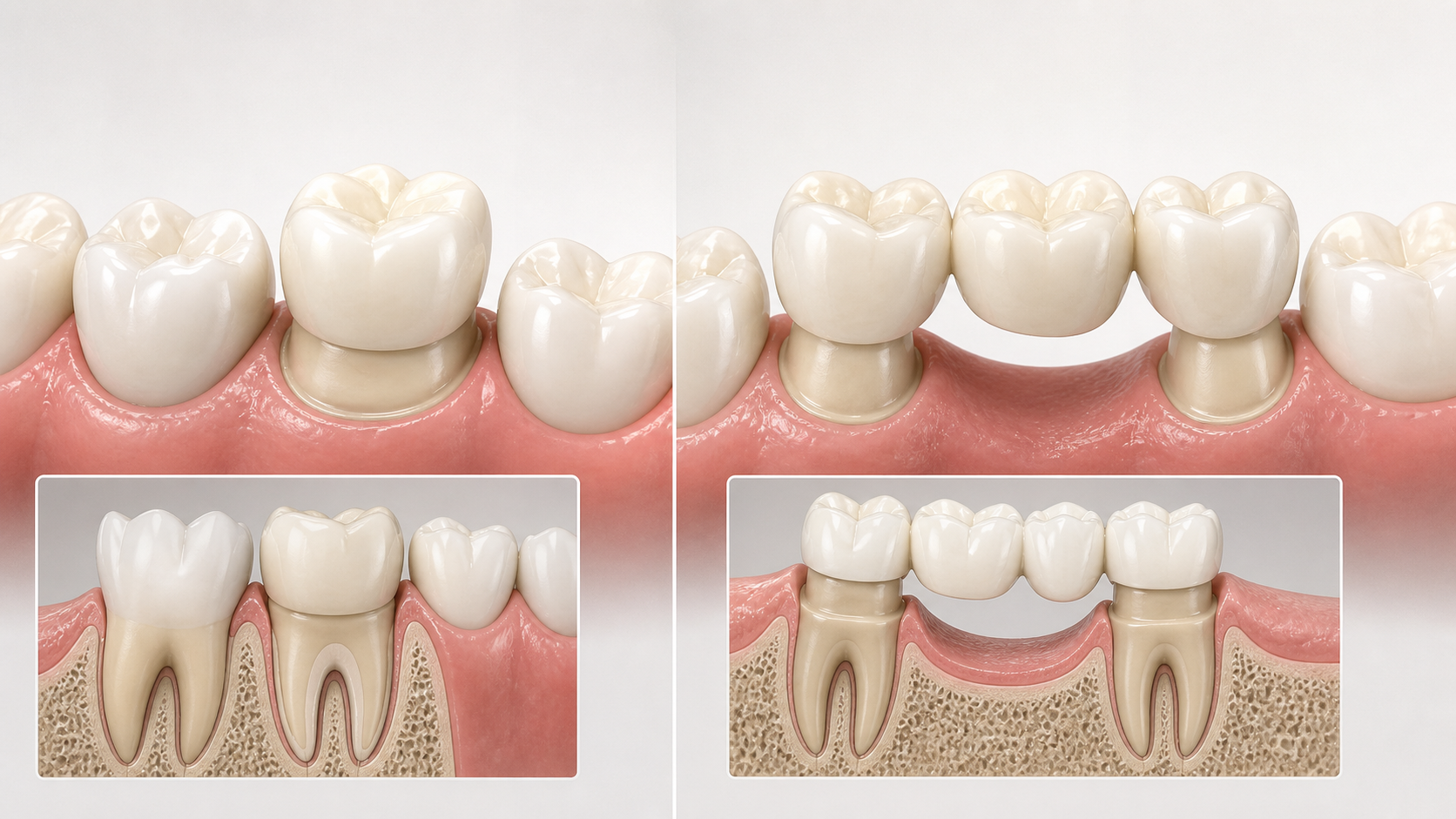
Key points in one minute
The main thing: the design is chosen according to the condition of the teeth and tissues, and not just the material
- A crown is a fixed covering for a preserved tooth; a bridge is a fixed structure that bridges the gap between teeth.
- For the crown, the volume of remaining tooth tissue and the condition of the root are important; for the bridge - also the health and stability of the supporting teeth, the length of the defect and the bite.
- The material, method of fixation and amount of preparation are chosen individually: each option has aesthetic, strength and biological limitations.
- Pain when biting, chipping, mobility of the structure, bleeding or swelling of the gums, unpleasant odor and stuck food are reasons to contact the dentist.
How is a crown different from a bridge?
A crown is a fixed prosthetic structure that covers a prepared natural tooth or can be placed on an implant. It is considered when a tooth is severely decayed, weakened by a large restoration, damaged, or needs to be restored to form and function. The decision depends on whether the tooth can be saved and how to protect the remaining tissue.
A bridge fills the gap of a missing tooth. In the classic version, it rests on one or more adjacent teeth that need to be prepared; there are both adhesive and implant-supported options. It is impossible to assume in advance that any bridge is the best way to close a defect: the supports, the load, the condition of the gums, the possibility of cleaning and alternatives are important.
What does the doctor evaluate before treatment?
During the consultation, complaints, previous restorations, general health, dental loading habits and expectations are discussed. They examine the teeth and gums, check contacts during closure, assess hygiene and, if indicated, use X-ray examination. For a bridge, it is important to separately evaluate each abutment tooth and the length of the gap.
Active caries, gum inflammation, cracked teeth, unstable support or poor plaque control should not be ignored for the sake of quick prosthetics. Sometimes the first step is cavity treatment, endodontic treatment, gum stabilization, or another plan. This is not a delay “due to formalities”, but part of the assessment of the forecast.
- Is it possible to save the tooth and is there enough tissue for a crown?
- Which teeth will be the supports if a bridge is being considered, and will the structure overload them?
- How does biting, grinding or habits affect the material and protection of the structure?
- What preparatory steps, temporary construction and supervision will be required?
- What alternatives are appropriate in this particular clinical situation?
Preparation, temporary structure and materials
Treatment typically includes tooth or abutment preparation, digital or traditional impression/scanning, bite registration, and fabrication of the restoration. While the permanent restoration is being made, a temporary crown or temporary bridge may be needed. The exact steps and number of visits depend on the situation, laboratory process, and the need for pretreatment; you cannot promise the same term to everyone.
Ceramics, zirconium, cermets, metal alloys, and composite materials differ in appearance, strength, processing, and limitations. For example, for certain ceramic materials the risk of chipping and the load zone are important, while for metal alloys the composition and possible sensitivity are taken into account. The material is not an independent “rating”: it is selected along with the shape of the structure, bite and preservation of tissues.
| Question | Why is it important | What to discuss |
|---|---|---|
| Tooth safety | The crown must rest on a securely prepared tooth or root. | Is it possible to save a tooth and what risks remain? |
| Bridge supports | Neighboring teeth take on additional stress and require care. | Do they need to be sharpened and is there a more gentle option? |
| Material | Aesthetics and strength depend on the area, thickness and bite. | What limitations does the proposed material have? |
| Contacts and hygiene | Improper contact or failure to clean under the bridge increases the risk of problems. | How to clean the gaps and when to come to control? |
Risks, care and when you need a doctor
Even a well-made structure does not eliminate caries and gum disease around your own teeth. Possible sensitivity after preparation, chipping or decementing, changes in contacts, inflammation of the gums, caries at the edge of the crown or under the bridge support. The risk depends on the initial condition, hygiene, load, quality of fit and regular monitoring; the exact service life is not guaranteed in advance.
Brush your teeth twice a day with a fluoride toothpaste and ask your doctor how to clean the space between your teeth and under a bridge: threaded floss, interdental brushes or other products are not suitable for everyone. Contact the clinic if there is pain, increased sensitivity, chipping, mobility, changes in bite, bleeding or swollen gums, foul odor, or food stuck. Rapidly increasing swelling of the face or neck, fever with deterioration of well-being, difficulty breathing or swallowing require urgent medical attention according to local regulations.
Alternatives and questions to ask your doctor
An alternative to a bridge may be an implant with a crown, an adhesive bridge, a removable structure, or, in some cases, maintaining a gap. An alternative to a full crown is sometimes a more gentle restoration if there is enough tooth tissue. Each solution has its own requirements for adjacent teeth, bone, gums, hygiene, timing and control.
If you live in Yerevan, are visiting from out of town, or are planning treatment during a short trip to Armenia, discuss the logistics of follow-up visits and temporary construction in advance. You should not choose a method based solely on the number of visits or the promise of aesthetics: what is more important is a clear diagnosis, a service plan and a backup plan if the condition of the tooth turns out to be different than expected.
Save before your visit
Questions worth asking your dentist
- Why can or cannot the tooth be saved in my case?
- Which option for filling a defect better takes into account the condition of adjacent teeth, gums and bite?
- What preparation and temporary construction will be required that might change the plan?
- How to clean the structure, what symptoms should be considered a reason for an unscheduled visit, and how will control be organized?
Sources
- Dental treatments — NHS
- Crowns — American Dental Association
- Bridges — American Dental Association
- Materials for Indirect Restorations — American Dental Association


