
 23 Tumanyan St, Yerevan
Key points in one minute
Understanding enamel protection
- Enamel protects the crown through a densely mineralised structure. Once a tooth has erupted, it cannot grow back a lost layer: the cells that formed enamel are no longer present on its surface. Early mineral loss is different from a hole, however. When the structure remains intact, saliva and fluoride can help strengthen weakened areas. Toothpaste cannot regrow a chip or close a cavity.
- Enamel loses and gains minerals throughout the day. Saliva helps neutralise acids and supplies calcium and phosphate, while fluoride supports the resistance of the surface. Early decay without a cavity can sometimes be arrested or remineralised. This does not mean growing new tooth tissue or restoring its original thickness.
- Pain-free teeth can still have early enamel damage. Brief cold sensitivity has several possible causes; arrange a dental assessment if it recurs. Lingering or spontaneous pain, pain on biting, a new chip, a visible hole or increasing sensitivity needs timely attention. Facial swelling, fever or worsening illness needs urgent care; difficulty breathing or swallowing requires emergency help.
Strong does not mean indestructible
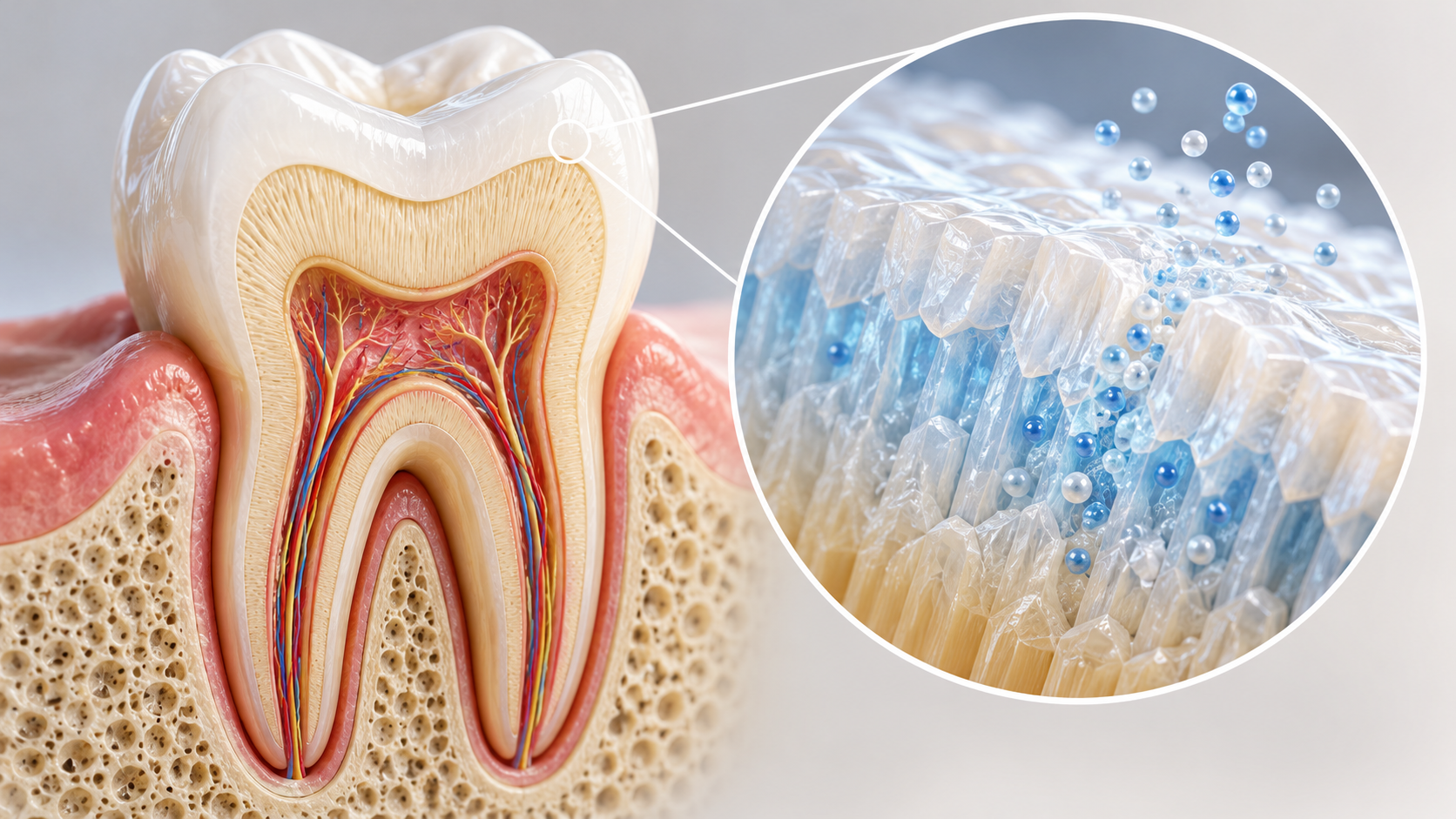
Enamel is made mainly of hydroxyapatite mineral crystals arranged in an intricate structure. It is the hardest tissue in the body, yet acids can dissolve its minerals and excessive forces or impacts can damage it. Skin contains living cells and renews itself; mature enamel has no comparable repair mechanism. Its hardness should not be mistaken for immunity to everyday wear or disease.
Under enamel lies dentine, a softer tissue containing microscopic tubules. The pulp within the tooth contains nerves and blood vessels. Exposed dentine can therefore cause sensitivity even though enamel itself has no nerves. Symptoms alone do not establish the depth or cause of damage: decay, cracks and gum recession may produce similar sensations.
A practical map of dental terms
The crown is the visible part of a tooth; the root is supported within the jaw. Enamel covers the crown, while cementum covers the root. The periodontal ligament connects the root to surrounding bone. The periodontium is the supporting system of gum, ligament, cementum and alveolar bone. The pulp inside the tooth is separate from the tissues supporting it, so root canal treatment and periodontal care address different problems.
Incisors cut, canines help tear food, and premolars and molars grind it. An occlusal surface faces the opposing teeth, a proximal surface faces a neighbouring tooth, a buccal surface faces the cheek, and a lingual or palatal surface faces inward. Occlusion describes how teeth meet. In the widely used FDI system, a two-digit number identifies the quadrant and tooth position, not disease severity. Ask the dentist to point out the tooth on a diagram.
What remineralisation can achieve
Enamel loses and gains minerals throughout the day. Saliva helps neutralise acids and supplies calcium and phosphate, while fluoride supports the resistance of the surface. Early decay without a cavity can sometimes be arrested or remineralised. This does not mean growing new tooth tissue or restoring its original thickness.
A white spot may indicate mineral loss, but it can have other explanations. Colour and photographs cannot reliably establish a diagnosis. A cavity, missing fragment or altered tooth shape may need restorative treatment. Evaluate claims about “repairing enamel” against the actual goal: reducing sensitivity, preventing decay and replacing missing tissue are different tasks.
| Condition | Approach |
|---|---|
| Mineral loss without a cavity | Remineralisation and risk control |
| Cavity or chip | Restoration when indicated |
Decay, erosion, wear and cracks
In tooth decay, plaque bacteria use dietary carbohydrates to produce acids. Frequent sugary snacks and drinks create repeated acid challenges. Erosion is chemical tissue loss from acids that do not originate from bacteria, including acidic drinks or stomach acid associated with reflux or repeated vomiting. The processes may coexist, but prevention needs to address their causes.
Tooth-to-tooth wear and abrasion from other objects are different again. A fine surface line is not necessarily a serious crack, whereas pain on biting deserves assessment. Do not test a tooth with hard objects or file down an edge yourself. Reflux or recurrent vomiting also needs attention to the underlying cause, rather than a toothpaste change alone.
How damage is assessed
The dentist asks about sensitivity, diet, dry mouth, medication, habits and possible reflux, then examines surfaces, defects, fillings, gums and the bite. Pulp response tests, bite tests or imaging may be appropriate. A cone-beam CT scan is not needed for everyone: an examination should answer a specific clinical question.
A periapical radiograph covers a small area; a bitewing helps assess surfaces between teeth and bone levels. A panoramic image provides a broad view of the jaws, while cone-beam CT supplies three-dimensional information when indicated. They are not interchangeable. Ask what “demineralisation”, “dentine involvement”, “restoration” or “monitoring” means in your plan and which findings support the recommendation.
Daily care and treatment choices
Brush twice daily with fluoride toothpaste and a soft brush, and clean between teeth regularly. Extra pressure does not improve protection. Reduce frequent sugary or acidic drinks; choosing water instead of repeatedly sipping a soft drink reduces exposure. Avoid lemon, acids and harsh abrasives for home whitening. Discuss persistent dry mouth with a clinician without stopping prescribed medicines yourself.
Early lesions may be managed through risk reduction, professional fluoride and monitoring. Selected non-cavitated lesions may be suitable for sealing or infiltration. Cavities generally require a restoration; substantial wear needs an individual plan. Restorative material replaces lost structure but does not become natural enamel, and every restoration requires continuing care and review.
When to seek help in Yerevan
Pain-free teeth can still have early enamel damage. Brief cold sensitivity has several possible causes; arrange a dental assessment if it recurs. Lingering or spontaneous pain, pain on biting, a new chip, a visible hole or increasing sensitivity needs timely attention. Facial swelling, fever or worsening illness needs urgent care; difficulty breathing or swallowing requires emergency help.
At a consultation in Yerevan, ask whether the surface remains intact, what caused the damage, whether monitoring is reasonable and how progress will be assessed. Discuss alternatives, tissue removal, limitations and follow-up in a language you understand. This is general information, does not replace examination and makes no claim of human medical review.
Save before your visit
Questions worth asking your dentist
- Is the surface intact or is there a cavity?
- What caused the tissue loss and how can I reduce risk?
- Can this area be monitored and when should it be reviewed?
Sources
- Tooth decay — NIDCR
- Dental erosion — ADA
- Fluoride and dental health — NIDCR
- Tooth anatomy — ADA
- Enamel formation — PubMed


