
 23 Tumanyan St, Yerevan
Key points in one minute
What to keep in mind
- Temporary odour after sleep or food differs from a persistent problem that returns despite regular care.
- Tongue coating and breath odour alone cannot identify stomach disease, infection or a vitamin deficiency.
- Ongoing dryness, bleeding gums and changes to the mouth lining need their cause assessed.
- An ulcer lasting more than three weeks or a new persistent patch is a reason to arrange an examination promptly.
What halitosis means
Halitosis is the medical term for bad breath. It describes a symptom rather than explaining its cause. Odour may vary during the day, so duration, links with food and cleaning, dryness, pain and gum symptoms all matter. A temporary change does not necessarily mean you have a disease.
It can be difficult to judge your own breath reliably. Checking with your hand, a spoon or a photograph cannot replace an examination. If the problem concerns you, describe it calmly to a professional rather than repeatedly scrubbing harder and injuring the tissues. Breath odour alone is not a fair measure of a person or their hygiene.
Sources inside and outside the mouth
Oral bacteria break down food debris and produce substances that smell. Plaque can collect between teeth, along the gumline and on the tongue. Decayed areas, inflamed tissues and dental work that is difficult to clean also need checking. Effective care starts by identifying these areas rather than relying on one universal product.
Gum disease may cause odour alongside bleeding, swelling, an unpleasant taste or loose teeth. A lack of severe pain does not rule it out. Smoking and certain foods also affect breath. Chewing gum may briefly change the sensation of freshness, but it does not treat inflammation.
If dental causes have been excluded, or other symptoms suggest a different source, your dentist may recommend a primary care doctor or an ear, nose and throat specialist. Possible contributors include nose and throat conditions, reflux and some systemic illnesses. Do not automatically blame the stomach or begin investigations and treatment without a clinical reason.
What tongue coating can tell you
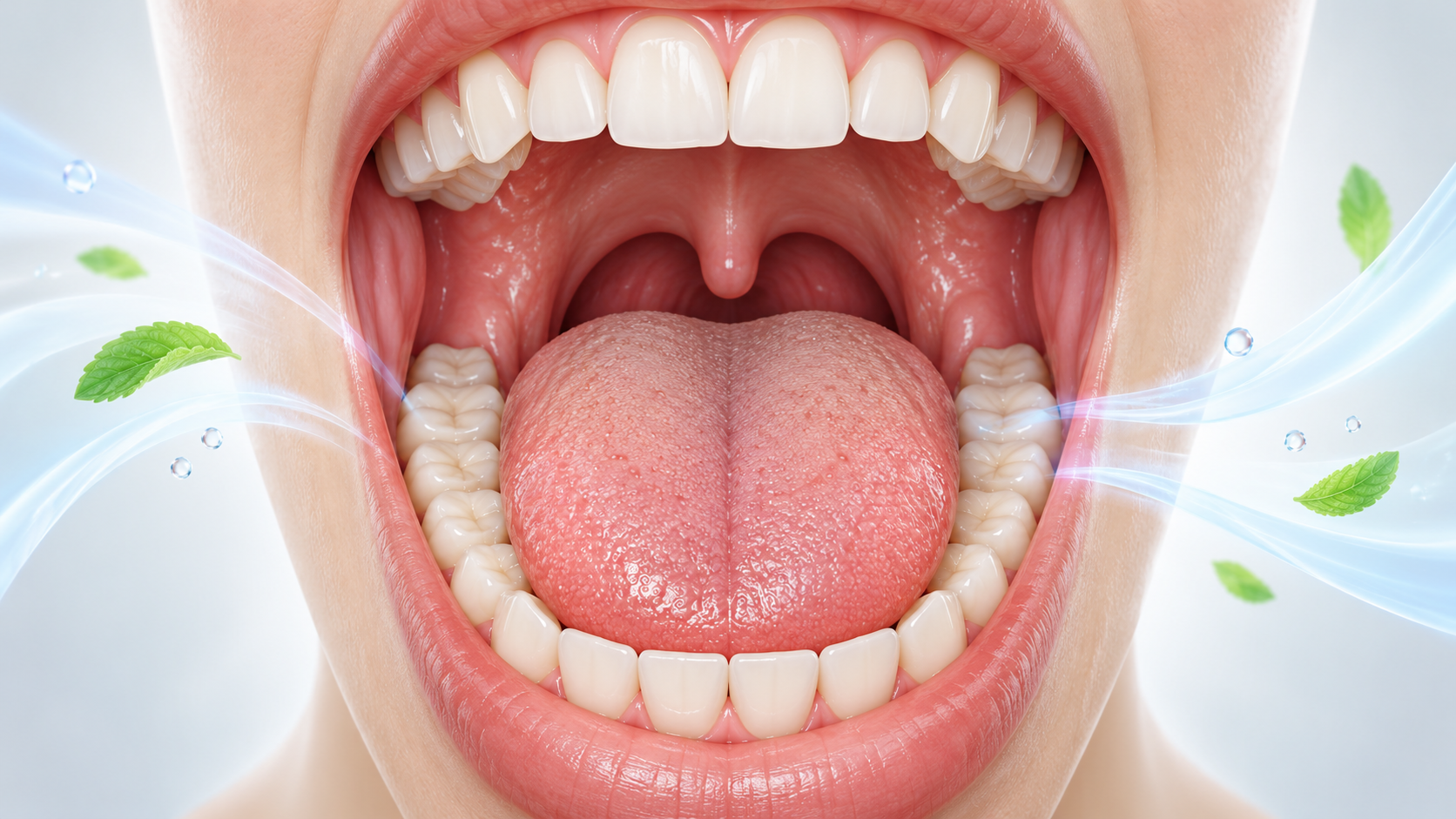
The tongue does not have to look perfectly smooth or identical in everyone. Its coating can contain bacteria, food debris and shed cells. Colour alone cannot reliably identify the source of odour or diagnose an internal disease. Pain, burning, ulcers and persistent changes need assessment in their own right.
Gentle tongue cleaning can form part of daily care, but it cannot guarantee relief from chronic bad breath. NHS guidance recommends gentle daily cleaning; the ADA notes insufficient evidence that scraping prevents or treats halitosis. Do not scrape until the tongue hurts, bleeds or looks perfectly pink. Show a painful area or persistent patch to a clinician.
Why saliva matters
Saliva moistens tissues, helps with swallowing and cleaning, and protects teeth. Persistent dry mouth, also called xerostomia, may cause stickiness, burning and difficulty speaking or swallowing. It raises the risk of decay and some oral infections. It should not simply be dismissed as a normal consequence of age.
Medicines, salivary gland conditions, systemic illness and the effects of treatment can contribute. Bring a list of medicines and supplements and explain when the dryness began. Do not stop prescribed treatment yourself. A clinician can decide whether saliva assessment, discussion with the prescriber or further investigations are appropriate.
Small sips of water and sugar-free gum may ease dryness if chewing and swallowing are comfortable. If another condition requires fluid restriction, follow your existing medical plan. These measures do not replace finding the cause or arranging individual protection against tooth decay.
What a dental assessment involves
The dentist asks when the odour started, whether it is constant, what you have tried and whether you have dryness, bleeding, pain, tobacco use, denture problems or other symptoms. The examination covers teeth, gums, tongue, cheeks, palate and the rest of the mouth lining. Findings determine the next steps; the word halitosis alone does not dictate a test package.
Depending on those findings, the dentist may assess periodontal tissues, restorations and dentures or request imaging and other investigations. Not everyone needs blood tests, a CT scan or an instrument to measure breath odour. A persistent suspicious change in the lining may need specialist referral and further assessment.
For an appointment in Yerevan, prepare your symptom notes and medicine list in a language the dentist understands. If you are visiting briefly, ask about follow-up arrangements: some changes need observation over time and cannot be resolved in one visit. Discuss the price and availability of particular procedures once the clinical task is clear.
Practical care at home
Start with gentle twice-daily brushing using fluoride toothpaste and daily cleaning between teeth with suitable floss or interdental brushes. Clean removable dentures as instructed and discuss their wearing schedule with your dentist. Your brush should not injure the gums. Repeated bleeding calls for assessment rather than abandoning oral hygiene.
Avoid smoking, forceful tongue scraping and applying alcohol or concentrated home mixtures to the mouth lining. A rinse may temporarily mask odour; a therapeutic product should address a specific indication. Starting antibiotics, antifungals or prolonged antiseptic courses yourself is not a safe way to discover the cause.
Notice what changes with consistent care, but do not delay help for pain, swelling or persistent changes to the lining. Arrange a dental visit if odour continues for several weeks despite home care. Warning symptoms are a reason to seek help sooner.
Temporary changes and signs that need attention
Consider accompanying symptoms rather than odour alone. This table helps you choose a next step; it cannot diagnose the problem.
| What you notice | Next step |
|---|---|
| Odour after sleep or strong-smelling food, without other symptoms | Maintain regular care and see whether it settles |
| Persistent odour, bleeding, pain or ongoing dryness | Arrange a dental examination |
| An ulcer lasting over three weeks, a persistent red or white patch, or a lump | Arrange prompt assessment by a dentist or doctor |
| Rapidly increasing swelling, difficulty breathing or swallowing | Seek emergency medical help immediately |
Treatment follows the confirmed cause
For cleaning difficulties, the dentist can tailor techniques and products. Gum disease needs an appropriate periodontal plan. Decay, uncomfortable dental work and sharp edges are managed according to the examination. Dry mouth and sources outside the mouth may require collaboration between professionals. One rinse cannot replace these different approaches.
Agree on the aim, limitations and timing of reassessment. If the odour does not improve, the cause should be reconsidered rather than endlessly escalating home remedies. Regular care remains necessary after treatment. Lasting freshness or a fixed time to improvement cannot be promised without diagnosis.
Save before your visit
Questions worth asking your dentist
- What is maintaining the odour, and which findings support that explanation?
- Do my gums, dryness or a change to the mouth lining need separate assessment?
- Which care products suit me, and what should I avoid?
- When should we reassess, and whom should I see if the problem persists?
Sources
- Bad breath — NHS
- Bad Breath — American Dental Association
- Dry Mouth — NIDCR
- Periodontal (Gum) Disease — NIDCR
- Mouth ulcers — NHS
- Tongue Scrapers and Cleaners — American Dental Association


