
 23 Tumanyan St, Yerevan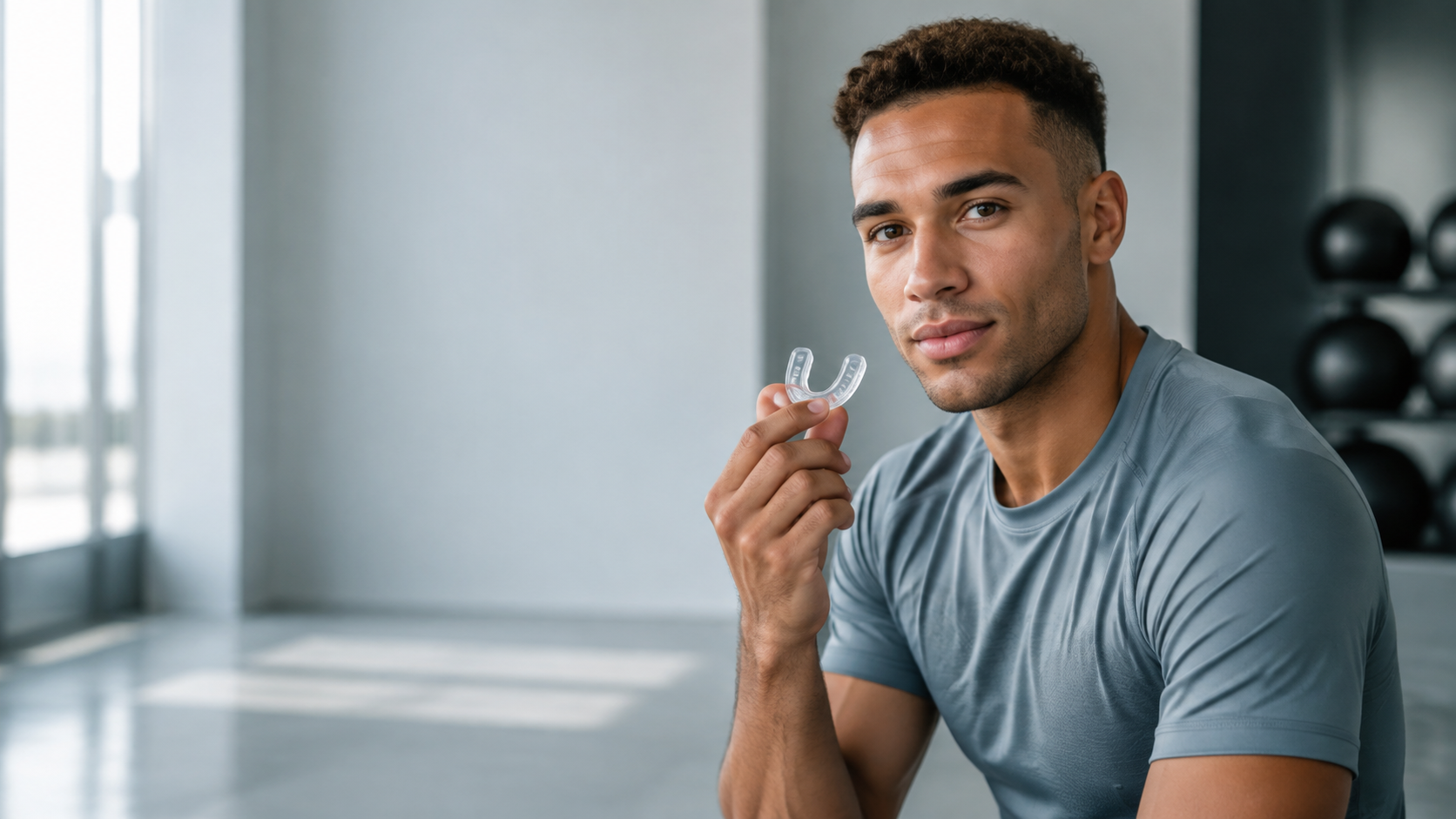
Key points in one minute
Key point: a mouthguard, sensible drinking and timely in-person assessment after injury matter more than universal online advice
- Contact, collision and high-speed activities call for a well-retained athletic mouthguard; discuss its type and fit with a dentist.
- Water is usually the most neutral choice for routine hydration; frequent acidic or sugary drinks create repeated challenges for enamel.
- Jaw clenching, pain on biting, a crack or a loose restoration are reasons to stop self-testing and arrange an examination.
- The return to exercise after an extraction, implant procedure or other treatment depends on the procedure, healing and the treating team’s instructions.
What really affects teeth during sport
The most obvious risk is a blow to the face, a fall or a collision. It is not limited to combat sports: basketball, football, hockey, cycling, gymnastics and other activities involving a ball, speed or unpredictable contact can also lead to dental injury. The American Dental Association recommends properly fitted mouthguards to reduce the frequency and severity of oral injuries in these activities.
There are quieter factors too. Some people clench their teeth under strain; that observation does not establish a diagnosis, but pain, sensitivity, a chip or jaw-joint discomfort are not reasons to buy a ‘bruxism guard’ without assessment. Sipping an acidic or sugar-containing drink often extends its contact with teeth. WHO links free sugars with dental caries, while evidence on sports drinks and erosion is mixed, so it is more accurate to consider frequency and composition than to label every drink as a cause.
| Situation | Practical step | Do not wait if |
|---|---|---|
| Contact, ball or fall | Wear a well-retained athletic mouthguard and check it for wear | There is pain, a chip, tooth movement or a wound after impact |
| Long training and drinks | Choose water for routine drinking; do not sip an acidic drink throughout the session | Marked sensitivity or pain appears |
| Jaw clenching | Reduce unnecessary tension and do not chew the guard | Biting hurts, there is a crack or a restoration feels loose |
| Recent treatment | Follow the personal post-procedure instructions | There is bleeding, increasing swelling, fever, severe pain or worsening wellbeing |
Athletic mouthguards: purpose and choice
An athletic mouthguard is different from a therapeutic night guard. Its purpose is to provide a resilient protective surface for the dental arch, usually the upper one, and to help protect lips and cheeks from impact. Ready-made guards often have poor retention and make the wearer keep their teeth together so the guard does not fall out. Boil-and-bite models may suit some people, but fit, breathing and speech still need checking.
A custom athletic mouthguard is made to the person’s teeth. It can be particularly useful with braces, fixed restorations, a changing bite or regular contact exposure. Do not trim it or repeatedly heat it to reshape it if it becomes distorted. Bring it to a routine examination so fit, condition and any need for replacement can be checked.
- Use a guard made for sport, not a random night appliance.
- After training, rinse it with cool water, let it dry and store it in a clean ventilated case.
- Do not leave it in a hot car or boil it unless the manufacturer directs this.
- With braces or new restorations, check whether the guard has become too tight or too loose.
Water, sports drinks and jaw clenching
Water is a straightforward neutral option for routine drinking during exercise. Sports drinks may have a place in specific training situations, but their role, amount and composition depend on the duration of activity, climate, food intake and advice from a coach or clinician. They need not replace all water, and repeatedly holding a drink in the mouth is unhelpful. After an acidic drink, a sip of water can be reasonable; vigorous brushing immediately after an acidic exposure is not necessary, and sensitivity should be discussed with a dentist.
Do not try to manage jaw clenching by force. Notice the tension point: during a break, relax the shoulders, tongue and jaw rather than holding teeth together. Persistent pain, headache, clicking, limited opening or morning soreness can have different causes. An in-person assessment helps distinguish overload from a tooth, gum, restoration or joint concern.
A knocked-out tooth or recent dental treatment
After an impact, first consider overall safety, consciousness and other injuries. For an avulsed permanent tooth, prompt action matters: hold the tooth by the crown only, do not scrub the root, and briefly rinse visible dirt with clean water. If the person is conscious and it is safe, the tooth can sometimes be gently placed back in its socket; otherwise keep it moist, for example in milk or saline, and seek urgent dental care. A primary tooth is different and should not be replanted. The International Association of Dental Traumatology notes that the type of injury and stage of dentition alter management.
A return-to-sport date after an extraction, implant procedure, bone graft or another intervention cannot be decided from an article. Early strain and pressure changes can interfere with recovery, but restrictions depend on the procedure, bleeding, swelling, medicines and the clinician’s plan. Obtain instructions before the procedure and ask which signs require contacting the clinic. Increasing facial swelling, fever, severe pain, ongoing bleeding, trouble breathing or trouble swallowing require urgent medical assessment.
- After trauma, do not repeatedly wiggle a tooth or use household glue on a fragment.
- Keep a broken fragment if possible and note the time of injury.
- Do not return to contact until a clinician has assessed the injury and discussed protection.
- After planned treatment, follow your clinic’s instructions rather than another athlete’s timeline.
Save before your visit
Questions worth asking your dentist
- Do I need an athletic mouthguard for my sport and dental situation?
- What should I do immediately after an impact or a knocked-out permanent tooth?
- When can I return to training after my procedure and which signs need a call to the clinic?
- Could jaw clenching be related to pain or a restoration?
Sources
- Athletic Mouth Protectors (Mouthguards) — American Dental Association
- 2020 Guidelines for traumatic dental injuries — International Association of Dental Traumatology
- Sugars and dental caries — World Health Organization


