
 23 Tumanyan St, Yerevan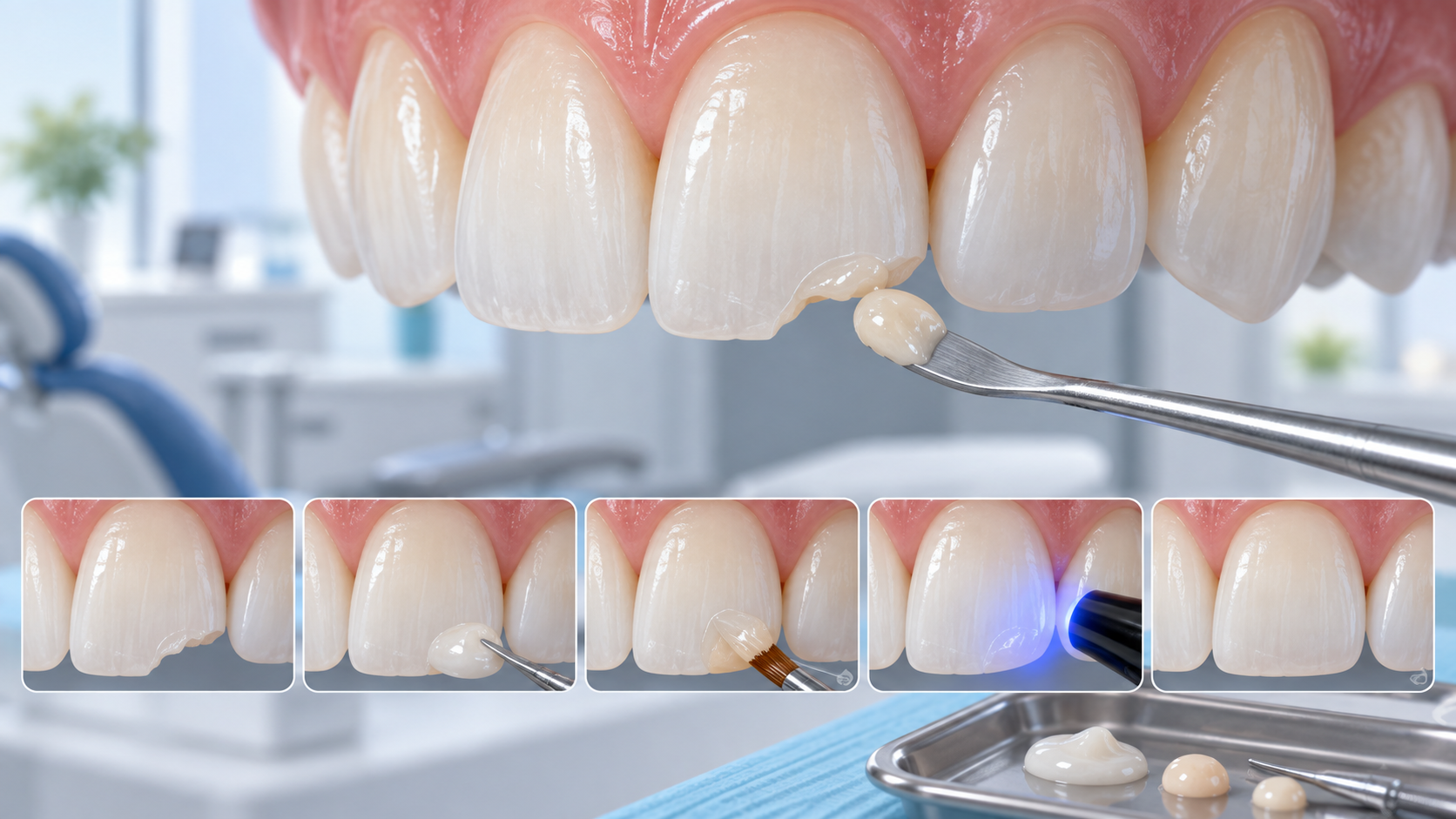
Key points in one minute
Key point: restoration rebuilds a tooth but does not replace diagnosing why it was damaged
- A direct restoration is made in the mouth from material a dentist builds and cures in layers; it is not a synonym for every aesthetic procedure.
- The choice between composite, an inlay, onlay, crown or observation depends on remaining tissue, decay, cracks, bite, gums and reliable isolation.
- Shade and contour can be planned, but no clinician can promise an identical match or one lifespan for every person.
- Increasing pain, swelling, trauma, a loose restoration or difficulty swallowing or breathing need in-person assessment; severe symptoms need urgent care.
What dental restoration means
A restoration rebuilds a part of a tooth lost through decay, a chip, wear, a failing filling or another cause. A direct restoration is placed in the mouth: composite is bonded to prepared tooth tissue, shaped and light-cured. The American Dental Association classifies composites as direct restorative materials, but a material name does not determine a treatment plan.
The word ‘aesthetic’ signals attention to form and shade, not a medical guarantee. Before treatment, the dentist must identify why the defect developed. Active decay, trauma, a crack, wear or heavy clenching can require different steps. This article cannot select treatment from a smile photograph.
When it may suit—and when another option may be safer
Composite is often considered for a small or moderate defect, a chipped edge, an old filling or a shape adjustment after diagnosis. The dentist assesses sound remaining tissue, decay at margins, pulp and roots, gums, contacts, opposing teeth and clenching or grinding.
With extensive loss, weakened cusps, a crack, deep destruction, unstable bite or an unreliable dry field, direct composite may not be the best option. The discussion may include treating the cause, an indirect inlay or onlay, a crown, root-canal treatment or another plan. A decision should never rely only on cost, advertising or a wish for one visit.
| Factor | Why it matters | What may be discussed |
|---|---|---|
| Remaining tissue | It supports and protects the restoration | Composite or a more covering restoration |
| Bite and load | Heavy contacts raise chip and wear risk | Form adjustment, protection or another design |
| Moisture and inflammation | Bonding needs controlled conditions | Isolation, prior treatment or a different stage |
How direct restoration commonly proceeds
After a history and examination, the dentist may use X-rays, photographs or other data when clinically indicated. Damaged tissue is removed and a working field is created. A rubber dam is an elastic isolation system that separates the tooth from moisture; ADA describes it as a barrier for an isolated operative field. The dentist decides whether and how isolation is appropriate.
The adhesive protocol prepares the surface and uses bonding agents. Composite is usually applied in small layers, shaped and cured. On front teeth, edge line, translucency and shade matter; on back teeth, chewing anatomy, contact point and bite matter. Contacts and bite are checked, then the surface is finished and polished. Visits depend on diagnosis and scope.
- Report pain, injury, sensitivity, grinding and past treatment.
- Ask what caused the defect and which options exist.
- Ask for the limits of the expected result and the review plan.
- Do not file an edge, glue a fragment or adjust your bite yourself.
Longevity, limits and alternatives
Modern composite restorations can perform for a long time, but there is no honest universal lifespan. Outcome depends on defect size and position, technique, a clean dry field, load, daily care, decay risk and reviews. Staining at an edge, wear, a chip, altered contact, recurrent decay or repair and replacement can occur.
Alternatives depend on the problem: observation of a stable minor defect, professional cleaning, direct composite, inlay, onlay, crown, orthodontic or other care. A direct restoration does not treat gum inflammation, root infection or unexplained pain. Do not agree to irreversible preparation until the aim, extent, alternatives and follow-up are clear.
Aftercare and when not to wait
Follow your dentist’s individual advice. In general, brush twice daily with fluoride toothpaste, clean between teeth with a suitable method and attend reviews. WHO links caries with frequent free sugars, inadequate fluoride and insufficient plaque removal, so daily care protects both the restoration and other teeth. Do not test strength by biting ice, packaging or hard objects.
Arrange an unscheduled review for a chip, lost fragment, pain on biting, persistent sensitivity, a high bite, bad smell at the margin or swelling. Rapid swelling, fever with deterioration, facial injury, pus, difficulty swallowing or breathing need urgent in-person medical assessment. In Armenia, patients can ask about a clinician’s qualification and treatment plan; the professional profile of dentists is established by the Ministry of Health.
- What caused this tooth’s defect?
- How much healthy tooth can each option preserve?
- How will my bite or grinding affect the restoration?
- Which symptoms after treatment need an unscheduled visit?
Save before your visit
Questions worth asking your dentist
- Why did this tooth chip or break down?
- Does a direct restoration suit my defect and bite?
- Which alternatives preserve more tooth structure and what are their limits?
- How should I care for the restoration and when is review needed?
Sources
- Materials for Direct Restorations — American Dental Association
- Glossary of Dental Terms — American Dental Association
- Oral health — World Health Organization
- Professional profile of a dentist — Ministry of Health of Armenia


