
 23 Tumanyan St, Yerevan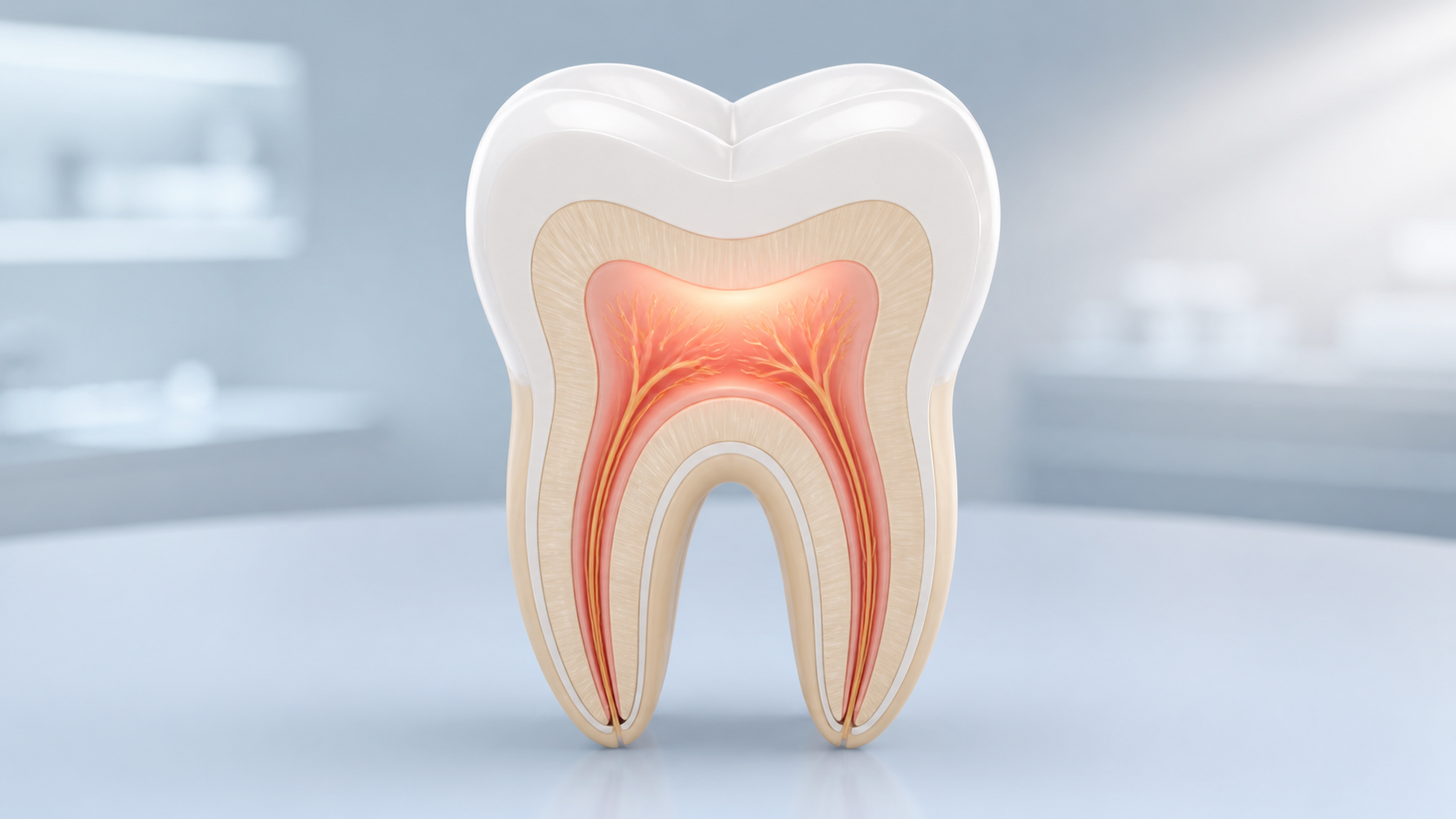
Key points in one minute
The key point: toothache needs an in-person assessment, and early care helps preserve options
- Pulpitis means inflammation of the pulp, but a dentist determines the cause of pain and tissue status after an examination.
- Lingering hot or cold sensitivity, spontaneous or night pain are reasons to arrange a prompt in-person dental visit rather than wait for pain to disappear.
- Depending on the diagnosis, the dentist may discuss vital pulp treatment, root-canal treatment or, if a tooth cannot be restored, removal with a replacement plan.
- Increasing swelling, fever, marked illness, or trouble breathing or swallowing require urgent in-person care.
What pulpitis is and why it can hurt
The pulp is the soft tissue in the tooth’s central space and root canals; it contains blood vessels and nerve fibres. Pulpitis is inflammation of this tissue. The World Health Organization notes that untreated tooth decay can progress to pain and infection: acids made in dental plaque from frequent free-sugar intake gradually damage the hard tooth tissues.
Most often, bacteria and their by-products approach the pulp through deep decay. Other possible routes include a crack, trauma, a leaking old restoration or repeated procedures. The word pulpitis does not tell us whether inflammation is reversible or which treatment will suit a particular tooth; clinical tests and an assessment of the whole tooth are needed.
- A cavity or defective restoration can let irritants reach the pulp.
- A crack or injury can cause symptoms even without an obvious cavity.
- Pain may spread, so it is not always possible to identify the source tooth yourself.
Symptoms: when not to delay a visit
Pain from cold, heat or sweets that quickly settles and pain that lingers afterward are different patterns, but neither can confirm a diagnosis at home. Spontaneous, throbbing or night pain, pain on biting, a feeling that the tooth is high, or recurring attacks deserve a prompt dental appointment. Pain suddenly stopping does not prove recovery: a change in pulp sensitivity still needs assessment.
Seek urgent in-person help for increasing facial or mouth swelling, fever, feeling unwell or difficulty opening the mouth. Difficulty breathing, speaking or swallowing, substantial swelling, or eye symptoms need emergency medical assessment. Do not open the gum or attempt to clean inside a tooth yourself.
How a dentist confirms the diagnosis
One X-ray or one test is not the whole answer. At an appointment, the dentist asks when pain began and what triggers it, examines the tooth and surrounding tissues, checks responses to temperature and other diagnostic stimuli, and may test tapping and biting sensitivity. A focused dental X-ray may be used to assess decay, roots and the tissues around the root tip, but it does not directly measure pain.
This approach matters because similar symptoms can come from decay, a crack, inflammation around the root, a neighbouring tooth or a non-dental cause. International endodontic terminology treats pulpal and periapical diagnosis as a combination of clinical findings, not a home test. Tell the clinician about trauma, old restorations, pregnancy, chronic conditions and every medicine you take.
- When did pain start, and what triggers or relieves it?
- How long does it last after cold, heat or eating?
- Is there swelling, fever, trauma, a crack or biting pain?
- Which medicines and health conditions need to be considered?
Treatment: options commonly discussed
Treatment aims to remove the source of inflammation or infection and preserve the tooth when feasible. With some diagnoses and enough sound tooth structure, a clinician may discuss vital pulp treatment: the affected portion is removed while the remaining pulp is kept alive if possible. Whether that route is appropriate is decided after examining bleeding, decay, cracks and the tooth’s restorative outlook.
If the pulp is irreversibly damaged or has died, endodontic treatment may be needed: the clinician cleans and treats the root canals, seals them and plans restoration of the visible part of the tooth. Sometimes the outlook is poor—for example with an unrepairable crack or too little remaining support—and removal with replacement options is discussed. No option guarantees an outcome without diagnosis and follow-up.
| Finding after diagnosis | Possible approach | Ask at the consultation |
|---|---|---|
| Pulp may remain vital | Vital pulp treatment and tooth restoration | Why this method fits and how the result is monitored |
| Pulp is substantially damaged or infected | Root-canal treatment and tooth restoration | How many stages are needed and the outlook for the restoration |
| Tooth cannot be predictably restored | Removal and, if appropriate, a replacement plan | Which alternatives and timing suit your situation |
What to do before your visit—and what not to do
Contact a dental practice and describe pain intensity, swelling, fever and chronic conditions. While waiting, do not place harsh substances on the tooth, heat a swelling or start antibiotics without a prescription. If you use an over-the-counter pain medicine, follow that product’s label and consider contraindications, allergies, pregnancy and other medicines; a clinician or pharmacist can give individual advice.
Continue gentle oral hygiene, avoid foods and drinks that clearly trigger pain, and do not postpone the examination because of temporary relief. Bring a medicine list and previous X-rays if available. That supports a safer, quicker plan, particularly if you have a chronic condition.
- Write down symptoms and when they occur for the clinician.
- Do not put tablets, alcohol or other substances onto the gum or into a cavity.
- Do not stop regular prescribed medicines without the prescriber’s advice.
- Use urgent care for red flags instead of waiting for a routine appointment.
Prevention and useful questions for your dentist
Not every case can be prevented, but the risk of tooth decay is reduced by regular brushing with fluoride toothpaste, cleaning between teeth, moderating free sugars and attending preventive check-ups. Treating decay early is usually simpler than treating its complications. These are general measures, not a promise that pulpitis will never develop.
At your appointment, ask for the diagnosis in plain language, request an explanation of the problem area and discuss alternatives. In Yerevan, and especially when travelling for dental care, do not choose a procedure only from a description or price: the decision depends on examination, imaging, restorability and your overall health.
- What is the diagnosis for the pulp and tissues around the root?
- Is there a chance to preserve pulp vitality, and why?
- How will the tooth be restored after treatment and what limits are possible?
- Which symptoms after treatment need an unscheduled call?
Save before your visit
Questions worth asking your dentist
- Why cannot similar pain patterns diagnose pulpitis at home?
- When might preserving the pulp be discussed, and when is root-canal treatment considered?
- Why do antibiotics not replace treatment of the source in the tooth?
- Which signs require urgent help?
Sources
- Oral health — World Health Organization
- Antibiotics for Dental Pain and Swelling Guideline — American Dental Association
- Glossary of Dental Terms — American Dental Association
- Dental abscess — NHS


