
 23 Tumanyan St, Yerevan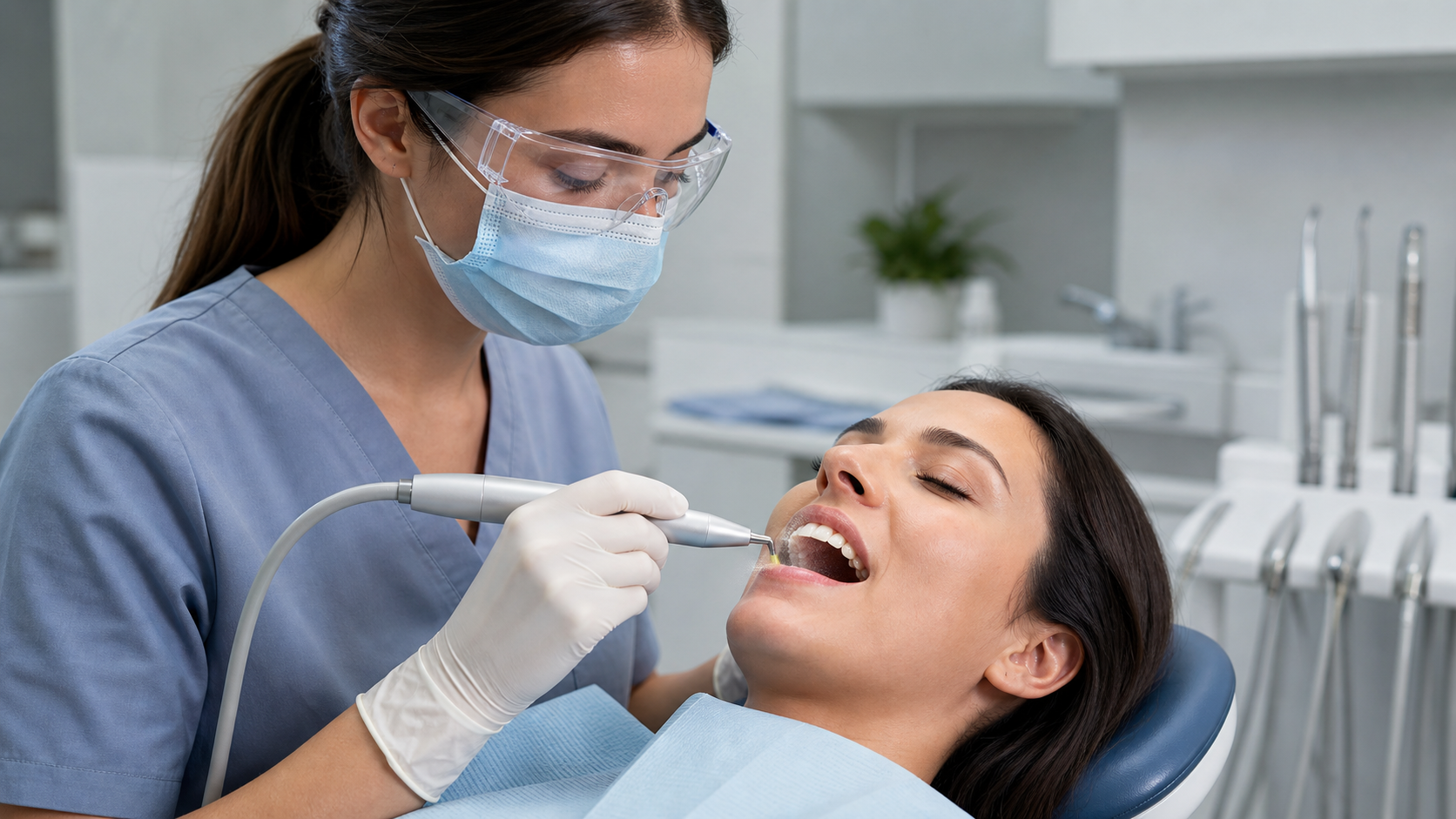
Key points in one minute
The main thing: cleaning removes deposits, and long-lasting results support daily care.
- Professional hygiene helps remove deposits that are difficult to remove with brushing alone, but does not treat all causes of pain, bleeding or odor.
- Ultrasonic instruments, hand instruments, powder blasting and polishing are used not as a mandatory set, but according to the clinical situation.
- Brief soreness or minor bleeding is possible, but severe pain, increasing swelling, or continued bleeding should contact your doctor.
- The frequency of visits is determined individually: it is influenced by plaque, gum disease, orthodontic appliances, smoking, home hygiene and treatment plan.
What is professional cleaning and what problem does it solve?
Bacterial plaque regularly forms on teeth. If not removed, it is associated with a risk of tooth decay and disease of the tissue around the teeth. The World Health Organization lists poor hygiene and tobacco as important risk factors for periodontal disease. At home, plaque is removed with a brush and interdental products; dense tartar cannot be removed safely and independently.
During professional hygiene, a specialist first examines the oral cavity. Then it can remove supragingival deposits, clean interdental areas, treat superficial pigment spots and polish surfaces. The procedure does not replace the treatment of caries, deep inflammation of the gums, tooth mobility or other causes of complaints. If such signs are found during examination, the plan changes: diagnosis and separate treatment may be required.
Who can benefit and when do you need consultation first?
Professional hygiene is often discussed when there is noticeable plaque or tartar, superficial staining, gum bleeding when brushing, bad odor, before certain dental procedures, and when home care is difficult. For example, braces, crowded teeth, crowns and bridges can create areas that are more difficult to clean. This does not mean that every person needs the same protocol or the same interval between visits.
If you have acute pain, swelling, pus, injury, fever, or a rapidly changing condition, do not schedule a routine cleaning as a substitute for a checkup. An in-person assessment by a dentist is required. During your consultation, it is important to disclose any sensitivity, bleeding history, chronic conditions, medications, pregnancy, and previous dental experience to help determine a safe plan.
- What deposits and areas require cleaning?
- Are there signs of tooth decay, gum disease or other cause of complaint?
- What methods will be used specifically in my case and why?
- How to maintain results at home and when do you need control?
How the procedure usually goes: ultrasound, Air Flow and polishing
There is no single mandatory sequence. For hard deposits, a specialist can use an ultrasonic scaler and hand tools. For soft plaque and superficial age spots, powder blasting, often called Air Flow after its common trade name, can be used. The choice of powder, pressure, treatment area and contraindications is assessed by a specialist, and not by an article or advertising title.
After removing deposits, the surfaces can be polished. In some situations, the doctor will discuss fluoride supplements or another preventive step; not everyone needs it and depends on caries risk, sensitivity and examination. If the gums are inflamed or there are periodontal pockets, simple cosmetic cleaning may not be sufficient: the required amount of treatment is determined after diagnosis.
| Stage | Task | What can change the plan |
|---|---|---|
| Inspection | Assess plaque, gums, sensitivity and complaints. | Pain, active inflammation, caries, tooth mobility. |
| Removing deposits | Remove accessible soft plaque and stone. | Volume of stone, location of deposits, sensitivity. |
| Powder blasting and polishing | Remove surface stains and smooth cleaned areas as indicated. | Condition of enamel, restorations, gums and the chosen method. |
| Briefing | Show home care and monitoring period. | Interdental spaces, orthodontic and prosthetic restorations, risk of caries. |
What to expect after cleaning and how to care for it
After the procedure, teeth may temporarily react more strongly to cold, hot, or sour foods, especially if deposits previously covered the exposed areas. Mild soreness of the gums or slight bleeding with existing inflammation is also possible. The sensations that are considered expected should be explained by a specialist after a specific procedure - they depend on the amount of work and the condition of the tissues.
In general, it is important to continue regular brushing with fluoride toothpaste, clean the spaces between teeth in the manner prescribed by the specialist, and do not try to scrape off the remaining tartar yourself. WHO recommends brushing your teeth twice a day with fluoride toothpaste. If after the visit individual remedies or restrictions are prescribed, follow them and not universal advice from the Internet.
Limitations, alternatives and questions for admission
Professional hygiene does not correct a carious cavity, does not restore lost enamel, does not straighten teeth and does not guarantee the absence of problems in the future. It also does not cancel home care: plaque begins to form again. The result of smoother and cleaner surfaces is only realistic within the limits of the initial condition, the method used and subsequent hygiene.
If signs of gum disease are detected, your doctor may suggest periodontal examination and treatment; in case of severe sensitivity, first determine its cause; for aesthetic purposes, discuss safe options separately. Do not choose a procedure based on a photo or start medications on your own. In Armenia, medical care is provided by specialists within the framework of professional competence and legal requirements; a specific plan should be drawn up by a doctor after an in-person assessment.
Save before your visit
Questions worth asking your dentist
- Do I have tartar, gum disease, or another cause of bleeding?
- What cleaning methods are planned and do they have limitations in my situation?
- What will be normal after the procedure, and what symptoms require unscheduled contact?
- Which interdental care is appropriate based on my teeth, restorations or braces?
Sources
- Oral health — World Health Organization
- Your Visit to the Dental Hygienist — Dorset County Hospital NHS Foundation Trust
- Law on Medical Care and Service of the Population — ARLIS, Republic of Armenia


