
 23 Tumanyan St, Yerevan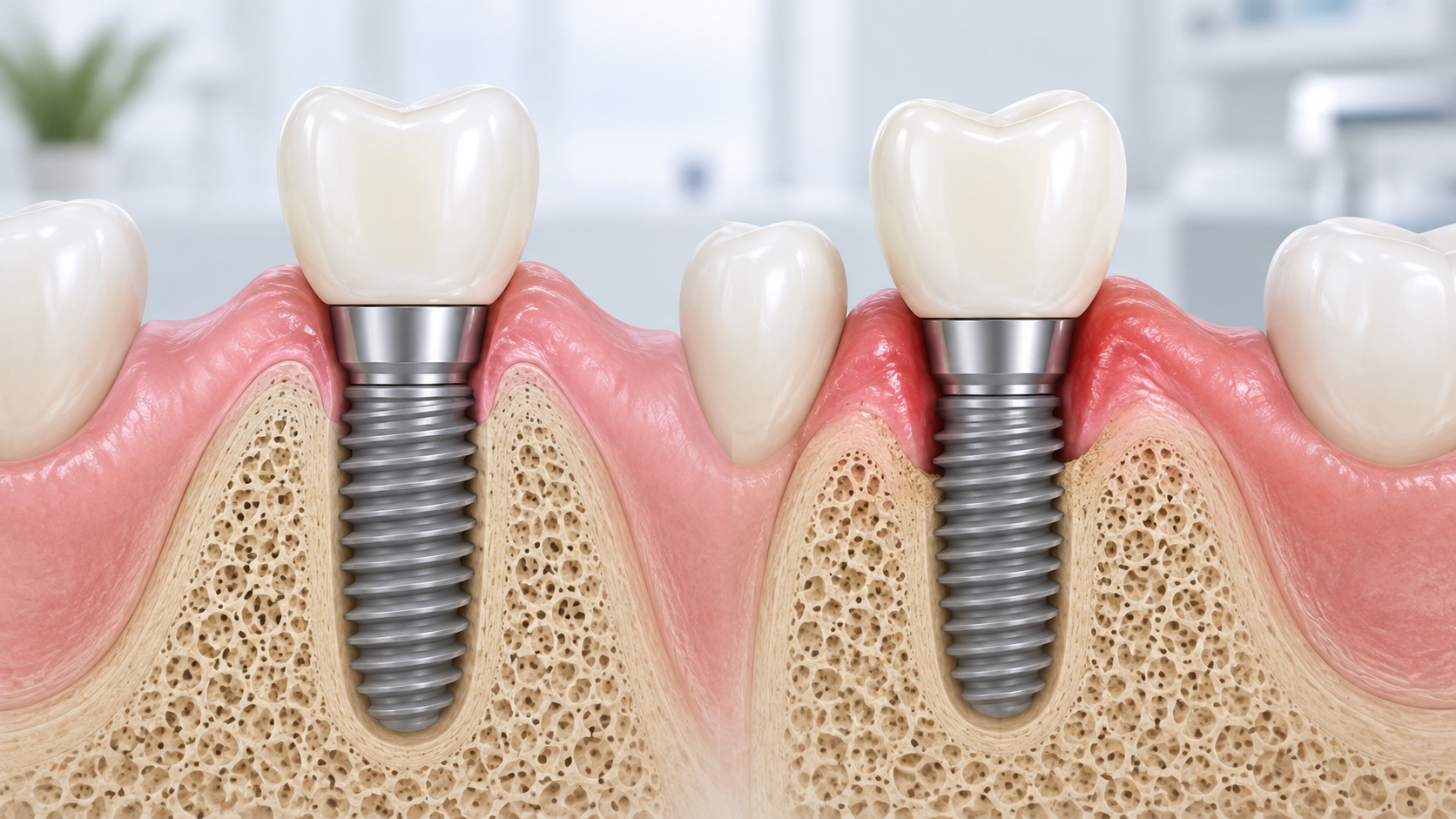
Key points in one minute
Key point: inflammation around an implant cannot be reliably distinguished from other problems without examination and imaging
- Peri-implant mucositis mainly affects soft tissue; peri-implantitis combines inflammation with progressive loss of bone around the implant.
- Bleeding on gentle probing, discharge, swelling, deeper probing measurements or recession warrant a dental review rather than self-treatment.
- Diagnosis uses examination, probing and radiographs compared with baseline measurements after the restoration was fitted.
- Professional maintenance, daily hygiene and review of risk factors remain important after initial treatment.
What peri-implantitis is, and how it differs from mucositis
An implant is surrounded by mucosa and bone that support its function. In peri-implant mucositis, inflammation chiefly affects the soft tissues: the gum may look red or swollen and bleed on gentle assessment. In peri-implantitis, inflammatory signs occur alongside loss of supporting bone, which is assessed on radiographs and over time.
International classification describes peri-implantitis as a plaque-associated pathological condition. That does not mean every sensation near an implant is peri-implantitis. Similar complaints can arise from trauma, a restoration problem, a neighbouring tooth or gum disease, so a mirror or photograph cannot provide a dependable diagnosis.
- Implant health is not defined by one probing-depth number.
- Baseline records and radiographs after the prosthesis was fitted are particularly valuable for comparison.
- Prompt assessment allows discussion of options before tissue loss becomes more extensive.
Symptoms: when not to wait
Arrange a review if the gum by an implant bleeds during cleaning, becomes swollen or sore, there is an unpleasant taste, discharge, movement of the restoration, or a change in chewing comfort. The disease may also progress with little pain, so absence of marked symptoms does not replace planned maintenance visits.
Seek urgent medical help for rapidly increasing facial or neck swelling, fever with feeling unwell, breathing or swallowing difficulty. Do not start antibiotics, use sharp objects to clean the area, or stop prescribed medicines without contacting the clinician responsible for your care.
Causes and risk factors
Bacterial plaque is considered the main cause of inflammation around implants. It can accumulate in areas that are hard to reach, around complex restoration shapes, or where daily cleaning is difficult. Risk is not a verdict or blame; it helps the clinician plan closer monitoring.
Assessment may include a history of periodontitis, smoking, daily hygiene, irregular maintenance visits, systemic conditions and medicines, soft-tissue characteristics, implant position and restoration design. The combination matters for each person. Do not change regular medication or make health decisions based on an article alone.
| Factor | Why it matters | Useful next step |
|---|---|---|
| Plaque in an inaccessible area | Can sustain soft-tissue inflammation | Ask for safe cleaning instructions for your own restoration |
| Previous periodontitis | May call for closer maintenance | Agree an individual review schedule |
| Smoking and systemic factors | May influence risk and healing | Tell the clinician about conditions and all medicines |
| Restoration shape and access | May make cleaning more difficult | Discuss whether daily hygiene access is adequate |
How clinicians make the diagnosis
At an appointment, the clinician asks about symptoms and treatment history, examines the mucosa, checks for bleeding and other inflammatory signs, assesses cleanliness and gently measures the tissues around the implant. A pattern of findings and change from previous visits matter more than a single observation.
Radiographs help assess bone level. They are interpreted in context: implant features, the time since placement and any baseline images all matter. In selected cases a clinician may choose additional imaging or specialist input. An article cannot decide which test is appropriate for you.
- Bring earlier reports and radiographs if you have them.
- Describe movement, pain, bleeding and when symptoms first appeared.
- Ask what findings support the diagnosis and what baseline is being used.
Treatment and outlook: why there is no universal home protocol
Treatment aims to reduce inflammation, control plaque and, where possible, stop further tissue loss. The plan depends on the defect, restoration design, access to the implant surface, general health and previous treatment. It may begin with professional cleaning and risk-factor management; more complex disease can require discussion of surgical approaches and defect management.
No method can honestly be described as a guaranteed solution for everyone. Sometimes the restoration needs review, a referral is appropriate, or alternatives including implant removal must be discussed if safe retention is not achievable. Decisions follow an in-person discussion of benefits, limits and risks in the individual case.
What to do before a visit and how to support results
Until you are seen, continue gentle routine hygiene without traumatising the inflamed area. Use only products and techniques previously recommended for you; with pain, bleeding or uncertainty, ask the clinic how to proceed. Do not delay in the hope that the issue will disappear on its own.
After treatment, supportive care commonly includes an individual review schedule, professional assessment and practical coaching for the exact restoration. Ask the team to demonstrate cleaning between and beneath the restoration, and which signs mean you should contact them before the next planned visit.
- Do not diagnose yourself or use sharp tools to clean around the implant.
- Keep previous radiographs and implant-system information where available.
- For pain, inflammation or doubt, arrange an in-person dental consultation in Yerevan.
Save before your visit
Questions worth asking your dentist
- Do my findings suggest mucositis or peri-implantitis, and what supports that view?
- Which radiographs and baseline records are needed for comparison?
- Which risk factors can be changed in my situation?
- Which treatment options, limits and review criteria apply to me?
Sources
- Guideline on treatment of peri-implant diseases — European Federation of Periodontology
- Peri-implant diseases and conditions: consensus report — Journal of Periodontology
- Medical care and services licensing — Government of Armenia


