
 23 Tumanyan St, Yerevan
Key points in one minute
Before choosing a restoration
- The implant, abutment and crown have different roles; check which parts your treatment plan includes.
- A dentist removes a fixed prosthesis; patients clean a removable one separately as instructed.
- Tissues, bite, hygiene and maintenance affect outcomes; lifelong service cannot be promised.
What the components do
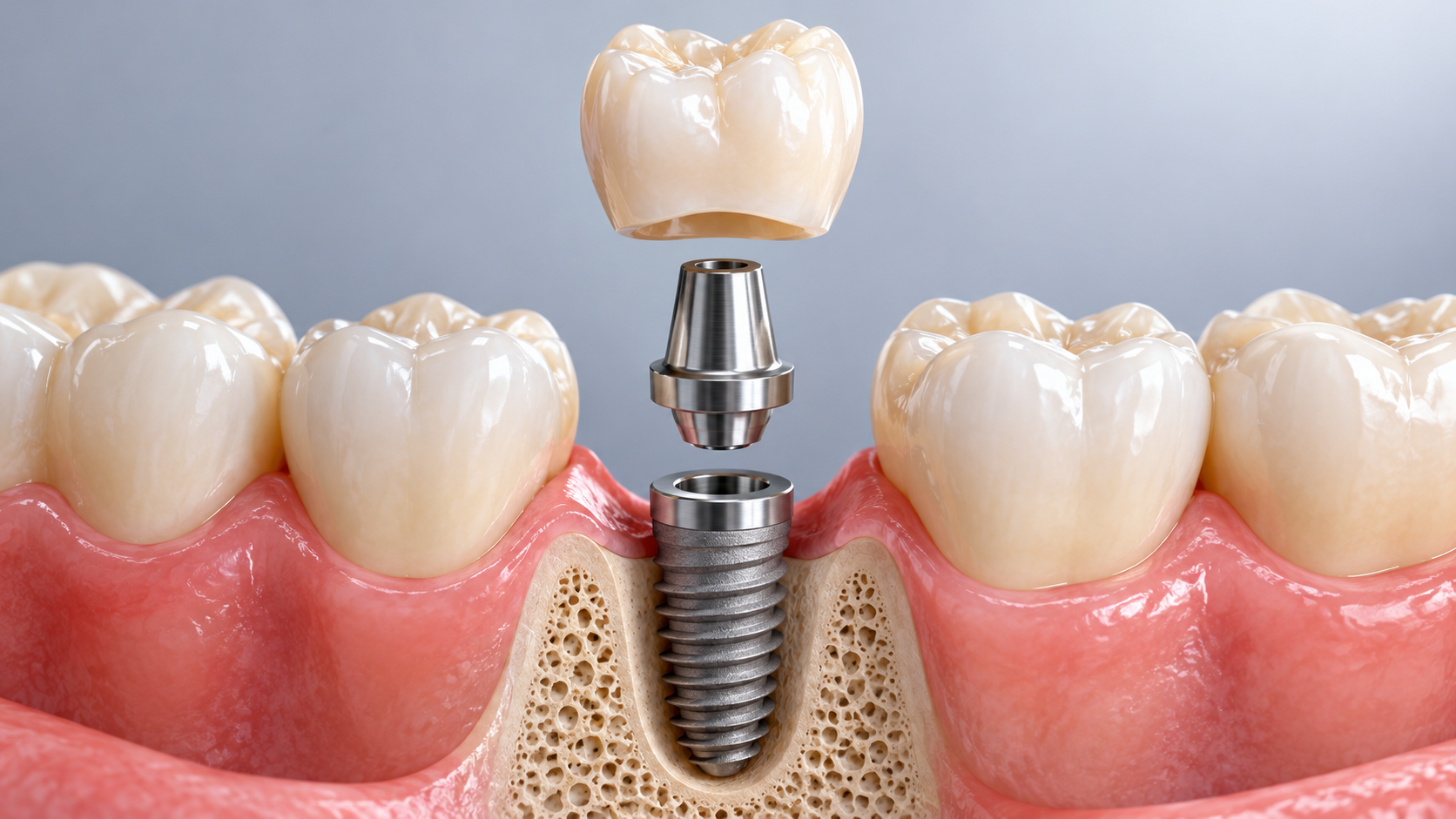
The implant sits within bone and provides support. An abutment connects it to the replacement tooth. A crown restores a single tooth, while a bridge joins several replacement teeth. Some designs combine components, so an actual system may look different from a simplified diagram.
A healing abutment is a temporary component that helps shape the soft tissue around access to the implant. It is neither the final crown nor necessarily a temporary tooth. Depending on the stage, the implant may be covered by gum or have a visible healing component. Do not adjust or tighten it yourself.
Replacing one tooth, several teeth or a whole arch
The number of missing teeth does not automatically determine the number of implants. Support positions, bone volume, loading, the span of the restoration and cleaning access all matter. A design using a set number of supports is not suitable for everyone.
A single implant crown can replace one tooth without necessarily preparing healthy neighbouring teeth. An implant bridge replaces a group of teeth on several supports. A removable overdenture attaches to special retaining components and is removed by the patient as instructed. A fixed prosthesis is removed by a professional when repair or servicing requires it.
| Option | Removal | Considerations |
|---|---|---|
| Crown or bridge | By a clinician when needed | Fit, bite and cleaning around supports |
| Fixed full-arch prosthesis | By a professional | Access beneath the prosthesis and servicing |
| Removable implant denture | By the patient as instructed | Separate cleaning and attachment wear |
Who may benefit, and what can limit treatment
Assessment covers gums, neighbouring teeth, bone, space for the crown and the smile line. General health, smoking, previous periodontitis, diabetes, tooth grinding and the ability to attend follow-up appointments also matter. These are individual risk considerations, not a checklist for diagnosing your own contraindications.
Tell the team about all medication, particularly drugs affecting blood clotting or bone metabolism, and previous radiotherapy to the head and neck. Do not stop treatment yourself. Active inflammation and poor plaque control need attention before restoration. Extra procedures or an alternative design may be appropriate. Implant timing in patients who are still growing needs separate consideration.
Planning starts with the replacement tooth
First, the team considers where the crown should sit, how it will meet the opposing teeth and where its margin should be. Tissue conditions and implant position must support that plan. An attractive material cannot by itself compensate for an awkward support position or inadequate cleaning access.
Examination may be supplemented by indicated imaging and impressions or a digital scan. Three-dimensional imaging is not automatically necessary for every patient at every stage. Ask what clinical question a test will answer and how the result could change the plan. If an implant was placed elsewhere, bring its identification record, system name and component details.
Temporary and definitive stages
Healing and integration with bone take time after implant placement, with considerable individual variation. An immediate temporary crown is possible only in suitable circumstances and may have loading restrictions. Receiving a temporary tooth does not mean healing is complete or that all foods can be chewed normally.
Once tissues are ready, impressions or scans are taken, components selected and trial fittings arranged. Fit, colour, neighbouring contacts, speech and bite are checked. A provisional restoration may help refine shape and assess loading. Readiness for the definitive restoration is a clinical decision, not simply a date in the calendar.
Screw or cement retention
A screw-retained restoration uses a screw connection and an access channel that is sealed afterwards. This can make servicing easier, although implant position affects where the channel emerges. Screws can loosen: seek professional attention rather than tightening them at home.
A cement-retained crown is secured to an abutment with dental cement. Residual cement, particularly near the gum margin, must be removed because it can contribute to inflammation. Clinical conditions, margin access, appearance and repair options guide selection. Neither method eliminates biological or mechanical complications.
Choose the material alongside the bite
Definitive restorations can use different ceramics, including zirconia, or metal-ceramic designs; longer prostheses may use other combinations. Temporary teeth are often polymer-based. The visible material and the supporting framework are not necessarily the same.
Colour and cost are only part of the decision. Thickness, tooth position, repair options, grinding and the opposing teeth matter too. Occlusion describes tooth contact as the jaws close and move. A high contact needs professional adjustment. An individually prescribed protective splint may be useful, but does not replace investigation of a problem.
Setting realistic expectations
Treatment aims to improve chewing, appearance and daily comfort. An artificial tooth does not fully reproduce natural tooth sensation, and the gum contour or visibility of a transition depends on the starting tissues. A large prosthesis may require adjustments to speech and cleaning habits.
An implant remaining in bone and a crown remaining serviceable are different outcomes. Even with stable support, chipping, wear, screw loosening or replacement of attachments may occur. Inflammation around an implant can lead to tissue loss. Discuss the outlook for your restoration and future maintenance costs, alongside the fitting appointment.
Alternatives and the written treatment plan
An implant is not obligatory if a natural tooth can be predictably retained. Options for a missing tooth may include a tooth-supported bridge, a removable denture or, in selected situations, monitoring the space. Every option has limitations, and personal preferences matter.
Request a written staged plan: assessment, tissue preparation, implant, healing abutment, abutment, temporary teeth and definitive restoration may be separate items. Clarify repair and follow-up arrangements. Visitors to Armenia should plan intervals between appointments, access to help after departure and transfer of implant information to their usual dentist. A universal cost or timetable cannot be given without assessment.
Daily cleaning and professional maintenance
Clean teeth and implant areas according to individual instructions. A dentist or hygienist should demonstrate suitable interdental brushes, floss or another method for reaching beneath a bridge. A water flosser may supplement cleaning, but does not automatically replace mechanical plaque removal. Before treatment ends, make sure you can reach the necessary areas.
Clean a removable prosthesis separately and remove it as recommended for its design. Do not dismantle a fixed restoration. Review intervals depend on risk; visits assess tissues, hygiene, the bite and attachment components. Never use household glue to replace a crown or file down a contact yourself.
Adaptation versus warning signs
Temporary soreness, swelling or slight bleeding may follow surgery; follow the postoperative instructions and watch the trend. A new crown can require brief adaptation to its shape, but increasing pain, movement or gum injury should not be accepted as normal.
Contact a dentist for bleeding around an implant, an unpleasant taste, discharge, new food trapping, a chip, clicking or a tooth that feels too high. Stop chewing on a loose restoration until it is assessed. Increasing swelling with fever needs urgent assessment; difficulty breathing or swallowing requires emergency care. You cannot reliably tell at home whether a crown, screw or the implant within bone is moving.
Save before your visit
Questions worth asking your dentist
- Why is a crown, bridge or removable prosthesis recommended, and what are the alternatives?
- Which components, temporary stages and maintenance visits does the plan include?
- How will I clean beneath the prosthesis, and who can help after I leave Armenia?
- Which material and retention method suit my bite, and why?
Sources
- Dental implants: patient advice and risks — FDA
- Dental implants in restorative dentistry — Cambridge University Hospitals
- Clinical guidance on screw and cement retention — ITI


