
 23 Tumanyan St, Yerevan
Key points in one minute
Before you arrange an assessment
- TMJ names the joint; TMD describes disorders involving joints, chewing muscles or both.
- Pain and loss of function matter more than a sound alone when deciding on care.
- Splints, exercises and imaging should address an identified need rather than be routine for everyone.
- Discuss alternatives before treatment that permanently changes the bite or involves surgery.
How the joint works
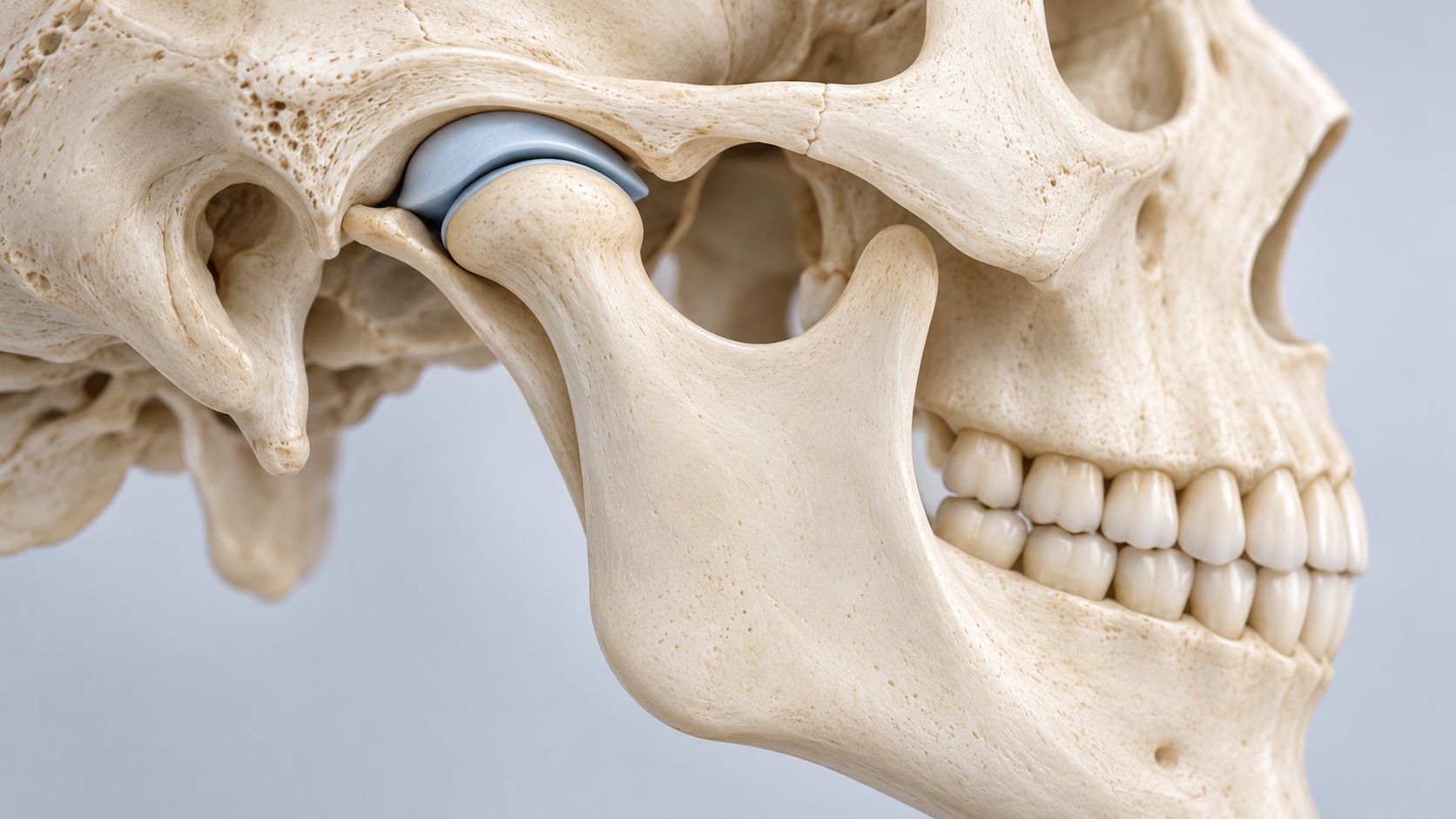
Your two temporomandibular joints sit in front of the ears and connect the lower jaw to the skull. As the mouth opens, the mandibular head rotates and slides. An articular disc lies between the bony surfaces, while muscles coordinate movement for speaking, chewing and yawning.
TMD is an umbrella term for conditions such as chewing-muscle pain, joint pain, disc-position problems and other joint changes. Several components can coexist. Two people with a similar symptom may therefore need different care. Gnathology describes a field of assessment rather than a single diagnosis.
Clicking, pain and restricted opening
Symptoms worth assessing include pain in front of the ear or in the chewing muscles, difficulty opening, stiffness and episodes of locking. Pain may worsen with chewing, spread across the face and accompany headaches. Ear noise or a blocked-ear sensation does not establish that the joint is responsible.
Painless clicking with comfortable, unrestricted movement is common and usually does not need treatment simply to silence it. A new painful click, reduced movement or recurrent locking calls for an examination. There is no inevitable progression from clicking to pain and then joint destruction.
| What you notice | What to do |
|---|---|
| Painless noise with free movement | Monitor it and mention it at a routine visit |
| Recurring chewing pain or stiffness | Arrange an in-person assessment |
| A locked jaw or inability to eat or drink | Seek urgent care |
| Visual disturbance with new severe temple pain | Seek urgent medical assessment rather than waiting for a dental visit |
Why the bite is not a complete explanation
A single cause often cannot be identified. Assessment considers injury, joint health, muscle loading, sleep, stress and other pain conditions. Clenching and grinding may aggravate symptoms without explaining every case. The influence of stress does not make pain imaginary: stress can affect muscle tension and pain processing.
An uneven bite or previous orthodontic treatment should not automatically be blamed for TMD. Current NIDCR information does not support that simple causal explanation. If changing the bite is proposed straight away, ask what diagnosis has been established and what separate problem the treatment would address.
What happens during diagnosis
The clinician asks where pain occurs, when it began, what makes it worse and whether there has been injury or locking. Examination assesses jaw movement, tender muscles and joints, teeth and surrounding tissues. Dental infection, ear disease and other causes of facial pain may need to be excluded. A click or an online test is not enough to diagnose TMD.
Imaging is useful when it answers a specific question that could change care. MRI may help assess the disc and soft tissues; CT may be needed for bony structures. Neither replaces examination or is necessary for every clicking joint. An imaging finding must be interpreted alongside symptoms rather than treated in isolation.
- Record when pain started, its location and its relationship to chewing.
- Note episodes of locking and changes in your usual mouth opening.
- Bring previous reports, a medicine list and details of any injury.
- Mention headaches, sleep problems and recent dental treatment.
Treatment and rehabilitation
Care aims to reduce pain and restore comfortable movement and chewing. Once the likely problem is identified, options include reducing aggravating loads, supported self-management and tailored rehabilitation. A professional should select exercises and hands-on techniques; forceful stretching or trying to relocate the jaw yourself can cause harm.
Persistent pain may require input from a dentist, an orofacial pain clinician, a physiotherapist and other professionals. Sleep support and psychological approaches to pain management can complement care where appropriate. Medicines require consideration of health conditions and contraindications; this article does not recommend a drug or dose.
Useful measures of progress include eating, talking and opening more comfortably, alongside pain frequency. Symptoms can fluctuate, and a brief flare does not necessarily mean fresh damage. Lack of improvement should prompt review of the diagnosis and plan. Neither a fixed recovery time nor a result can be guaranteed.
What a splint can and cannot do
A custom stabilisation splint can protect teeth and may form part of care for selected symptoms. It is not a universal cure: evidence for relief of TMD pain does not justify promising success to every patient. Its purpose, fit and review schedule should be clear.
A splint should not be intended to permanently change the bite without a separate justification. If it causes pain or a noticeable change in how your teeth meet, stop using it and contact the clinician. Do not reshape it yourself. Buying a guard without assessment cannot replace identifying the cause of pain.
Procedures and a second opinion
Injections, joint washing, arthroscopy and open surgery serve different purposes and require specific indications. A clicking sound alone does not justify them. Before a procedure, discuss likely benefit, risks, limitations and reversible alternatives. A second opinion is useful when the decision is complex.
Grinding teeth down, placing crowns or moving teeth orthodontically solely to treat TMD is not adequately supported as routine first-line care. Dental treatment may have independent indications, but these should be distinguished from a promise to resolve joint pain. Permanent changes need a particularly clear explanation.
Self-care limits and urgent warning signs
For mild discomfort, temporarily choose softer foods and avoid gum, habitual clenching and opening unusually wide. At rest, the teeth should not remain tightly pressed together. Comfortable warmth or cold can be applied through a cloth to protect the skin; stop if it worsens symptoms. These measures reduce strain rather than diagnose the condition.
Seek urgent help if the jaw is stuck open or closed, you cannot eat or drink, or symptoms follow an injury. Increasing swelling, fever, difficulty swallowing or difficulty breathing need urgent assessment. Do not attempt to relocate the joint yourself.
New severe temple pain with scalp tenderness or visual changes may have a different, serious cause. Do not assume it is TMD or wait for a routine visit. For persistent pain without these warning signs, arrange assessment in Yerevan and ask which clinician evaluates joint and muscle-related facial pain.
Save before your visit
Questions worth asking your dentist
- Which findings suggest joint pain and which suggest muscle pain?
- Would imaging help, and which decision would its result change?
- What is the purpose of a splint and when will its effect be reviewed?
- Which reversible options fit my situation and when should we reassess?
- Is there a separate reason to change my bite, or would a second opinion help?
Sources
- TMD (Temporomandibular Disorders) — NIDCR / NIH
- Temporomandibular disorder (TMD) — NHS
- Temporomandibular disorders (TMD) — Leeds Teaching Hospitals NHS Trust


