
 23 Tumanyan St, Yerevan
Key points in one minute
Before choosing treatment
- Awake clenching and sleep grinding need different approaches to monitoring.
- Tooth wear may reflect a combination of mechanical loading, acids and other factors.
- A fitted splint protects teeth but cannot guarantee that bruxism will stop.
- Permanent bite changes need a separate clinical rationale and discussion of alternatives.
Awake clenching and sleep grinding
During the day, people may hold their teeth together for long periods while working, driving or concentrating. Audible grinding is not essential. Sleep bruxism happens without conscious control: a partner may notice it, or damage and morning muscle fatigue may be the first clues.
Occasional clenching does not necessarily need treatment. The consequences matter: progressing wear, cracks, pain, or disruption to eating or sleep. A sound, a photograph or a headache alone cannot establish the risk. Equally, the absence of grinding noises does not rule out clenching.
Why teeth become worn
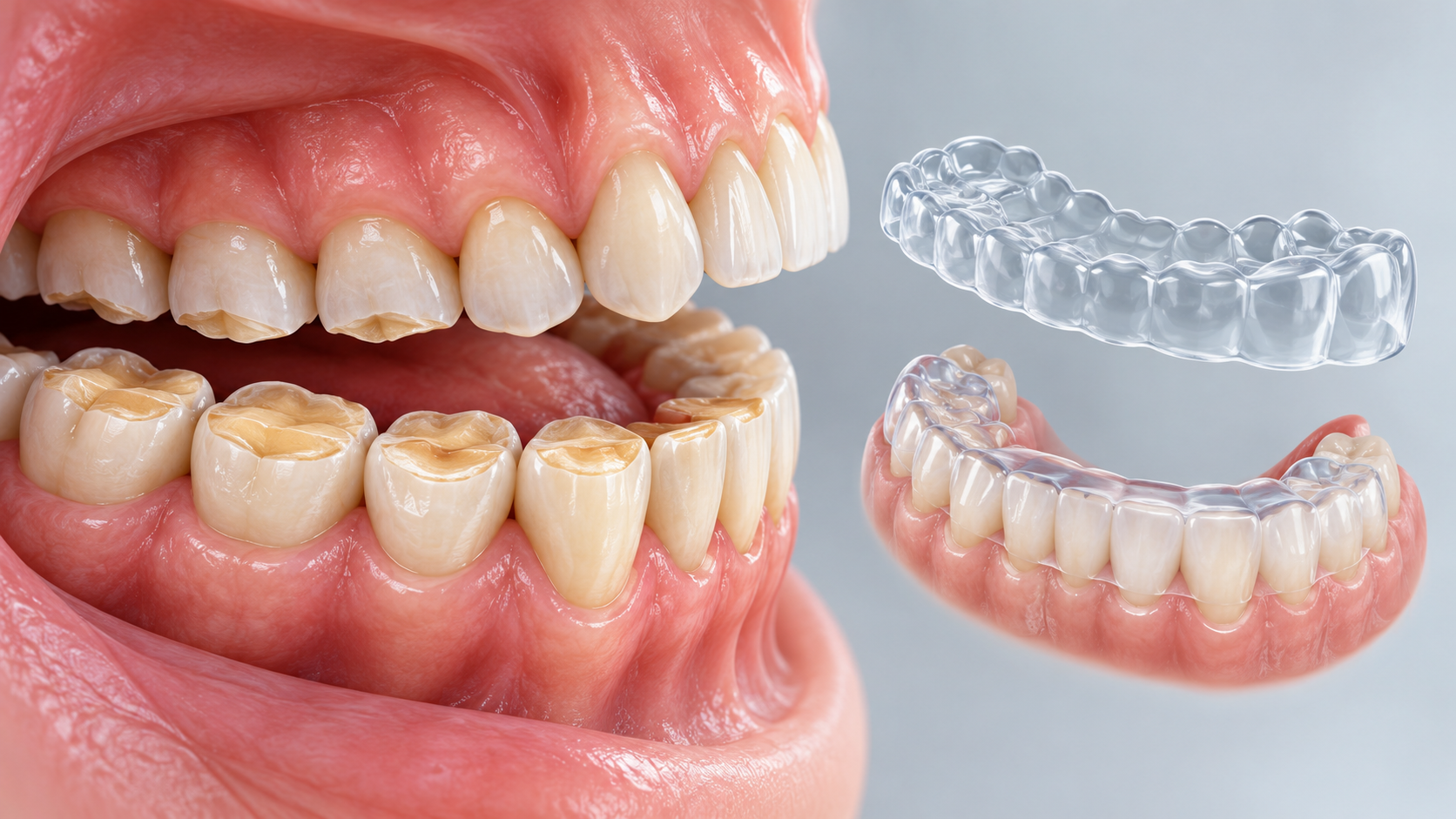
Teeth can change gradually with age, but substantial loss of shape, new chips and sensitivity deserve assessment. Bruxism is one possible contributor. Acids from drinks, food or reflux may soften the surface, allowing mechanical forces to accelerate tissue loss.
Wear marks represent accumulated change rather than simply what happened last night. A dentist considers age, diet, habits, existing restorations and older photographs. Longstanding flat areas alone are therefore not a sufficient reason to rush into crowns on every tooth.
Stress, sleep and medicines
Stress and anxiety can sustain daytime jaw tension. Sleep bruxism is also associated with sleep patterns, inherited factors, smoking, alcohol, caffeine and certain medicines. It is multifactorial, so there is rarely a single explanation that applies to everyone.
Tell your clinician about loud snoring, witnessed pauses in breathing, waking with choking or substantial daytime sleepiness. A sleep specialist may need to investigate. A protective dental splint does not treat sleep apnoea. Do not stop prescribed medicines yourself: discuss a possible association with the prescribing clinician.
What an assessment involves
The dentist asks about symptom timing, pain, chips, sensitivity, sleep, stress and medicines. They examine the teeth and fillings and assess the muscles and jaw movement. Further tests are selected where relevant; an X-ray on its own cannot confirm bruxism.
Baseline photographs, scans or models and a record of worn areas can support follow-up. Comparing them later helps establish whether tissue loss is continuing. Not everyone needs a sleep study: it is considered when a sleep disorder is suspected or the findings could change management. Jaw joint pain also needs its own assessment because bruxism and temporomandibular disorders are not the same diagnosis.
What a protective splint can achieve
A custom occlusal splint creates a barrier between the upper and lower teeth to help limit damage. The dentist selects its design, checks the contacts and explains when to wear it. Protection does not mean that all sleep-related muscle activity will stop or that every type of facial pain will improve.
A sports mouthguard or poorly fitting appliance is not a substitute for an individually assessed dental splint. Stop wearing it and contact the dentist if it causes pain, rubbing, altered tooth contact or difficulty removing it. Follow the cleaning and storage instructions and bring it to reviews; cracks or substantial wear require a check.
Repairing teeth and restoring bite height
Minor stable changes may need prevention and monitoring only. Where tooth strength, function or appearance is affected, options range from additive composite repairs to onlays and crowns when indicated. The aim is to preserve tissue and restore comfortable chewing, rather than simply cover visible wear.
Increasing bite height belongs within a comprehensive plan; it is not routine treatment for every person with bruxism. Planning considers available space, tooth and muscle health, a possible trial phase, chipping risks and ongoing care. Before irreversible work on several teeth, ask about alternatives and consider a second opinion. Crowns or bite changes cannot guarantee that bruxism will stop.
Treatment goals and limitations
Management often combines habit awareness, support for sleep, tooth protection and repair of specific damage. Mental health support may help when stress is significant; muscle pain may benefit from individually selected conservative measures. No single medicine reliably eliminates every form of bruxism.
Botulinum toxin treatment is not an obligatory first step. It should only be considered after diagnostic assessment and discussion of more conservative options. Effects are temporary and chewing weakness or other adverse effects can occur. Evidence for effectiveness and long-term safety in a particular indication remains limited. This article does not recommend a medicine, dose or procedure; an individual clinical assessment is essential.
| Situation | Possible approach |
|---|---|
| Stable wear without symptoms | Prevention and comparison at follow-up visits |
| Continuing chips or wear | Assess risk factors and individual tooth protection |
| Loss of function or substantial tooth tissue | Plan repair and discuss alternatives |
| Snoring and breathing pauses | Specialist assessment of sleep and breathing |
Practical steps at home
When you notice daytime tension, gently separate your teeth and let your jaw relax without forcing a position. Reminders during work can help you recognise the habit. A regular sleep schedule and reducing evening caffeine and alcohol may help, but do not replace assessment when teeth are being damaged.
Avoid chewing gum and very hard foods when your jaw is sore. Do not file teeth, attempt to change your bite yourself or perform forceful exercises through pain. Note when symptoms occur, how you sleep and what a partner notices. These observations are more useful than trying to diagnose bruxism from the appearance of your teeth.
Routine review or faster assessment?
Small, stable wear marks without pain can be discussed at a routine visit. New chips, sensitivity, morning muscle fatigue or reports of sleep grinding justify an appointment before substantial damage develops. Review intervals should reflect the individual risk rather than a universal timetable.
Severe pain, a broken tooth, or inability to open your mouth or eat normally needs prompt assessment. Facial swelling with fever, or difficulty breathing or swallowing, should not be attributed to bruxism: seek emergency medical care. Follow-up considers both symptoms and changes to teeth, splints and restorations.
Save before your visit
Questions worth asking your dentist
- Does the wear appear active or are these older marks?
- What other causes of tooth wear need assessment?
- What is the splint intended to achieve and how will its fit be checked?
- Should my sleep and breathing be assessed?
- Could monitoring or conservative repairs be appropriate first?
Sources
- Bruxism — NIDCR
- Teeth grinding (bruxism) — NHS
- Temporomandibular disorders — NIDCR
- Tooth wear: prevention and monitoring — Department of Health and Social Care
- Occlusal splints versus botulinum toxin for adult sleep bruxism: systematic review — Cranio / PubMed


