
 23 Tumanyan St, Yerevan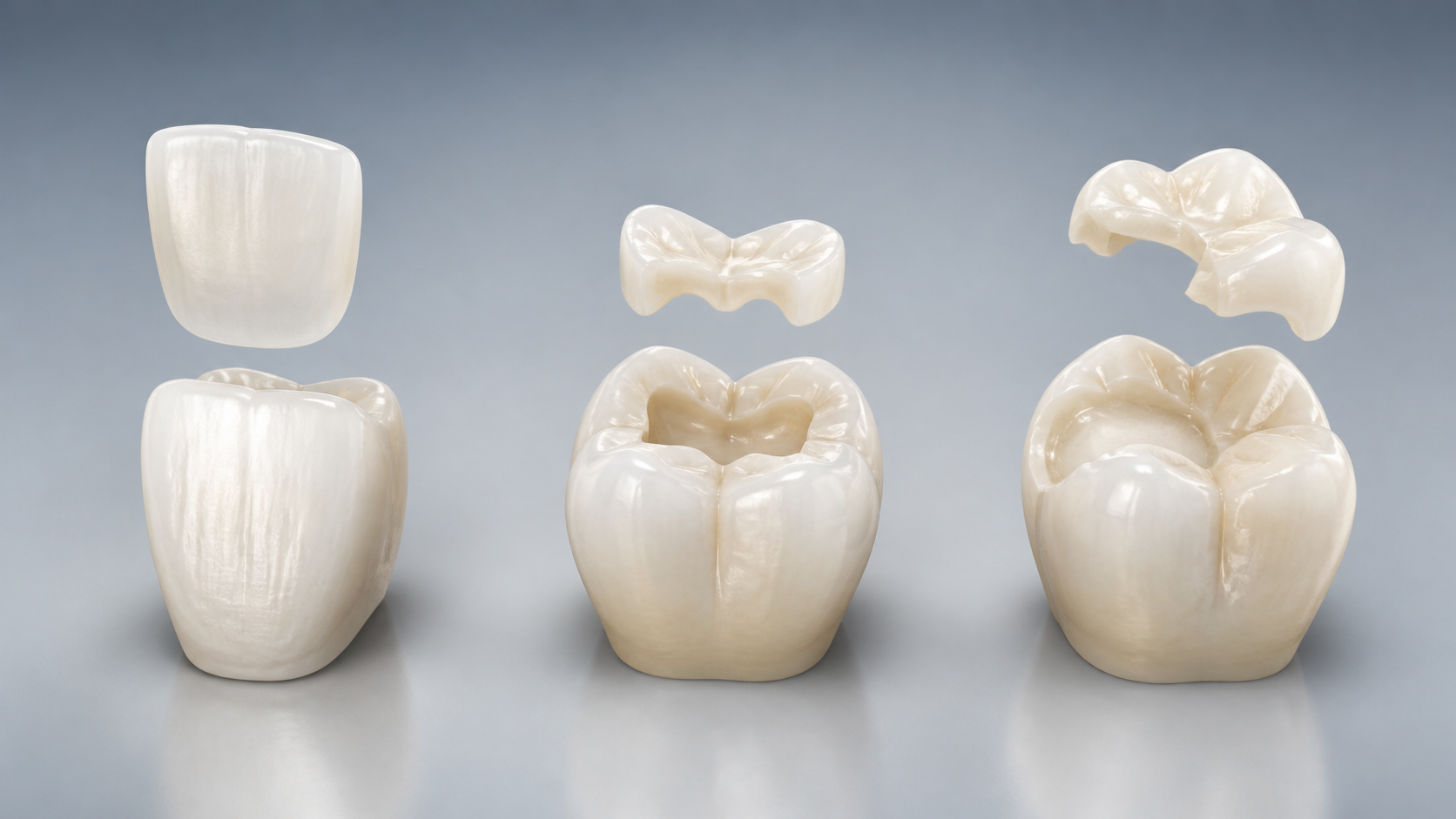
Key points in one minute
The choice is based on remaining tooth structure, bite and treatment goal—not a material name alone
- A veneer is a thin facing on the visible surface of a front tooth; it may improve colour, minor chips or shape, but it does not treat decay or gum inflammation.
- An inlay restores a prepared space within a chewing surface, while an onlay also covers one or more weakened cusps.
- Ceramic and composite materials have different properties; selection depends on the defect, bite, adjacent teeth, moisture control and treatment plan.
- Pain on biting, swelling, a loose restoration, a chip or a crack warrants an in-person dental assessment rather than self-repair.
The short answer: three restorations, three different roles
A veneer is usually placed on the outward, visible surface of a front tooth. After diagnosis, it may be considered to alter colour, shape or a small chipped edge. Some veneers require a small amount of tooth preparation, but the amount is never identical for every person.
Inlays and onlays are indirect restorations: they are made outside the mouth, in a laboratory or through a digital workflow, then fitted to a prepared tooth. An inlay replaces a defect within the chewing surface. An onlay extends over one or more cusps and may be used when those areas need protection. Neither is simply another name for a crown, which covers far more of the tooth.
| Restoration | Usual coverage | Possible purpose |
|---|---|---|
| Veneer | Front surface of a front tooth | Aesthetic adjustment of colour, form or a minor chip |
| Inlay | Space within a chewing surface | Rebuilding lost tooth structure where enough walls remain |
| Onlay | Space plus one or more cusps | Rebuilding and protecting weakened chewing areas |
Who may benefit—and why a photograph cannot make the decision
The same visible defect can have different causes: decay, a leaking old filling, a crack, tooth wear, trauma, erosion or tooth position. A photograph and an online recommendation cannot determine whether a veneer, inlay, onlay, filling, orthodontic care or another option is appropriate.
At a consultation, the dentist assesses the remaining tooth structure, gum margins, pulp and roots, contacts with opposing teeth, clenching or grinding, hygiene and expectations about colour. Active decay, gum inflammation, significant grinding or an unstable bite may need treatment or stabilisation first. That is not a rejection of aesthetics; it makes a plan safer.
- Mention pain, sensitivity, chips and clenching or grinding.
- Bring previous radiographs and treatment information if available.
- Ask how much tooth structure each option preserves and what alternatives exist.
- Do not agree to irreversible preparation until the aim, limits and aftercare are clear.
Materials, bonding and bite: why there is no universal answer
Indirect restorations can be made from different ceramics, composite materials and, in selected situations, metal alloys. The American Dental Association notes that their properties, fabrication methods and clinical indications differ. A tooth-coloured appearance alone does not prove that a particular ceramic is suitable for a particular tooth.
How the restoration is fixed also matters. Depending on the material and clinical situation, it may be conventionally cemented or adhesively bonded. This requires clean, dry conditions and sufficient tooth structure. With high bite forces, grinding, extensive loss of structure or unreliable moisture control, a dentist may recommend a different type of restoration. No option has the same expected lifespan for everyone.
What treatment commonly involves
Care starts with a conversation and examination. The dentist establishes a diagnosis, may use radiographs, photographs, models or a digital scan, and discusses alternatives. The goal—restoring function, closing a defect, changing shape or colour—is agreed separately from what the method cannot guarantee.
After tooth preparation, temporary protection may be needed. The indirect restoration is made from an impression or digital scan, tried in and fitted. Contacts and bite are checked after placement. The number of visits depends on the workflow, the amount of work and the condition of the tooth, so a universal timeline would be misleading.
- Diagnosis and discussion of alternatives.
- Agreement on form, shade and required preparation.
- Tooth preparation and, where needed, a temporary restoration.
- Fabrication, try-in, fitting and bite check.
- Review appointments and individual home-care advice.
Aftercare, alternatives and when not to wait
Care for a veneer, inlay or onlay includes gentle daily hygiene: brush twice daily, clean between teeth with an appropriate method, and attend reviews as advised. Do not test a restoration by biting ice, packaging, nuts or hard objects. If grinding is suspected, a protective appliance should be selected after assessment rather than bought as a universal solution.
Depending on the defect, alternatives can include observation, professional cleaning, a direct composite restoration, whitening where appropriate, a crown, orthodontic care or another treatment. Seek urgent in-person help for rapidly increasing swelling, severe pain, trauma, pus, fever with worsening condition, or difficulty swallowing or breathing. If a restoration chips or comes off, keep the fragment if it is safe to do so and contact a dentist.
Save before your visit
Questions worth asking your dentist
- What is causing the defect in my tooth, and which restoration options are appropriate?
- How much healthy tooth structure can be preserved with each option?
- How will my bite, grinding and gum health affect the outlook?
- Which symptoms after placement need an unscheduled appointment?
Sources
- Materials for Indirect Restorations — American Dental Association
- Glossary of Dental Terms — American Dental Association
- Dental treatments — NHS


