
 23 Tumanyan St, Yerevan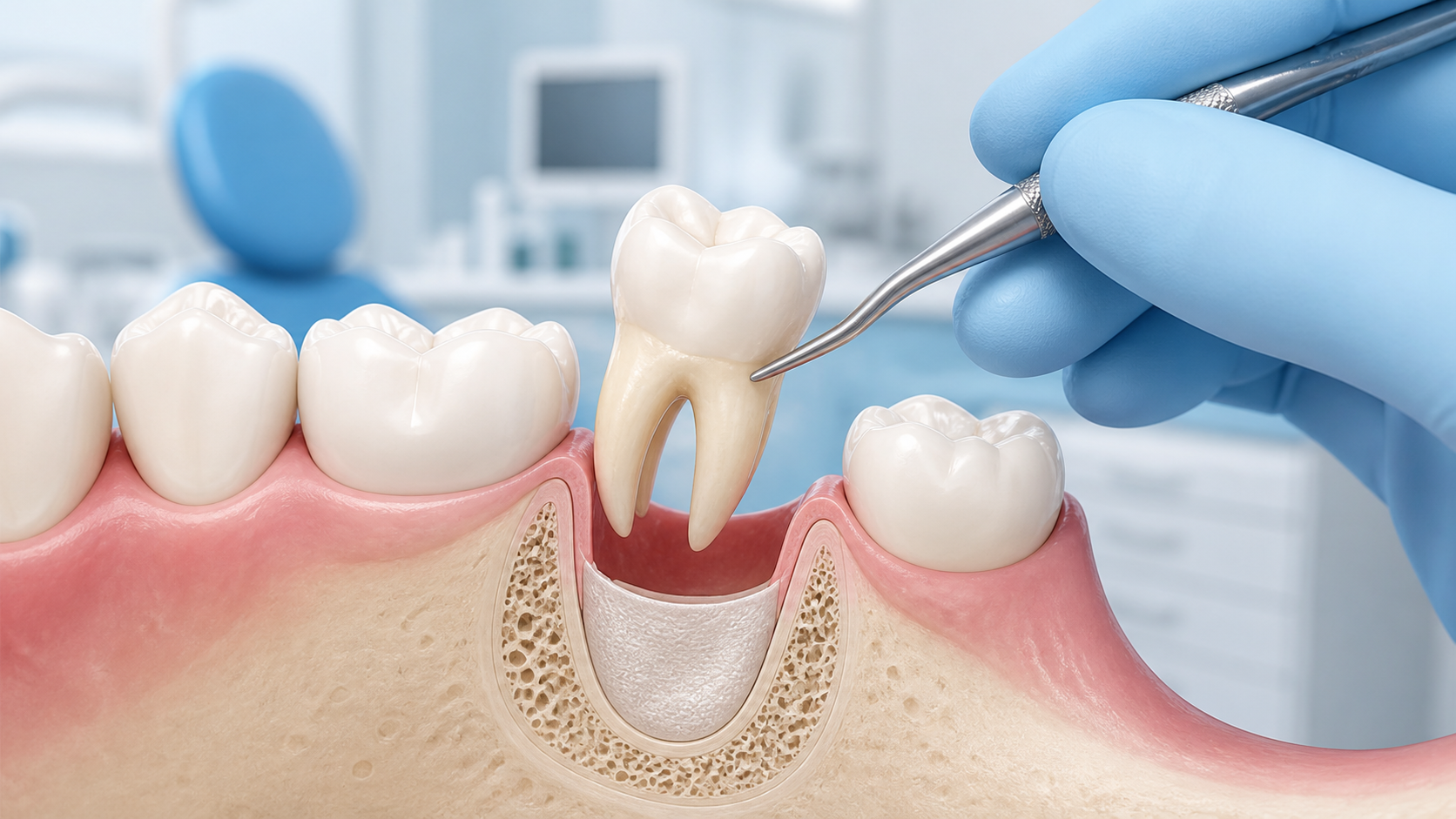
Key points in one minute
Extraction is considered when the benefit of retaining the tooth is less than the risk or when the tooth cannot be restored predictably
- The cause of pain, mobility or destruction cannot be determined from a photograph: the decision is made after examination and, if necessary, an image.
- Simple and surgical extractions differ in access to the tooth and complexity, but both require an individual assessment of contraindications and a postoperative care plan.
- Pain and mild swelling may occur in the early days, but increasing pain, fever, increasing swelling, difficulty swallowing or breathing require prompt medical evaluation.
- After extraction, it is important to discuss socket preservation and tooth replacement options; the need and timing depend on the site, bite and condition of the bone tissue.
When is removal really considered?
Extraction may be discussed when there is irreversible decay of the crown or root, a fracture with a poor prognosis, severe inflammation around the tooth, severe mobility due to periodontal disease, a problem with the wisdom tooth, or when the tooth interferes with a safe orthodontic and surgical plan. The mere presence of caries, pain or an old filling does not mean that the tooth needs to be removed: in many cases, the possibility of restoration, root canal treatment or observation is first assessed.
The doctor will compare the symptoms, examination, condition of the gums, adjacent teeth and imaging data if she changes her decision. It is important to disclose chronic illnesses, pregnancy, allergies, medications and agents that affect blood clotting or immunity. Do not stop or start medications on your own before the procedure: safe preparation is determined together with your treating specialists.
- Is it possible to save a tooth and what is the prognosis for each option?
- Is a photo necessary and what question will it answer?
- What will change if treatment is delayed?
- How will the function be restored after deletion?
Preparation and diagnosis: why images and medical history are important
Before the procedure, complaints, past treatments, medications, reactions to anesthesia and general well-being are clarified. The examination helps to understand whether the tooth is accessible, whether there is swelling, restriction of mouth opening and signs of infection. X-ray examination is not prescribed automatically, but when it is necessary to evaluate the roots, the proximity of important anatomical structures, bone or the condition of neighboring teeth. It complements, but does not replace, an inspection.
When undergoing a planned removal, ask for an explanation of whether the procedure will be simple or surgical, what restrictions are possible after it, and who to contact if your health changes. If you are coming to Yerevan for a short period of time, discuss control contact in advance and the possibility of face-to-face assistance after departure. For acute symptoms, the plan may change: airway safety and infection spread are more important than a convenient schedule.
| Region | Why is this necessary? | What can change the plan |
|---|---|---|
| Tooth and roots | Understand the extent of destruction and access | Simple or surgical removal |
| Diagnostic imaging when indicated | Assess roots, bone and adjacent structures | Tactics, referral to a specialist or the need to save the socket |
| General health and medications | Reduce the risk of complications and unwanted interactions | Procedure time and agreement with the attending physician |
| Future location of the tooth | Assess function and bite | Discussion of prosthesis, bridge or implantation after healing |
How does the removal proceed: simple and surgical?
Typically, the doctor will numb the area with local anesthesia and check that there is no sensation. In a simple extraction, the tooth is carefully loosened with special tools and removed from the socket. This description does not mean that everyone feels the same: pressure is possible, but pain or severe discomfort should be reported to the doctor immediately. Don't try to judge complexity by the appearance of the tooth - it is often related to the roots and position in the bone.
If the tooth is decayed, unusually positioned, has complex roots, or access is limited, surgical access may be required: careful opening of the tissue, separation of the tooth into pieces, or another technique. Once removed, control bleeding, clean the area, and place sutures if indicated. Preserving socket volume with material is sometimes discussed, but this is not a required step for every person and does not replace a subsequent restoration plan.
Healing of the socket and home restrictions
Immediately after removal, a blood clot forms in the socket: it protects the tissue and participates in healing. In the first hours, follow the doctor's instructions for biting the gauze pad, eating, drinking and hygiene. Do not touch the socket with your fingers or objects, gargle vigorously, or apply strong negative pressure in your mouth, such as through a straw. Such actions may disrupt the clot. Specific timing and restrictions depend on the complexity of the procedure and the condition of the tissue.
In the first days, pain, slight swelling and limited mouth opening are possible; usually they should gradually decrease. Choose soft foods at a comfortable temperature, drink water and brush the rest of your teeth carefully, without injuring the area of intervention. Smoking and alcohol can impair healing, so discuss your abstinence period with your doctor. Do not apply aggressive substances to the socket and do not use medications or antibiotics without prescription.
- Keep written recommendations and a contact number after the procedure.
- Find out when you can return to normal eating, sports and work in your case.
- Ask if sutures need to be removed and when to assess healing.
- Discuss when you can plan to replace a missing tooth.
Risks, dry socket and signs when you need a doctor
Like any surgery, extractions have risks: continued bleeding, infection, damage to an adjacent tooth or restoration, delayed healing, and other complications associated with the extraction area. Dry socket is commonly referred to as a painful condition in which a blood clot does not persist or breaks down too early; the pain often intensifies after a few days and can radiate to neighboring areas. It is not a self-diagnosed condition and requires contact with a physician for evaluation.
Contact the clinic without delay if the pain increases rather than gradually improves, bleeding continues or recurs, noticeable purulent discharge, high fever, increasing swelling or foul odor along with worsening of the condition. Rapidly growing swelling of the face or neck, difficulty opening the mouth with general deterioration, difficulty swallowing or breathing is a reason to seek emergency medical help according to local rules, and not wait for a response to the message.
Alternatives and plan after removal
Before extraction, it is appropriate to ask about tooth preservation options: restoration, root canal treatment, endodontic retreatment, periodontal treatment, or observation—if clinically appropriate. Each option has limitations regarding the volume of tissue preserved, fractures, infection, hygiene, and prognosis. A second opinion may be reasonable if the planned case is complex or the explanation of the options remains unclear.
After removal, not everyone needs the same replacement method. Possible observation, removable denture, bridge or implantation; the choice depends on the area, number of missing teeth, bite, gum and bone conditions, and the overall medical context. During your consultation, ask to separate the mandatory next step and decisions that can be made after healing. This helps not to promise yourself a result before a full-fledged plan.
Save before your visit
Questions worth asking your dentist
- What diagnosis and what data confirm the need for removal?
- Is there a realistic option for saving my tooth and how does the prognosis differ?
- What home restrictions and signs of complications are relevant for me?
- When and in what way should restoration of a missing tooth be discussed?
Sources
- Oral health — World Health Organization
- Emergency tooth extraction and aftercare — MSD Manuals
- Wisdom tooth removal — NHS


