
 23 Tumanyan St, Yerevan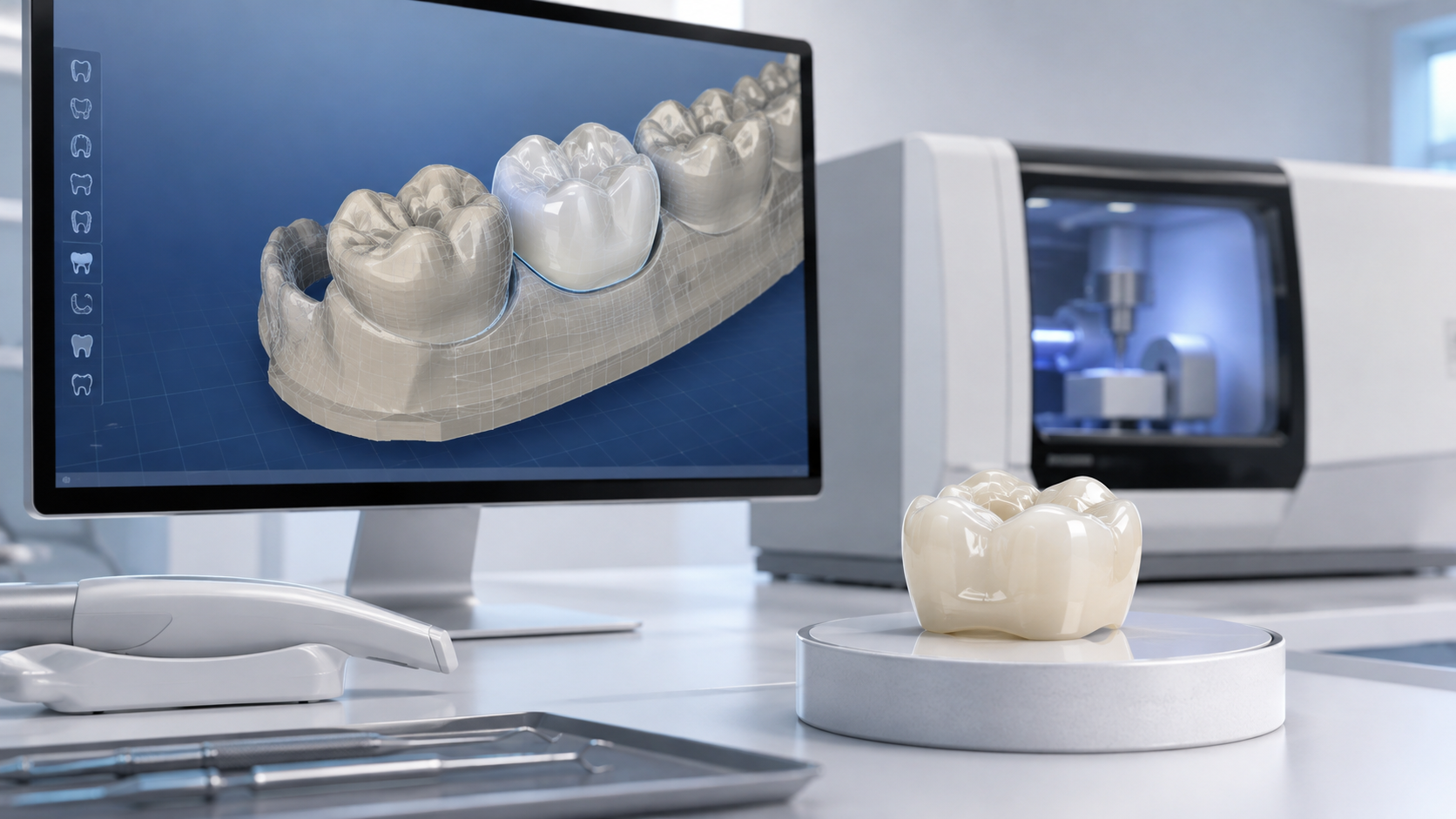
Key points in one minute
The key point: a digital workflow helps the clinician and laboratory share data, but the outcome still depends on diagnosis, design, material, manufacture and a clinical try-in
- CAD/CAM means computer-aided design and manufacturing. A digital scan can replace part of a conventional impression process but cannot replace clinical assessment.
- The pathway commonly includes assessment, any necessary preparation, scanning, virtual design, manufacture, try-in and fitting or adjustment.
- Digital data can be precise, yet fit is also affected by preparation margins, moisture, movement, bite, material and laboratory quality control.
- There is no universally better digital or conventional method; a clinician may recommend a conventional or mixed workflow in a complex situation.
What ‘digital prosthetics’ means
In a digital pathway, an intraoral scanner creates a three-dimensional model of teeth and soft tissues. A clinician and dental technician then use CAD software to plan the restoration's form, contacts with neighbouring teeth and bite. At the CAM stage, the restoration may be milled from a material block, or technical components may be printed or manufactured in a laboratory from the digital file. For a patient, this is mainly a different way to capture, share and process data, not automatic treatment.
The approach may be used for more than a single crown: it can form part of planning a veneer, inlay, bridge, temporary restoration or implant restoration. The amount of work, gum condition, missing teeth, access for scanning and bite are all individual. A generic claim about a ‘digital crown in one visit’ therefore cannot tell you the right timetable or protocol for your own situation.
| Stage | What happens | Why checking matters |
|---|---|---|
| Assessment and plan | Teeth, gums, bite and, when needed, imaging are assessed | A restoration cannot be chosen from a scan or photo alone |
| Scanning | A digital model of arches and the treatment area is captured | Margins and bite registration need to be clear |
| CAD design | Shape, thickness and contacts are planned | The virtual model is checked against clinical information |
| CAM manufacture | The restoration is milled, a technical part printed or the case sent to a lab | Material, processing and quality control matter |
| Try-in and fitting | Fit, contacts, shade and comfort are checked | The restoration may need adjustment before final fitting |
From scan to try-in: the treatment pathway
First, the clinician identifies the task: preserve a tooth with a restoration, protect it with a crown, replace a missing tooth with a bridge or plan an implant restoration. Decay, gum inflammation, root canal treatment or healing may need attention before prosthetics. A scan does not make these steps unnecessary.
During scanning, a small camera records tooth surfaces in sequence. The clinician needs to manage moisture, make the restoration margin visible and record the bite. The technician receives a file and a clinical prescription: a digital model alone does not explain the aim, shade, neighbouring teeth or bite contacts. Before final fitting, the clinician assesses the restoration in the mouth under real conditions.
Accuracy, materials and laboratory work
Digital does not mean error-free. Evidence supports digital workflows in a range of prosthodontic tasks, especially some single restorations and implant work, but data quality and the clinical case matter. Accuracy can be affected by tooth preparation, the depth and access of the margin, saliva or bleeding in the field, span of the restoration, movement, equipment settings and team experience.
Materials are selected for location, thickness, load, aesthetics, opposing teeth and hygiene rather than for the name of the technology. Different ceramics and other materials have different properties and indications. Milling and printing are not interchangeable either: a printed model, temporary restoration and definitive restoration may each require a different material and process. Ask which material is proposed and why.
- Ask whether the restoration is temporary or definitive, and whether it is tooth- or implant-supported.
- Ask which information is needed beyond a scan: imaging, photographs, bite records or a diagnostic model.
- Do not judge quality by speed or the CAD/CAM label alone.
- After fitting, report a bite that feels high, pain, roughness or food trapping beside the restoration.
Limits, alternatives and realistic expectations
A digital workflow can reduce some manual steps and make data transfer to a laboratory easier. It is not necessarily faster for every restoration and does not always reduce visits. Complex bridges, implant work, inflamed gums, temporary restorations or adjustments can require more time. Systematic reviews find that evidence and results vary by task, so a digital pathway should not be described as guaranteed to outperform a conventional one in every case.
A conventional impression, a mixed analogue-digital pathway or another restoration type may be reasonable alternatives. The choice follows diagnosis, not a wish to use the newest equipment. If treatment is offered without an examination, without a material explanation or without a bite check, an in-person second opinion can be helpful.
| Situation | Practical step | Why |
|---|---|---|
| Small contact adjustments are needed at a try-in | Discuss them before final fitting | Final fit is checked in the mouth |
| The bite feels wrong or pain appears after fitting | Contact the clinic; do not grind the restoration yourself | The bite and restoration margin need assessment |
| Swelling, severe pain, fever or injury develops | Seek prompt in-person dental assessment; seek urgent care for severe symptoms | The cause may not be the digital workflow |
| You want to choose a material from advertising or photos | Ask for indications and alternatives | Material and design depend on clinical load |
Useful questions for a consultation
A consultation is the place to discuss the clinical task rather than demand a particular device. Ask what is being restored — function, protection of a weakened tooth, appearance, or several aims — and which steps are necessary before scanning. Ask about the restoration and material, whether a temporary is needed, how fit will be checked and what happens if adjustment is required.
This article is for information and cannot replace diagnosis. Do not self-diagnose from a description of digital technology if you have pain, swelling, injury, tooth mobility, bleeding gums or a changed bite. An in-person dental assessment can determine urgency and the safer treatment pathway.
Save before your visit
Questions worth asking your dentist
- What task would a crown, bridge or another restoration solve in my case?
- Would a digital, conventional or mixed impression be appropriate, and why?
- Which material is proposed, what are its limits and how should I care for it?
- How many visits may be needed, and how will fit and bite be checked?
Sources
- Digital dentistry policy statement — FDI World Dental Federation
- The Complete Digital Workflow in Fixed Prosthodontics Updated: A Systematic Review — PubMed
- Time efficiency and cost analysis between digital and conventional workflows for fixed dental prostheses — PubMed
- Law of the Republic of Armenia on medical care and services for the population — ARLIS


