
 23 Tumanyan St, Yerevan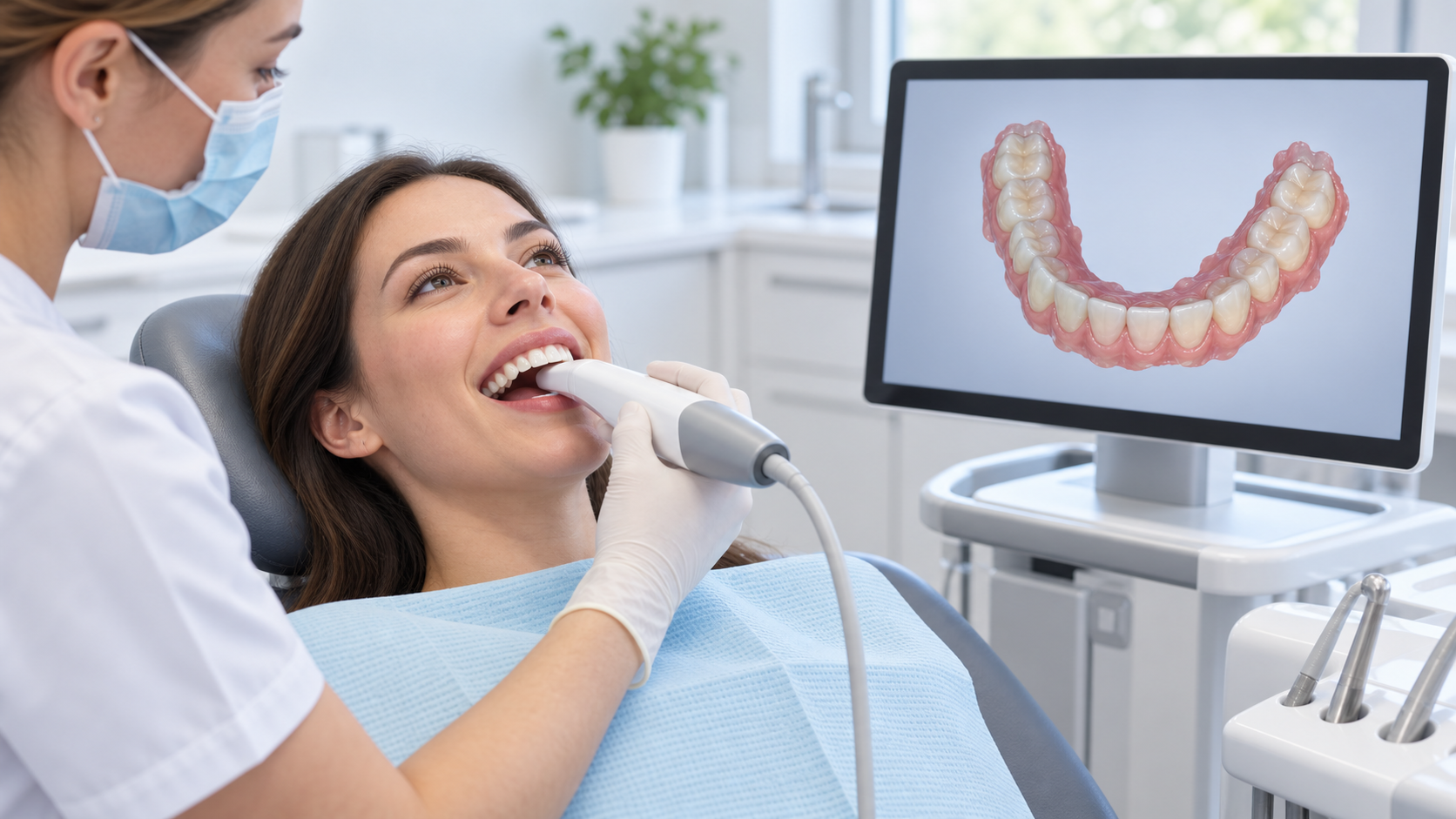
Key points in one minute
Key point: digital data can clarify a conversation about a plan, but cannot decide treatment on its own
- An intraoral scanner records visible teeth and some soft tissues as a digital model; it does not show roots, bone or the cause of pain.
- A photo protocol relates planning to the face, lips and smile, although lighting, angle and expression affect what is perceived.
- Digital Smile Design and a virtual wax-up are discussion tools; an in-mouth mock-up and examination are needed to assess function and comfort.
- Accuracy depends on the area, moisture, movement, scanning protocol and clinical question, so other methods may be needed for complex situations.
- Before files are shared, ask where data are stored, who can access them and how the plan will be agreed.
What digital smile diagnostics includes
It usually brings together several complementary sources of information. An intraoral scanner captures the surface of teeth and gums in sequence and builds a three-dimensional model. A photo protocol records the face, lips, smile and teeth in standard views. The dentist considers these alongside your history, examination, gums, bite and, where indicated, radiographic images.
Digital Smile Design (DSD) and a virtual wax-up are names for visual planning of proposed tooth shapes or restorations. Their role is not to draw a finished smile, but to make a discussion more concrete: available space, proportions and possible compromises. A proposed design may be transferred to a temporary in-mouth mock-up so speech, bite, cleaning and comfort can be checked in person.
| Tool | What it may contribute | What it does not replace |
|---|---|---|
| 3D scan | A digital form of the arches, contacts and design reference | Examination or assessment of roots and tissues below the gumline |
| Photo protocol | Facial, lip and smile context for communication | A function check or health assessment |
| Virtual wax-up / DSD | Possible forms and volume for discussion | A guaranteed aesthetic or treatment result |
| Mock-up | An in-person trial of a proposed form | An individual plan without diagnosis |
How the process works and what it is for
A consultation begins with your concerns, expectations, previous treatment and health history. The dentist then examines teeth, gums and bite. If digital information can genuinely support planning, scanning and photographs may follow. The process should not be painful, but tell the team beforehand if you have a marked gag reflex, limited mouth opening or a tender area.
The dentist can then explain which findings are supported, what remains uncertain and which options may be considered. A digital model is useful for communication with a dental laboratory and for comparing stages, but it does not make every procedure appropriate. Pain, inflammation, tooth mobility or a possible crack require attention to the cause before aesthetic design.
- What clinical question makes a scan useful in my case?
- What can the model show, and what needs an examination or an image?
- Will there be a mock-up, and what can be changed after trying it?
- Which data are retained and can I receive a copy?
Accuracy, limitations and realistic expectations
‘Digital’ does not mean the same accuracy in every situation. Saliva, movement, reflective surfaces, access to back teeth, the scanning path and operator experience can affect a model. Systematic reviews report acceptable results for a range of partial applications, while noting limits for full arches and the need for further clinical evidence. Mobile soft tissues in toothless areas can also be captured less accurately than attached tissue.
Screen colour, smile-line symmetry and a virtual tooth shape are discussion references, not a medical conclusion. Shade is affected by lighting and settings; the bite changes with jaw movement; gums may need separate care before restorations. A sound plan explains risks, alternatives, treatment sequence and follow-up criteria as well as showing a visual proposal.
Preparing for a consultation in Yerevan
No special home preparation is usually needed beyond normal oral hygiene. Bring previous images, reports, models or photographs if you have them, and mention pregnancy, long-term conditions, allergies and regular medicines. If you are travelling to Yerevan from another city or country, ask in advance about the number of visits, how data may be discussed remotely and how in-person follow-up will be arranged.
Ask which decisions depend on examination, whether decay or gum inflammation needs care before an aesthetic stage, who is responsible for making a restoration and which timings are only estimates. In Armenia, medical care is provided by licensed organisations and individual entrepreneurs; technology does not remove your right to an understandable explanation and a shared decision.
- What treatment and no-treatment options are available?
- What could change the preliminary design after examination and mock-up?
- How will fit, contacts, bite and gum health be checked?
- When and how should I contact the team outside a planned visit?
When not to wait for routine visual planning
Digital planning is not urgent care. A rapidly increasing swelling of the face, mouth or neck, fever with significant illness, or trouble breathing or swallowing require urgent in-person medical care through the local pathway. Do not try to identify the cause of pain from a scan or photograph, and do not start treatment from this article.
When there are no urgent signs, a consultation is a chance to discuss goals, limits and available information calmly. A dentist can decide whether a digital impression is useful, which additional investigations are justified and whether a trial mock-up is appropriate. This is educational information, not remote diagnosis or a personal prescription.
Save before your visit
Questions worth asking your dentist
- Can a digital impression provide a diagnosis?
- How does a virtual wax-up differ from a mock-up?
- Are X-rays needed when there is already a 3D scan?
- Why can a screen design change after an examination?
Sources
- Digital Dentistry — FDI World Dental Federation
- Validation of Digital Impressions’ Accuracy Obtained Using Intraoral and Extraoral Scanners: A Systematic Review — PubMed
- Diagnostic Applications of Intraoral Scanners: A Systematic Review — PubMed Central
- Medical care licensing application — Republic of Armenia e-Government


