
 23 Tumanyan St, Yerevan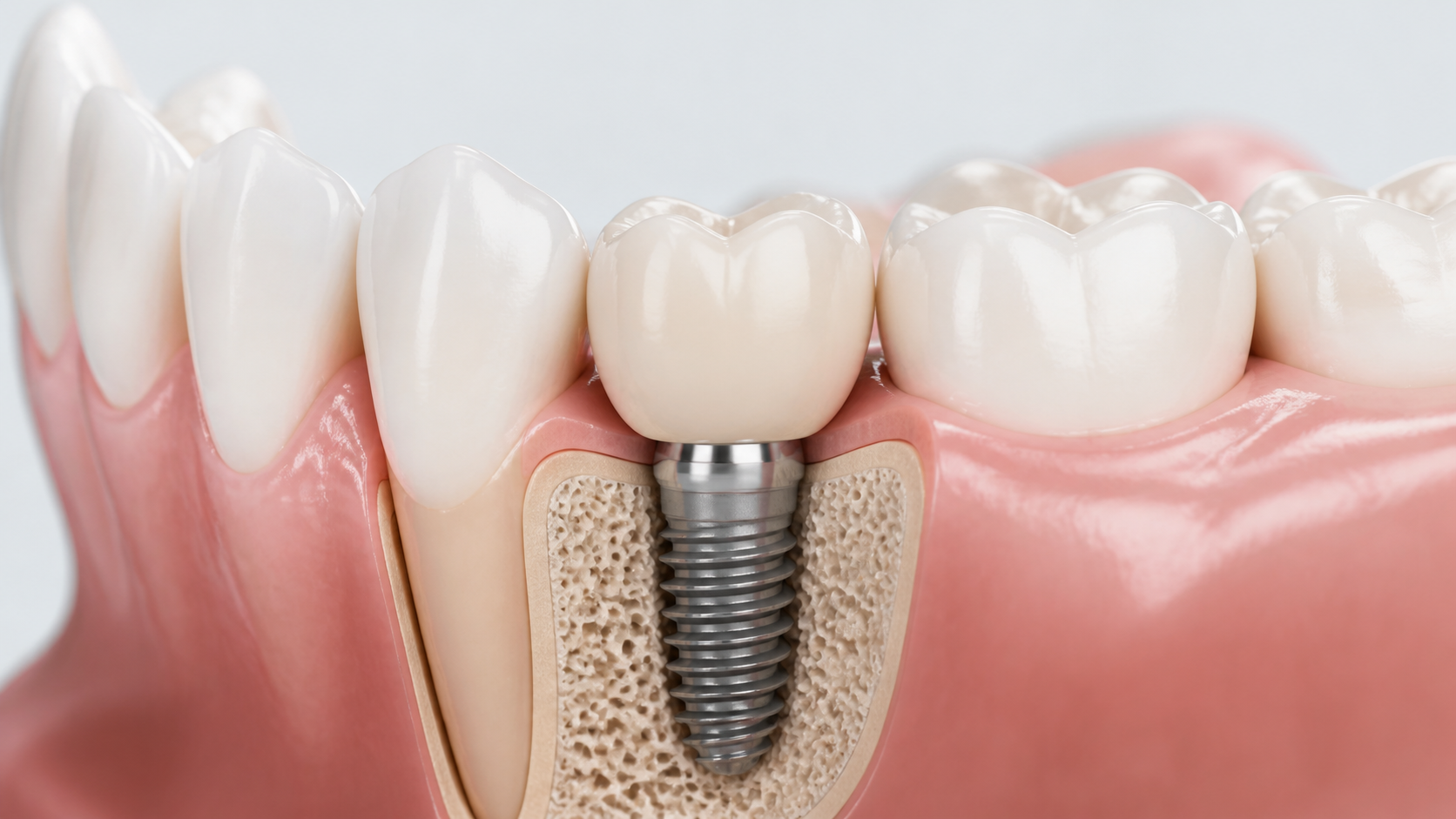
Key points in one minute
The main thing: “immediately” describes the placement timing, and not a promise of the same result
- With immediate implantation, the implant is placed in the socket on the day of tooth extraction; temporary crown and immediate loading are separate solutions that cannot be promised in advance.
- For the method, the safety of the socket walls, bone volume for primary stability, the condition of the soft tissues, occlusion, control of inflammation and the patient’s willingness to comply with the plan are important.
- If conditions are not suitable, delayed or early implantation may be a more predictable option; this does not mean that the treatment has become worse.
- Pain, increasing swelling, temperature, purulent discharge, mobility of the temporary crown or difficulty swallowing and breathing require contact with a doctor, and in an emergency, urgent help.
What is instant implantation and what it is not?
Immediate implant placement takes place directly after tooth extraction, during the same procedure. The term describes the timing of implant placement, not the timing of the permanent restoration. After extraction, the dentist cleans and assesses the socket and, when conditions allow, places the implant according to the plan. A gap may remain between the implant and the socket wall and requires an individual clinical decision; grafting needs and materials cannot be selected from an article or photograph.
It is important to distinguish between three concepts. The implant can be installed immediately after removal. They can install a temporary crown on it in a short time, but remove it from contact with the opposing teeth. And immediate loading means that the structure is involved in the bite soon after surgery. These options have different requirements. In everyday advertising they are often lumped together with the words “a tooth in one day”, but the permanent crown, load-bearing and final aesthetic result usually require separate planning and monitoring time.
Who may benefit from this method, and who needs a different time frame?
A suitable candidate may be someone whose doctor can safely remove the tooth, preserve important socket walls, and obtain sufficient primary stability of the implant in their own bone. The quality and volume of bone around and deeper than the socket, the thickness and position of soft tissue, inflammation, adjacent teeth, dental loading habits, hygiene, smoking, diseases and medications that may affect healing are assessed. For the smile area, the future gum contour and aesthetic expectations are especially important.
The method may not be suitable if, upon removal, a significant defect in the socket wall is discovered, it is impossible to obtain the desired stability, there is uncontrolled acute inflammation, there is a high risk of overload, or the patient cannot comply with the postoperative regimen and come for control. Some infections are not always an absolute contraindication, but the surgeon must evaluate them and the possibility of careful treatment. In such situations, the doctor may suggest preserving the tissue volume, allowing the area to heal and installing the implant later. This is a clinical adaptation, not a “disruption” of treatment.
- What is the reason for the removal and is it possible to remove a tooth without damaging the important walls of the socket?
- Is there bone to anchor the implant and how will its primary stability be confirmed?
- How does the condition of the gums, bite, adjacent teeth and home hygiene affect the plan?
- Will there be a temporary crown, will it be excluded from the bite and when is a permanent one possible?
- What steps and alternatives are provided if conditions during surgery differ from those expected?
Diagnostics and preparation: what is discussed before removal
Planning doesn't start with choosing an implant brand. During a face-to-face consultation, complaints, reasons for removal, expectations, medical history and habits are discussed. The doctor examines the teeth and gums, assesses the bite, hygiene and space for a future crown. X-ray examination is prescribed according to indications to assess anatomy and planning. If necessary, active tooth decay, gum disease, or other problems that worsen the prognosis are first treated.
It is useful to discuss in advance who will lead the surgical and prosthetic stages, how follow-up visits will be organized and what to do if you do not live in Yerevan or are visiting for a short time. Do not start antibiotics, painkillers or rinses based on advice from the Internet: specific prescriptions, contraindications and doses are determined by the attending physician.
| Question | Why is it important | What to clarify during consultation |
|---|---|---|
| Installation time | An implant on the day of removal is possible only with suitable tissues and stable fixation. | What findings may change the plan during surgery? |
| Temporary crown | It can form the contour of soft tissues, but should not always be involved in chewing. | Will she be in contact with antagonist teeth and what restrictions are needed? |
| Permanent crown | Its duration depends on healing, stability and tissue control. | What signs will indicate that it is possible to move on to a permanent structure? |
| Control | Early detection of inflammation or congestion is more important than trying to solve the problem at home. | How to contact the team and when to come for inspections? |
As usual, treatment proceeds in stages
After confirmation of the indications, the tooth is removed as carefully as possible, the socket is cleaned and assessed. The implant is then placed in the planned position and its stability is checked. If the clinical conditions are as planned, the doctor may perform additional manipulations with the soft tissue or filling the space around the implant. The exact technique depends on the specific area and situation; there is no universal sequence for all patients.
Then different scenarios are possible: a healing element without a crown, a temporary crown outside the bite, or, in selected cases, immediate functional load. The choice should not be made for speed. After a healing period, the doctor evaluates the tissue and stability, plans a permanent crown, and continues with preventive examinations. The implant requires the same regular hygiene and monitoring as your own teeth.
Risks, limitations and alternatives
As with any implantation, there may be pain and swelling during the recovery period, bleeding, infectious complications, delayed healing, loss of implant stability, changes in gum contour, poor esthetics, or problems with the temporary and permanent design. The risk is not the same for everyone and depends on anatomy, tissue condition, loading, hygiene and adherence to a control plan. Even with a successful start, you cannot promise an exact outcome or deadline without observation.
Alternatives include early or delayed implant placement after healing, socket preservation when indicated, a bridge, a removable restoration, or another tooth preservation plan if still possible. Each option has its own advantages, limitations and requirements for adjacent teeth and tissues. Compare not only the number of visits, but also biological conditions, prognosis, care and the possibility of regular monitoring.
Care after surgery and when to see a doctor
Obtain written post-operative recommendations from your team and follow them: they take into account the extent of the procedure and your health. Do not touch the surgical site, do not put pressure on the temporary crown unless your doctor tells you to, and do not change medications yourself. Discuss hygiene and nutrition in the first days with your doctor; exact timing and funds vary between plans. Regular examinations are necessary even if you feel well.
Contact the clinic if the pain or swelling increases, there is a fever, purulent discharge, an unpleasant odor, the bleeding does not stop as instructed, the temporary crown becomes loose or interferes with the bite. Rapidly increasing swelling of the face or neck, difficulty breathing or swallowing is a reason to seek emergency medical help according to local regulations. This article is intended to inform, but does not replace, a dental examination.
Save before your visit
Questions worth asking your dentist
- Why can’t the tooth be saved in my case and what data confirms the need for removal?
- What features of the socket, bone, and gums make immediate placement possible or risky?
- What exactly will be installed on the day of surgery: an implant, a former or a temporary crown, and will it participate in the bite?
- What is the backup plan if sufficient stability cannot be obtained during surgery?
- What symptoms require contact with a doctor and what monitoring schedule is needed after treatment?
Sources
- Implant Placement and Loading Protocols — International Team for Implantology
- Selection Criteria for Immediate Implant Placement and Immediate Loading for Single Tooth Replacement in the Maxillary Esthetic Zone — International Team for Implantology
- Immediate Loading vs. Early/Conventional Loading of Immediately Placed Implants in Partially Edentulous Patients from the Patients’ Perspective — International Team for Implantology


