
 23 Tumanyan St, Yerevan
Key points in one minute
Key points before your appointment
- Sedation supports treatment but does not treat the cause of a dental problem.
- The route a drug is given by does not, on its own, define sedation depth.
- Preparation and restrictions vary by technique; obtain written instructions in advance.
Sedation, local anaesthetic and general anaesthesia
Local anaesthetic temporarily prevents pain in the treatment area. Sedation changes anxiety and alertness. General anaesthesia involves unconsciousness and a different level of airway support and monitoring. The phrase “sleep dentistry” can therefore be misleading: ask which level of consciousness is actually intended.
With minimal sedation, responses to speech are usually normal. Under moderate sedation, responses may be slower, but you respond purposefully to speech or light touch. Deep sedation makes you harder to rouse and may require breathing support. Sedation can become deeper than intended, so the team must be able to recognise this and provide rescue care.
| Method | Main purpose |
|---|---|
| Local anaesthetic | Numb the treatment area |
| Sedation | Reduce anxiety and alter alertness |
| General anaesthesia | Allow treatment while unconscious |
Techniques and what you may experience
Dental techniques include inhaling nitrous oxide mixed with oxygen through a nose mask, intravenous sedation and other approaches. The route does not determine the depth. A tablet taken before an appointment can also affect breathing and coordination and interact with other substances. Taking a sedative yourself is not a safe substitute for a clinician-led plan.
During conscious sedation you may feel relaxed and drowsy while still hearing and following requests. Memories may be patchy, but complete amnesia is not guaranteed. Pressure, vibration and sounds can remain noticeable even with effective local anaesthesia. Tell the team if you feel pain: it should not be dismissed as an unavoidable part of sedation.
Who may benefit and who needs a different plan
Sedation may be considered for severe anxiety, difficulty tolerating a procedure or particular health and behavioural needs. It can help someone receive care they have repeatedly postponed. A convenient schedule or a long list of procedures does not by itself establish a need for sedation. Less restrictive forms of support should also be discussed.
Heart and lung conditions, snoring and sleep apnoea, pregnancy, allergies, previous anaesthetic reactions, medicines, alcohol and other substances all matter. They can change the technique or setting, or prompt advice from another specialist. Contact the team about a cold, new symptoms or medication changes before attending. Children need their own age-appropriate assessment; an adult plan must not simply be applied to a child.
Agree the preparation before treatment day
The assessment should cover both the dental plan and sedation: its purpose, alternatives, risks and recovery. Decisions and consent should be completed before the sedative takes effect. Ask who administers sedation, who monitors you, how complications are managed and whom to contact after discharge.
Instructions for food, fluids and usual medication vary. Do not borrow fasting rules from someone else’s leaflet or stop prescribed medicines yourself. Get personalised written instructions and tell the team if you have not been able to follow them. Prepare a medication and allergy list, details of ongoing conditions and previous anaesthetic experiences. Arrange an escort and transport home in advance.
During the appointment: treatment and monitoring
Before starting, the team rechecks your health, preparation and baseline observations. They explain how to signal discomfort, administer sedation according to the plan and assess your response. Dental treatment proceeds with local anaesthetic where needed. Whether all planned work can be completed in one visit depends on your tolerance and the clinical situation.
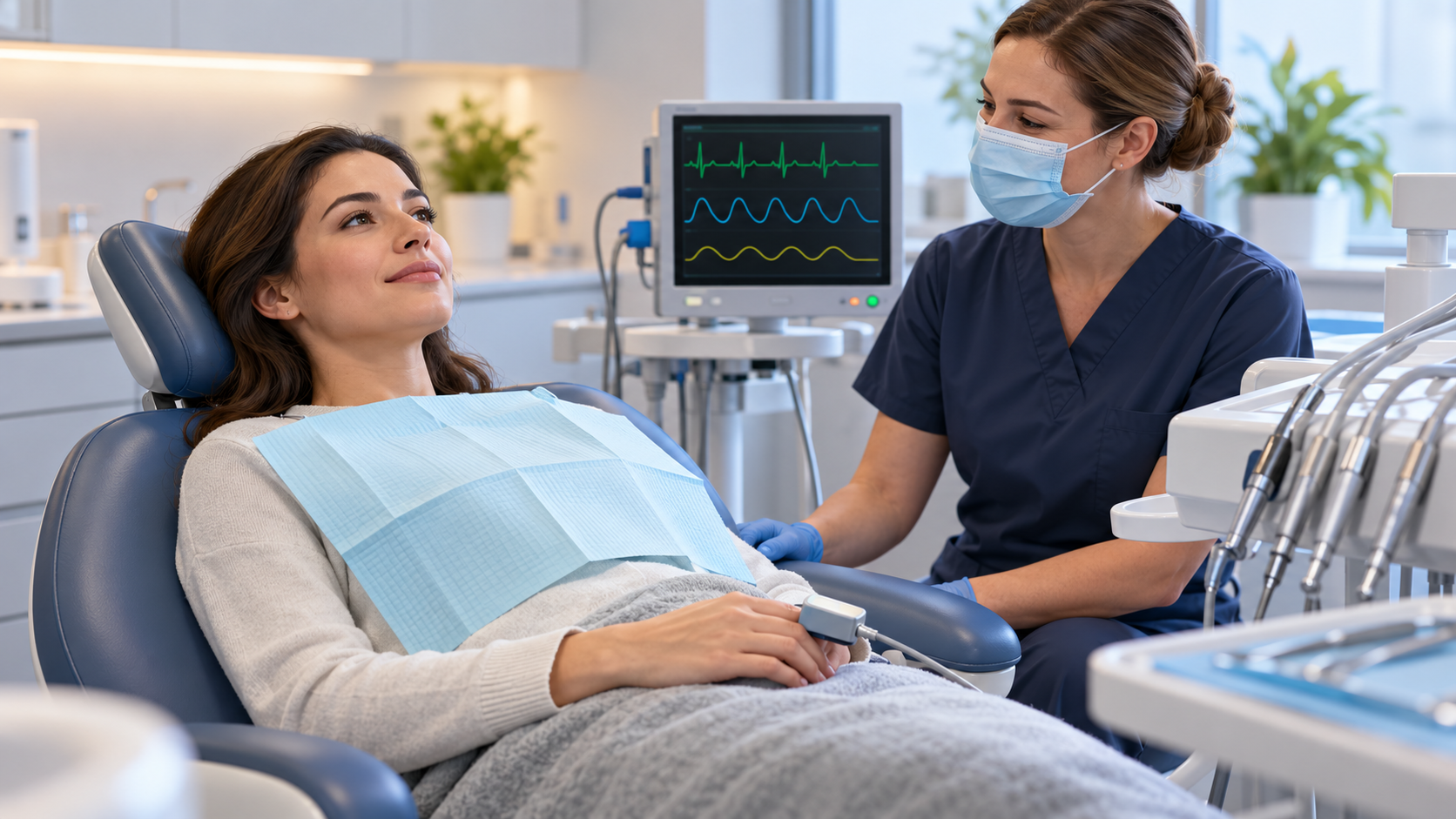
Monitoring covers consciousness, breathing, blood oxygen levels and circulation. Equipment depends on the depth and technique; moderate or deep sedation may require measurement of exhaled carbon dioxide. A finger sensor alone does not replace observation by a trained team. Monitoring continues through recovery, and discharge follows an assessment of readiness rather than a fixed time alone.
Risks, limitations and a realistic outcome
Possible effects include nausea, dizziness, drowsiness, lower blood pressure, temporary memory disturbance or an unexpected agitated response. More serious complications include respiratory depression, airway obstruction and allergic reactions. Personal risk depends on health, drugs, sedation depth and the setting. Absolute safety cannot be promised.
A successful sedation appointment allows agreed care with acceptable comfort and a safe recovery. It does not guarantee the outcome of a filling, implant or any other procedure. Sedation may be insufficient, requiring a revised plan or the procedure to be stopped. It does not necessarily resolve a dental phobia in the long term; lasting anxiety reduction may need separate support.
Afterwards: escorts and restrictions
After intravenous sedation, a responsible adult is generally needed to take you home and stay for the period specified by the team, often 24 hours. A taxi journey without an escort does not replace that support. During this period, avoid driving, operating machinery, alcohol, important decisions and sole responsibility for children. Restrictions after inhalation sedation can differ: follow your own discharge advice.
Do not add sleeping tablets or sedatives without agreement. While local anaesthetic numbness remains, protect your lip and cheek from biting and avoid hot food or drinks. Wound care, diet and pain management after the dental procedure need their own instructions. If you are visiting Yerevan briefly, allow time for recovery, review and possible changes to the plan rather than booking treatment immediately before a flight.
Expected effects and warning signs
Some techniques can leave you moderately sleepy, unsteady or with patchy memories, provided these effects match the instructions and gradually improve. Contact the treating team if you are not improving, keep vomiting or cannot drink. Do not try to sleep off a worsening condition alone.
Difficult or unusually slow breathing, blue lips, inability to wake someone normally, collapse or rapidly increasing swelling requires emergency medical help. The escort should know these signs and have contact details available. Increasing severe dental pain, fever or swelling after the procedure also needs timely assessment, even when the sedation has worn off.
Support without drugs and questions to ask in Armenia
Explain what frightens you: injections, sounds, loss of control or a past experience. A stop signal, explanations before each step, shorter stages and breaks can help. Persistent phobia may benefit from a trained professional and cognitive behavioural therapy. These approaches can complement sedation; you do not need to endure severe anxiety silently.
At a consultation in Armenia, ask which technique is actually available, about the team’s qualifications, monitoring arrangements and transfer plans if complications arise. This article does not establish that Full Clinic offers sedation or describe Armenian licensing requirements. Request instructions in Armenian, Russian or another language you understand and agree with the team. This is general information, not a prescription, and no human medical review is claimed.
Save before your visit
Questions worth asking your dentist
- What sedation depth is intended, and will I remain able to communicate?
- Will I need local anaesthetic, and what alternatives are available?
- How do my conditions and medicines affect the choice?
- Which food, fluid and escort instructions apply to me?
- Who monitors breathing, and whom should I contact after discharge?
Sources
- Anaesthesia and sedation — ADA
- Clinical standards for dental anxiety management — NHS England
- Intravenous sedation — UCLH NHS
- Patient escort information — Rotherham NHS


