
 23 Tumanyan St, Yerevan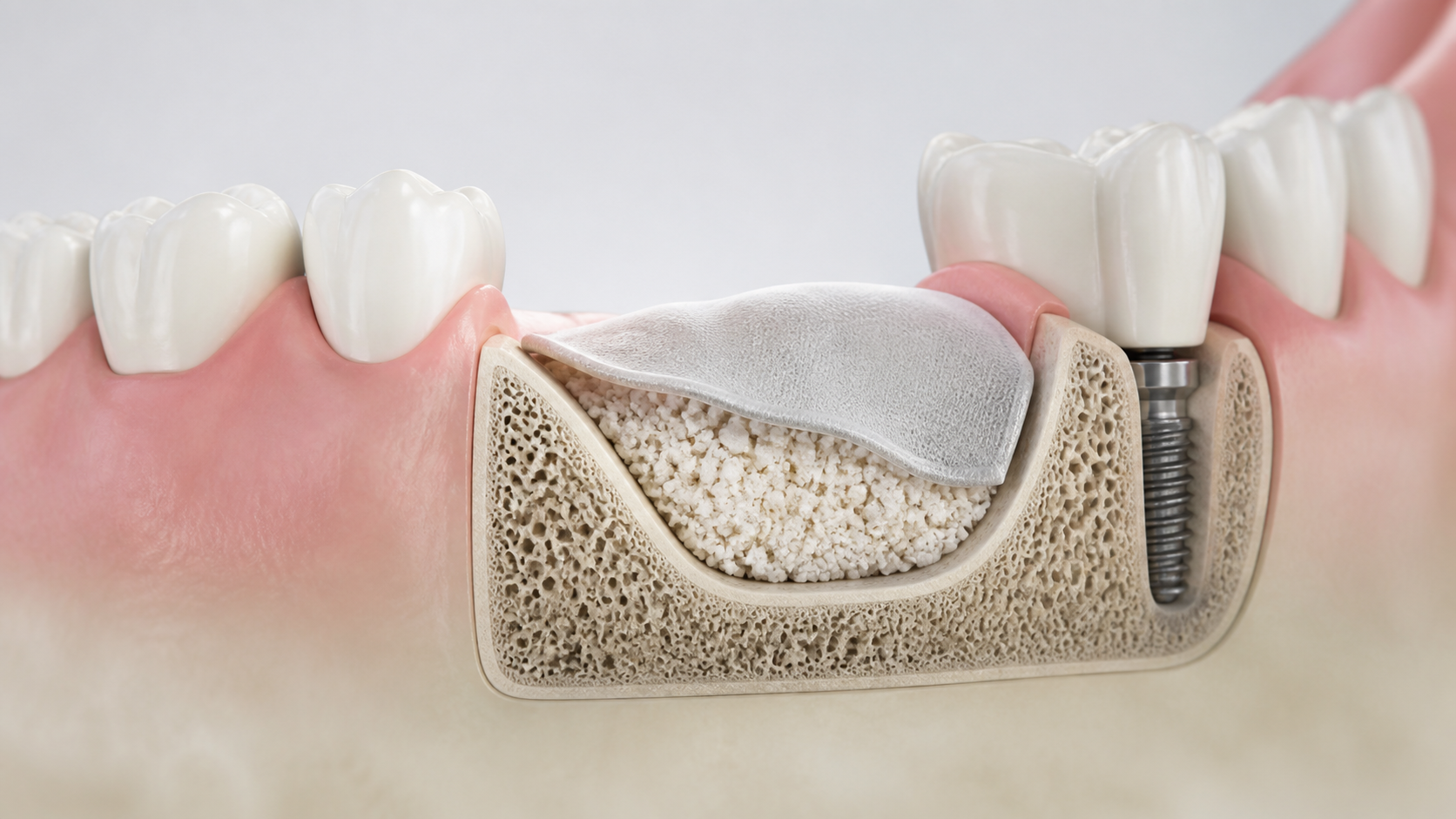
Key points in one minute
The main thing: bone grafting is part of an individual plan, and not a mandatory stage
- Lack of width or height of the alveolar ridge may prevent the implant from being placed in a functionally and aesthetically rational position, but does not in itself determine the treatment method.
- For guided bone regeneration, bone material and a barrier membrane can be used; the choice depends on the shape of the defect, soft tissues, general situation and the experience of the surgeon.
- The implant is sometimes placed simultaneously with augmentation, and sometimes after healing: if the defect is large or primary stability is insufficient, a staged approach is often discussed.
- Swelling, discomfort and restrictions after surgery are discussed in advance; increasing pain, fever, discharge, or rapidly increasing swelling requires contact with your healthcare team.
What is bone grafting and what problem does it solve?
After tooth extraction, inflammatory processes, trauma or prolonged absence of a tooth, the volume of the alveolar ridge may change. For an implant, it is important not only to be able to install a titanium support, but also its three-dimensional position relative to the future crown, adjacent teeth, soft tissues and anatomical structures. If the bone is not sufficient in width, height, or contour, the surgeon may discuss augmentation—restoring the volume of the bone.
Guided bone regeneration (GBR) is one approach: bone material maintains volume, and a membrane helps isolate the regeneration area from rapidly growing soft tissue. This is not a one-size-fits-all “implant surgery” or remote diagnosis. The doctor compares the clinical examination, photographs, quality of soft tissues, hygiene, habits and the purpose of future restoration.
- Horizontal deficiency—the ridge is too narrow for the planned implant position.
- Vertical deficiency - there is not enough bone height; such situations may be technically more difficult.
- Local defect after tooth extraction - the plan depends on the walls of the socket and the timing of treatment.
- Special anatomical zones - for example, the proximity of the maxillary sinus or mandibular canal - require separate planning.
Diagnostics, materials and options: what is usually discussed
Preparation does not begin with choosing a brand of material. The doctor evaluates the condition of the teeth and gums, bite, inflammation, expected structure and bone volume using a study that is really needed for planning. Three-dimensional imaging can be useful in implantology, but it is prescribed for a specific clinical question. It is useful to ask to see the expected position of the implant on the image and to explain which anatomical boundary affects the plan.
The material may be the patient's own bone, donor material, animal material, or a synthetic substitute; sometimes combinations are used. Each option has indications, limitations and technical requirements. Membranes are either absorbable or non-absorbable; the need for fixation also depends on the stability of the material and the shape of the defect. One material cannot be considered “best for all”: Qualitative data does not establish the absolute superiority of one method or material in all situations.
| Stage | What to clarify | Why is this necessary? |
|---|---|---|
| Diagnostics | What defect is visible and what data confirms this? | Understand the purpose of the procedure, and do not focus only on the name. |
| Method | Why is a simultaneous or phased option proposed? | Clarify the relationship between the form of the defect, stability and timing. |
| Materials | What material and membrane are being considered, and what alternatives are there? | Discuss indications, limitations, and consent for intervention. |
| Recovery | What symptoms are expected and how to contact the clinic if there are alarming signs? | Prepare for the postoperative period without self-medication. |
How the treatment works in stages and why the timing varies
After the examination, a plan is agreed upon: first, they can eliminate active inflammation, stabilize hygiene, or discuss saving the tooth, if possible. During the intervention, the surgeon gains access to the area, prepares it, places the selected material and membrane, and then sutures the tissue. In some situations, the implant is placed during the same operation if its correct position and primary stability can be ensured. If the defect is more pronounced, regeneration is performed first, and implantation is planned after a healing period.
There is no single deadline for everyone. It depends on the volume and location of the defect, method, tissue reaction, associated factors and the results of follow-up visits. The planned date is not a guarantee of tissue readiness: the doctor evaluates healing and changes the sequence if necessary. Do not settle for promises of an accurate result or instant implantation without diagnosis and explanation of the risks.
Risks, limitations and alternatives
Like any surgical procedure, bone grafting may be accompanied by swelling, bruising, soreness, bleeding, or temporary dietary restrictions. Suture dehiscence, membrane exposure, infection, insufficient regeneration and the need to change the plan are also possible. Individual risk depends on anatomy, gum condition, smoking and other health factors; it is important to inform your doctor in full, including the medications you are taking. Do not start antibiotics, rinses or painkillers based on online advice - the regimen is given by your treating specialist.
An alternative may be implantation without augmentation in a different position, another type of prosthetics, a prosthetic solution based on adjacent teeth, or refusal of implant treatment. Sometimes it is possible to save your own tooth; this is discussed before removal. No option is automatically correct: the prognosis, volume of intervention, care requirements, timing and risks are compared specifically for your situation.
- What risks are most relevant specifically for my anatomy and tissue condition?
- What happens if you choose a staged approach or a non-augmentation alternative?
- What factors can be adjusted before surgery to reduce the risk of complications?
- What signs after surgery warrant a same-day call?
Recovery: what is usually discussed and when a doctor is needed
Postoperative recommendations depend on the technique and extent of the intervention. Typically, the team explains how to maintain hygiene in the surgical area, what exercise and food to temporarily limit, when to come in for follow-up, and how to take prescribed medications. Do not touch the surgical area with your hands or objects, and do not change the recommendations yourself. Smoking and nicotine products can impair healing, so quitting or taking a break should be discussed in advance.
Some swelling and discomfort in the first days can be expected, but should be assessed in the context of the doctor's instructions. Contact the clinic if there is increasing pain, increasing swelling, fever with deterioration of health, unpleasant odor or discharge, prolonged bleeding, opening of stitches or damage to the membrane. If you have difficulty breathing or swallowing, or rapidly growing swelling of the face or neck, you need emergency medical attention according to local regulations.
How to prepare for a consultation in Yerevan
Take previous statements and photographs if available, but do not assume that the old study is always sufficient for a new decision. For patients from the regions, the diaspora, or medical tourists, it is especially useful to clarify in advance what data can be sent for a preliminary conversation, what will necessarily require an in-person examination, and how many follow-up visits may be needed. Preliminary correspondence does not replace diagnosis and consent to treatment.
During the consultation, ask to explain the purpose of each stage in simple terms, show possible alternatives, and name signs that would cause the plan to be revised. This helps to compare not advertising promises, but the logic of treatment. If there is pain, inflammation or doubt, do not make a diagnosis according to the article: sign up for an in-person consultation in Yerevan.
Save before your visit
Questions worth asking your dentist
- What kind of bone deficiency have I been diagnosed with and on what data is this conclusion based?
- Is it possible to save my own tooth or consider the option without bone grafting?
- Why is single-stage or staged implantation offered in my case?
- What materials and membrane are planned, what restrictions and risks should be taken into account?
- Which post-intervention symptoms are to be expected and which should be treated without waiting?
Sources
- Horizontal Ridge Augmentation in the Anterior Maxilla — Consensus Statements — International Team for Implantology
- Guided bone regeneration in implant dentistry: Basic principle, progress over 35 years, and recent research activities — PubMed
- Effectiveness of vertical ridge augmentation interventions: A systematic review and meta-analysis — PubMed


