
 23 Tumanyan St, Yerevan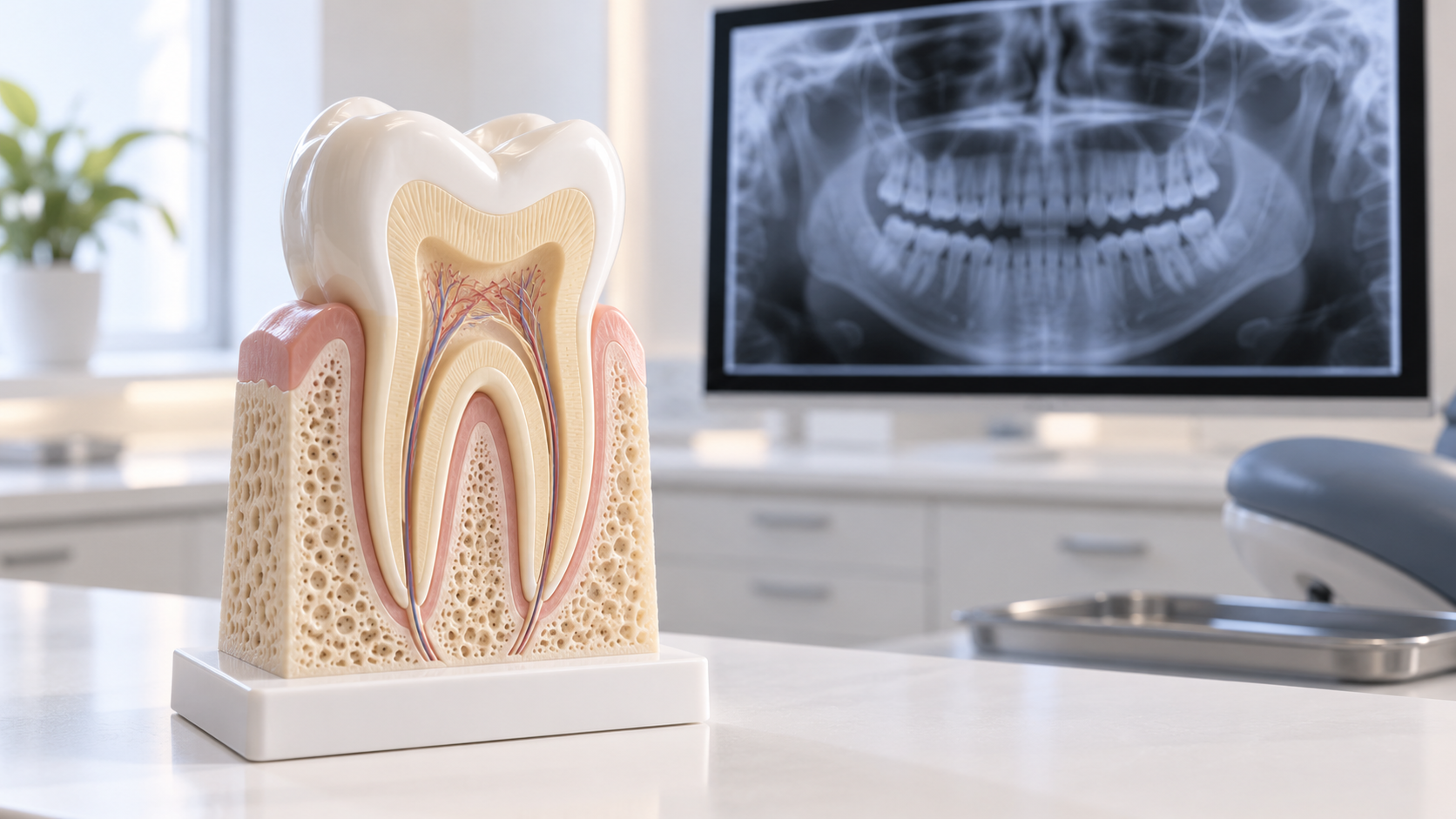
Key points in one minute
What guides the decision
- Establish the diagnosis and whether a lasting restoration is feasible before comparing options.
- Root canal treatment addresses the inside of a tooth; it does not replace rebuilding the crown or treating gum disease.
- Extraction is irreversible. Discuss healing, replacement options and their limitations before proceeding.
- Increasing swelling, fever or difficulty swallowing requires urgent assessment.
What determines the choice?
A tooth is part of a connected system: its visible crown, roots, tissues inside the root canals and surrounding periodontium — the gums, ligament and bone. Assessing the outlook means considering the whole system. Being able to clean a root canal, for example, does not establish whether the remaining tooth can support the planned restoration.
At your consultation, separate three questions: what is causing the symptoms, how can the cause be treated, and how will the tooth function afterwards? If the answers are uncertain, an endodontist or periodontist may help clarify the options. With an urgent infection, immediate safety comes first; seeking another opinion must not delay emergency care.
Your preferences also matter. The dentist explains the risks, stages and alternatives, while you describe your expectations, available time and ability to attend follow-up appointments. An informed choice is a clear plan with acknowledged limitations, rather than a promise of the same outcome for everyone.
What an assessment can show
Explain when the pain began, whether it happens on biting, with cold or without a trigger, and whether the tooth has been injured or treated before. Tell the dentist about medical conditions, allergies and all medicines you take. This information may affect investigations and treatment; do not stop regular medication on your own.
The dentist examines the tooth and existing restorations, checks responses to diagnostic tests, and assesses mobility, the bite and gums. Periodontal probing helps evaluate pockets around the tooth; X-rays show roots, surrounding bone and some signs of inflammation. A tooth that looks intact in a photograph can still have a problem inside or around its root.
Additional imaging, including a three-dimensional scan, should address a specific diagnostic question rather than be routine for everyone. Even detailed images have limitations: some cracks are difficult to detect. Occasionally, the extent of damage only becomes clear after an old restoration is removed. Ask in advance how such a finding could change the agreed plan.
When preserving the tooth is considered
Preservation is considered when the damage can be repaired and the supporting tissues can maintain useful function. Depending on the diagnosis, the plan may involve a restoration, root canal treatment, periodontal treatment or a combination. Not every damaged tooth needs root canal treatment; the indications depend on the pulp and tissues around the root.
If a previously treated tooth has not healed or develops a new problem, extraction is not always the only option. The dentist assesses whether root canal retreatment is feasible. In selected circumstances, surgery around the root tip may be considered. The choice depends on the cause of the problem, access to the canals, root condition and whether the tooth can be restored.
Cleaning the root canals is only part of saving a tooth. A well-sealed final restoration, sometimes a crown, protection from excessive loading and follow-up are also needed. Periodontal disease requires its own treatment and maintenance plan. Ask for the complete sequence, including what needs to happen after the pain settles.
When extraction is considered
Removal may be reasonable when a tooth cannot be rebuilt for stable function, has an unfavourable crack, or has lost so much support that preservation is unpredictable. Your dentist should explain which finding determines the outlook. Simply calling it a “bad tooth” does not explain the reason for an irreversible procedure.
Cracks vary. A small chipped area, a crack in the crown and a vertical root fracture require different assessments. A split tooth or confirmed vertical root fracture often leads to a discussion about extraction. Selected teeth with several roots may have other specialist options. You cannot reliably judge the depth of a crack yourself.
With advanced periodontal damage, the remaining bone, mobility and ability to control inflammation all matter. Mobility alone does not automatically mean a tooth must be removed. However, preserving a tooth with a poor outlook without discussing persistent infection is also inappropriate. If there is no emergency and the explanation remains unclear, seeking a second opinion is reasonable.
Compare complete plans and their limitations
Compare the whole course of care. The price of one procedure does not represent the complete journey: preservation may include retreatment and a crown, while removal may involve healing and a replacement. At a consultation in Yerevan, request a written estimate in Armenian drams for each stage, including follow-up and possible additional procedures. There is no universal price for this decision.
Replacing a missing tooth is an individual decision. Options include an implant and crown, a bridge or a removable denture, and, in suitable circumstances, monitoring without replacement. Tooth position, the bite, bone and neighbouring teeth influence the choice. An implant is not an automatic next step and also requires maintenance and review.
Every option involves uncertainty. A preserved tooth can develop further inflammation, fracture or need additional treatment. Extraction and replacement also carry surgical and restorative risks. Ask what a successful result would mean in your plan and what would happen if treatment does not go as hoped. A personalised lifespan cannot responsibly be predicted without an examination.
What affects the longer-term outlook?
Daily cleaning, periodontal health and regular reviews matter whichever option you choose. Smoking and poorly controlled diabetes can affect supporting tissues and the response to treatment. Tell your dentist about these factors so the plan and home care can be adapted; they are not a reason to blame a patient.
Discuss clenching, grinding and habits such as biting hard objects. Your dentist can assess the load on the tooth and whether the restoration needs protection. Do not repeatedly bite on a painful tooth to test it; this will not establish a diagnosis. Feeling comfortable after temporary treatment does not remove the need for a final restoration and follow-up.
If you live outside Yerevan or have limited time during a visit, arrange the sequence of appointments and follow-up after you return home. Ask whom to contact if symptoms worsen and how to share images with another dentist. A workable plan accounts for access to later care as well as the first procedure.
When to seek urgent help
Tooth pain with swelling, pus, fever or feeling unwell needs urgent dental assessment. A dental abscess will not resolve on its own: the source of infection needs treatment. Do not try to puncture a swelling or postpone an examination simply because pain has temporarily eased.
Seek emergency medical help immediately if breathing, swallowing or speaking becomes difficult, substantial swelling in the mouth or neck is rapidly increasing, or swelling spreads towards an eye. Do not wait for a routine dental appointment in these circumstances.
This article does not prescribe medicines. Do not start antibiotics yourself or use them as a substitute for dental treatment. When seeking help, report any fever, how quickly swelling is progressing, whether you can open your mouth and swallow, and which medicines you are taking.
Questions to ask a dentist in Yerevan
Bring existing X-rays, records of previous treatment and a list of medicines. Ask the dentist to show you the affected area and explain the diagnosis in everyday language. Clarify which conclusions are established and which remain provisional or need further investigation.
Before agreeing to treatment, discuss the final restoration, number of stages, need for a temporary restoration and follow-up. If extraction is proposed, ask why preservation has an insufficiently favourable outlook and discuss replacement beforehand. If the tooth is being saved, ask which findings would prompt a change of plan.
This is a general educational article, not a patient story, diagnosis or personalised recommendation. The editorial team prepared it using the sources listed below; no human physician review is claimed. Decisions about an individual tooth require an examination and a discussion of alternatives.
Save before your visit
Questions worth asking your dentist
- What is the diagnosis, and which findings support it?
- Can the tooth be predictably restored after the cause is treated?
- Would an endodontic or periodontal opinion help?
- What are the alternatives, risks and total costs at each stage?
- What will be needed after extraction, and can replacement wait?
- When is follow-up needed, and which symptoms require urgent help?
Sources
- Root canal treatment explained — American Association of Endodontists
- Cracked teeth — American Association of Endodontists
- What is periodontitis? — European Federation of Periodontology
- Dental abscess — NHS


