
 23 Tumanyan St, Yerevan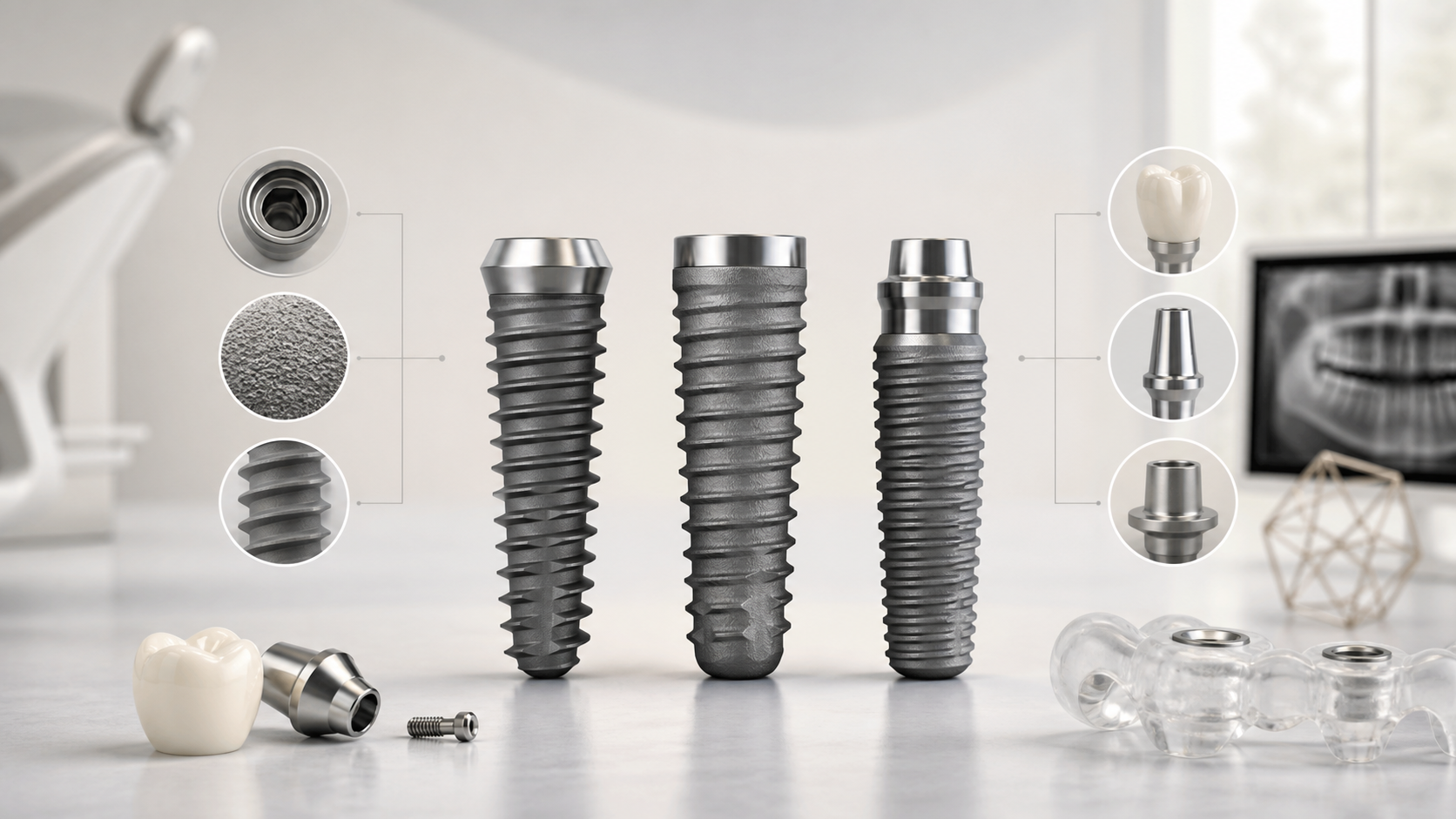
Key points in one minute
The main idea: the system does not have a universal winner - what matters is its suitability for your plan
- The choice begins with the diagnosis, bone and gum condition, bite, overall health and recovery goal, not with a brand catalog.
- The geometry, connection, surface and material of the implant only matter in conjunction with the surgical and prosthetic plan.
- The compatibility of abutments, screws and other components, as well as their availability for future maintenance, is a practical part of safety.
- The implant does not guarantee lifelong results: hygiene, control of inflammation, quitting tobacco if possible and regular monitoring are important.
Short answer: brand is not the starting point
A reliable system is one that a physician can reasonably apply to a specific anatomy, load, and future design, and then maintain over the long term. The manufacturer's name alone does not tell whether there is enough bone, whether an implant can be placed safely, whether a patient is suitable for surgery, or what type of prosthesis is needed. These issues are resolved after an in-person examination and diagnosis.
It is reasonable to ask the doctor to explain the plan in simple terms: what exactly needs to be restored, what imaging data is important, what alternatives exist, and what will happen if implantation is postponed or another type of prosthetics is chosen. The article helps prepare questions, but does not replace diagnostics and does not select a system remotely.
What to evaluate before choosing a system
An implant is a part of a structure that must work together with bone, soft tissue and a prosthesis. Therefore, before making a choice, the doctor evaluates the cause of tooth loss, the condition of adjacent teeth and gums, the volume and shape of the bone, the bite and the expected load. Medical conditions, medications taken, smoking, history of periodontitis, ability to maintain hygiene and attend follow-up appointments are also taken into account. If necessary, the plan is changed or the inflammation is treated first.
Diagnostic images help evaluate the area, but do not provide a definitive answer on their own. The doctor compares them with the examination, the task of prosthetics and the risks. Sometimes saving your own tooth, a bridge or a removable structure is a more suitable topic of discussion than implantation.
- What function and aesthetics need to be restored: one tooth, several teeth or an entire row.
- Are bone and soft tissue sufficient and is separate site preparation required?
- What the future crown or prosthesis will look like, where there will be room for hygiene and control.
- What factors can increase the risk of complications and how to reduce them before treatment.
- What options exist, including not implanting, and what are their limitations.
What criteria are being discussed: a single frame instead of a rating
Different systems may have different variations in shape, connection and prosthetic parts. It is impossible to honestly declare one parameter the winner outside of a clinical task. It's more helpful to check how each item relates to your plan and who will be responsible for follow-up care.
Titanium implants are widely used and have a long clinical history. Zirconium solutions exist, but they are not suitable for all situations and require separate discussion. The choice of material, as well as shape or surface, should not be made based on advertising, reviews or advice from friends.
| Criterion | Why is it important | What to clarify during consultation |
|---|---|---|
| Clinical task | Determines the position, number of implants and type of future construction. | What diagnosis and recovery goal guides the plan? |
| Geometry and size | Must be consistent with available bone volume and load. | What inspection and imaging data support this choice? |
| Connection and prosthetics | Affects crown, abutment, screw compatibility and serviceability. | What components will be needed now and in the future, and who will be able to order them? |
| Surface and material | These are product characteristics that are evaluated in the context of indications and evidence. | What data and restrictions are relevant specifically for my case? |
| Documentation and support | Needed for traceability and long-term maintenance of the structure. | What documents about the system and prosthesis will I receive after treatment? |
| Surveillance and hygiene | The implant requires regular evaluation of the tissue around it. | What kind of home and professional examination plan is needed after the prosthetic restoration? |
Why components, documentation and evidence are important
The implant does not end with the surgical stage: the crown or prosthesis may require an abutment, screw and other compatible components. Their originality, compatibility and accessibility cannot be considered a trifle. If repairs or replacement of a part of the prosthesis is necessary years later, it is useful for the doctor to know exactly the system and the parts used. Save the extract, information about the implants and care recommendations.
The system must have clear clinical documentation and the team must have a sound plan. This does not mean that the patient is required to read studies or compare marketing promises on their own. It is much more useful to ask what clinical data and experience are relevant to the proposed solution, what the limitations are, and how the follow-up will be organized.
Risks, care and situations when you need a doctor
Long-term results depend not only on the product. Inflammation of the tissue around the implant, poor hygiene, smoking and a history of gum disease can increase the risk of complications. Professional recommendations emphasize the importance of an individual maintenance plan: access to cleaning and inspection of the future structure must be planned in advance.
Do not wait until your next scheduled visit if there is bleeding around the implant during cleaning, swelling, unpleasant taste or odor, pain, mobility of the crown, bridge or the implant itself. Such signs do not allow making a diagnosis according to the article, but are a reason to consult a dentist. If there is rapidly growing swelling of the face or neck, fever with deterioration of well-being, difficulty swallowing or breathing, urgent medical attention is required according to local regulations.
Save before your visit
Questions worth asking your dentist
- What diagnosis and what recovery goal define the proposed system?
- What options, including saving the tooth or another prosthesis, should be discussed in my case?
- How will the future crown or prosthesis be maintained and what components will be needed for this?
- What risk factors are important for me and how will follow-up be arranged after treatment?
Sources
- Selecting an Implant System — International Team for Implantology
- Peri-implant disease: Prevention — European Federation of Periodontology
- Oral health — World Health Organization


