
 23 Tumanyan St, Yerevan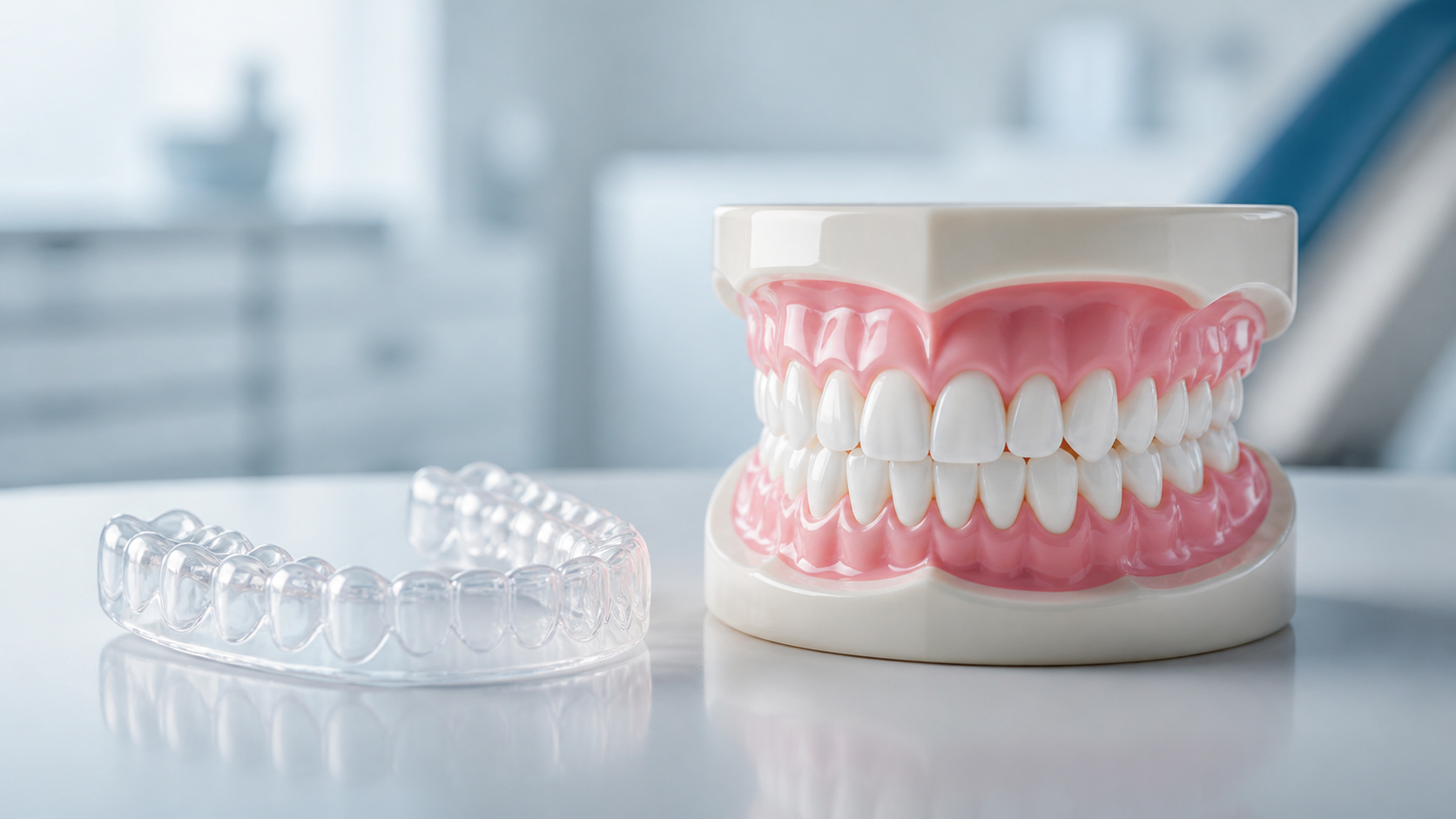
Key points in one minute
The key point: aligners follow a plan, and results depend on diagnosis as well as the wear routine
- Clear aligners are removable transparent trays that apply controlled forces in sequence to move teeth.
- Before treatment, the teeth, gums, bite, hygiene and planned movements need assessment; a photograph cannot establish suitability.
- Trays are normally removed for meals and hygiene and worn to the clinician’s schedule; missed wear can disrupt the plan.
- Retention is usually planned before the active stage ends, because teeth can shift without a retainer.
What clear aligners are and what they can address
Clear aligners are thin removable transparent trays made from a model of one patient’s teeth. A sequence of trays is changed over time, with each one designed for a small part of the intended movement. They are not a way to straighten teeth at home: this is orthodontic treatment with records, a plan and follow-up.
They may be used for crowding, spaces, certain tooth rotations and some bite concerns. In some situations aligners are combined with other elements, while in others braces or a different approach are more predictable. Their discreet appearance does not indicate how simple the case is.
Who may benefit: assessment, digital setup and preparation
At a consultation, the clinician discusses concerns and goals and examines the teeth, gums and bite. Photographs, digital models or scans and X-rays may be needed depending on the situation. A digital setup helps explain anticipated stages, but it remains a plan: tissues and tooth movement are checked during treatment.
Decay, gum inflammation or other problems may need treatment or stabilisation first. The clinician also considers fillings, crowns, implants, periodontal health and hygiene. If teeth are very close together, the plan may include interproximal reduction — creating a small amount of space between selected teeth. Its need and extent are decided only after assessment.
- Which goals are realistic in my situation?
- Which records and preparation are needed before starting?
- Why are aligners proposed rather than braces or another option?
- How will tooth, gum and movement health be monitored?
How treatment proceeds: trays, attachments and reviews
After the plan is agreed, the tray series is made. Some teeth may receive small composite attachments, which help the tray deliver the planned force. They are a common planning tool but are not needed in every case. The team explains how to insert and remove the trays, when to change them and how to get in touch.
Trays are generally removed for eating and tooth cleaning, then put back in. The orthodontist sets the wear and change schedule: do not speed it up, file a tray or use someone else’s set. Review appointments, or an agreed remote check, are needed to assess tray fit, hygiene and whether movement is tracking the plan.
| Stage | Team’s role | What matters for the patient |
|---|---|---|
| Assessment | Set goals, limits and preparation. | Share concerns and complete requested records. |
| Active stage | Monitor movement and adjust the plan if needed. | Wear and change trays only as instructed; attend reviews. |
| Retention | Maintain the achieved position. | Use the retainer and do not stop without advice. |
Hygiene, consistency and the limits of the method
Being removable does not remove the need for hygiene. Clean teeth before putting trays back in, and clean the trays in the way advised by your clinician. Hot water, harsh products and improvised treatment can distort the material. Frequent sweet or acidic drinks with trays in place are worth discussing because of the potential effect on enamel and gums.
Results depend on more than the appliance: the starting problem, tissue health, diagnostic accuracy, review attendance and the wear routine all matter. A tray that does not fit, cracks or is lost should prompt contact with the treating team, not a move to the next tray. Aligners are not a stand-alone treatment for jaw-joint noises, headaches or jaw pain.
What result to expect and why retention matters
A realistic outcome is reaching agreed goals within the limits of anatomy, dental and gum health and the chosen plan. The same smile shape, perfect bite or exact duration cannot be promised for everyone. If circumstances change during treatment, the clinician may recommend refining the plan, additional trays or a different strategy.
After active movement, teeth may tend to shift. A removable or fixed retainer is therefore usually a separate part of treatment. The orthodontist determines its type, schedule and duration. If you live in Yerevan, are visiting from another city or plan treatment during a stay in Armenia, discuss follow-up and retention logistics before you start.
Save before your visit
Questions worth asking your dentist
- What movements and limits apply in my case?
- Will I need attachments, space creation between teeth or preparation?
- What wear and review schedule is appropriate for me?
- What will retention look like after the active stage?
Sources
- Clear Aligners — American Association of Orthodontists
- Braces and orthodontics — NHS


