
 23 Tumanyan St, Yerevan
Key points in one minute
Key points to remember
- A sharp pain that stops quickly does not prove the tooth is healthy: recurrence and other symptoms matter.
- Lingering pain, spontaneous pain or pain on biting needs assessment by a dentist.
- Swelling that makes breathing or swallowing difficult requires immediate emergency medical help.
The short answer
Cold can stimulate sensitive areas of a tooth, particularly near the gum line where dentine has lost its protective covering. However, a new reaction in one tooth, recurring pain or pain that outlasts the cold stimulus calls for a dental appointment rather than choosing treatment yourself.
Notice the pattern as well as the intensity: which tooth reacts, what triggers it, how quickly it settles and whether it hurts without food or drink. Mild pain that is becoming worse also matters. This is general information for readers in Armenia, not a diagnosis or an individual treatment recommendation.
What makes cold hurt a tooth?
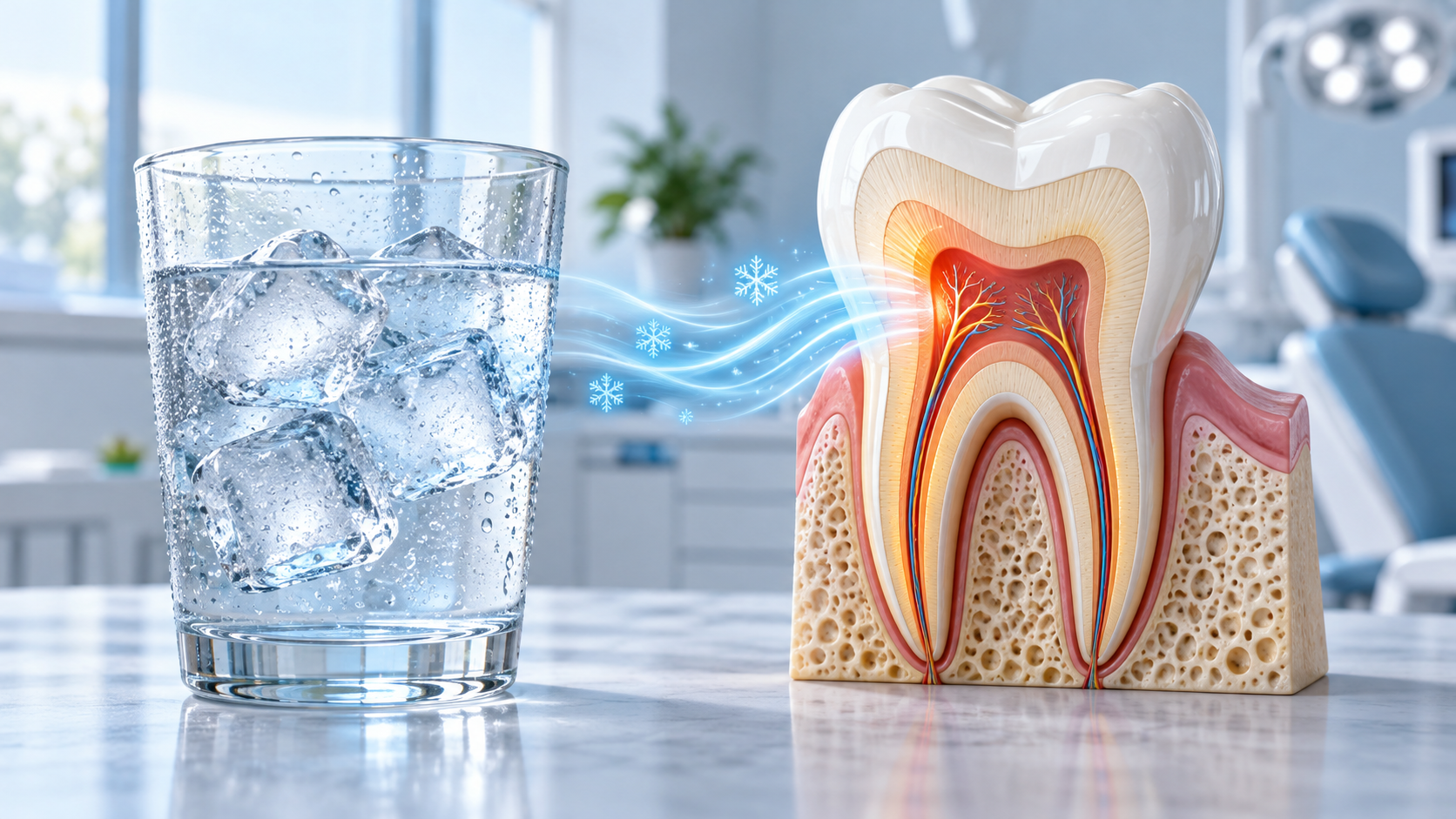
Beneath the enamel is dentine, which contains microscopic tubules. If gum recession or loss of the protective covering exposes dentine, temperature changes can trigger pain more readily. Sensitivity near the gum line may affect several teeth, sometimes without a visible cavity.
Decay, a worn or leaking filling, a chip or a crack can also cause a reaction. The defect may be hard to see, and pain can seem to come from a neighbouring tooth. Looking in a mirror cannot rule these problems out.
The pulp is the living tissue inside a tooth, containing nerves and blood vessels. Irritation or damage there can also cause temperature-related pain. A lingering response or pain without a trigger should not be dismissed as everyday sensitivity; the pulp needs to be assessed at an appointment.
Describe the pattern and choose the next step
These examples guide the decision to seek care; they are not a self-diagnosis tool. Different conditions can produce similar pain, and the absence of severe pain does not rule out disease.
| What you notice | Next step |
|---|---|
| A sharp twinge with a sip, followed by complete relief | Avoid the trigger; book an examination if the reaction is new or keeps returning. |
| Pain remains after the cold has gone, especially beyond roughly 30 seconds | See a dentist as soon as possible; do not wait for toothpaste alone to resolve it. |
| Pain when biting or releasing the bite, or a recently chipped tooth | Contact a dentist; avoid loading that side until it is checked. |
| A mild reaction after a filling that is steadily improving | Follow the treating dentist’s advice; return earlier if it worsens or starts to linger. |
| A swollen cheek, fever or an unpleasant taste | Seek urgent dental assessment. |
| Swelling affects breathing, swallowing or speech, or spreads to the neck or around the eye | Get emergency medical help immediately. |
Three familiar situations, without guessing a diagnosis
One tooth gives a quick twinge with ice cream and then settles. That episode alone cannot tell you whether home care or a restoration is needed. Mention it to a dentist if it returns, has only recently started or involves a tooth with a large filling.
Cold air catches several teeth near the gum line. Exposed roots and brushing technique may be relevant, but the cause still needs confirmation. Pressing harder with a toothbrush to “clean the sore spot” is not helpful.
Cold stops bothering you, but the tooth begins to ache on its own. A change in symptoms is not proof of recovery. Do not postpone an examination simply because the original trigger no longer hurts.
Looking after the tooth before your appointment
Choose food and water at a comfortable temperature. Avoid very cold, very hot or other foods that clearly provoke pain. If chewing hurts, use soft foods temporarily and avoid loading that tooth. This limits irritation but does not repair a possible defect.
Keep up gentle cleaning with a soft toothbrush and fluoride toothpaste. Toothpaste designed for sensitive teeth may ease symptoms from exposed dentine, usually after repeated use. It cannot fill a cavity, mend a crack or replace an assessment of persistent pain.
For help preparing for care, see <a href="https://fullclinic.am/en/blog/zubnaya-bol-poshagovyi-algoritm-do-priema-vracha/">what to do about toothache before an appointment</a>.
Read more about <a href="https://fullclinic.am/en/blog/domashnyaya-gigiena-zubov-prakticheskii-gid-bez-krai-nostei/">gentle daily oral hygiene</a>.
- Note when the reaction started and what brings it on.
- Record whether it stops immediately and whether pain occurs at night or without a trigger.
- Mention recent fillings, whitening, an injury and pain when chewing.
- If your stay in Yerevan is short, discuss time for assessment and the possibility of a follow-up visit in advance.
What to avoid
Do not put aspirin, alcohol or caustic substances on the tooth. Do not file it down, cut into the gum or seal a defect with household glue. Do not start antibiotics yourself: treatment depends on identifying the cause.
Avoid repeatedly testing the tooth with ice or alternating hot and cold. Do not stop cleaning altogether or try to overcome sensitivity with a hard brush or harsh whitening products. Temporary relief does not prove the underlying problem has resolved.
What about sensitivity after dental treatment?
Temporary sensitivity can occur after dental work. There is no single period that is “normal” for every tooth: the procedure, the tooth’s previous condition and whether symptoms are improving all matter. For a mild reaction that is steadily settling, follow your own dentist’s instructions.
Contact the treating dentist before the planned review if pain worsens, lingers after cold, wakes you at night, starts without a trigger or makes closing your teeth uncomfortable. Advice to monitor a temporary reaction does not apply to swelling, fever or other warning signs.
How a dentist finds the cause and discusses options
The assessment brings together the history of the symptoms, examination of the teeth, fillings and gums, tests of the tooth’s response and checks for pain on biting. An X-ray may be appropriate. No single test answers every question; the findings are interpreted together.
For exposed dentine, options may include changes to home care or treatment to protect the sensitive surface. Decay or a defective filling may need a restoration; a crack calls for assessment of how the tooth can be protected and preserved. Pulp disease may require other treatment, including root canal treatment.
Not every sensitive tooth needs a crown or root canal treatment. The diagnosis and how well the tooth can be restored guide the choice: a conservative approach may be enough, while delay can sometimes make treatment more difficult. Ask about alternatives, limitations, stages and the cost of your individual plan without expecting a guaranteed outcome.
When care should not wait
Arrange an examination for recurring new sensitivity, particularly in one tooth. Toothache lasting more than two days should not be left without dental advice. This is not a required waiting period if symptoms are pronounced or becoming worse.
Lingering temperature-related pain, spontaneous pain, pain on biting, a swollen cheek, fever or an unpleasant taste call for earlier care. Swelling around the eye or in the neck, or difficulty breathing, swallowing or speaking, requires emergency medical help immediately. Do not wait for a routine appointment.
Common questions
If sensitive-tooth toothpaste helps, can I cancel the examination? Symptom relief is useful, but does not identify the cause. New pain, pain on one side or recurring pain is still worth discussing with a dentist.
If only cold hurts, does that rule out a pulp problem? No. The trigger alone is not enough to reach that conclusion. The dentist considers how long the reaction lasts, other symptoms and the examination findings.
Can I wait until I get home from a trip? That depends on the symptoms and the length of the trip. Worsening pain, swelling or general symptoms should not wait. If you plan dental treatment in Armenia, clarify who will provide follow-up care after you leave.
Save before your visit
Questions worth asking your dentist
- What is the most likely cause of the reaction, and which findings support it?
- Which treatment or monitoring options suit this particular tooth?
- Which symptoms mean I should return sooner, and when is follow-up needed?
Sources
- Sensitive teeth — American Dental Association
- Tooth pain: symptoms and possible problems — American Association of Endodontists
- Toothache and when to seek care — NHS
- Cracked teeth — American Association of Endodontists


